Glenwood Hot Springs Resort Awards $16,000 Scholarship to Lifeguard Jacob Cordova
Glenwood Hot Springs Resort awards $16,000 to lifeguard Jacob Cordova, highlighting a 31-year history of $295,000 in scholarships designed to retain local talent in the valley.
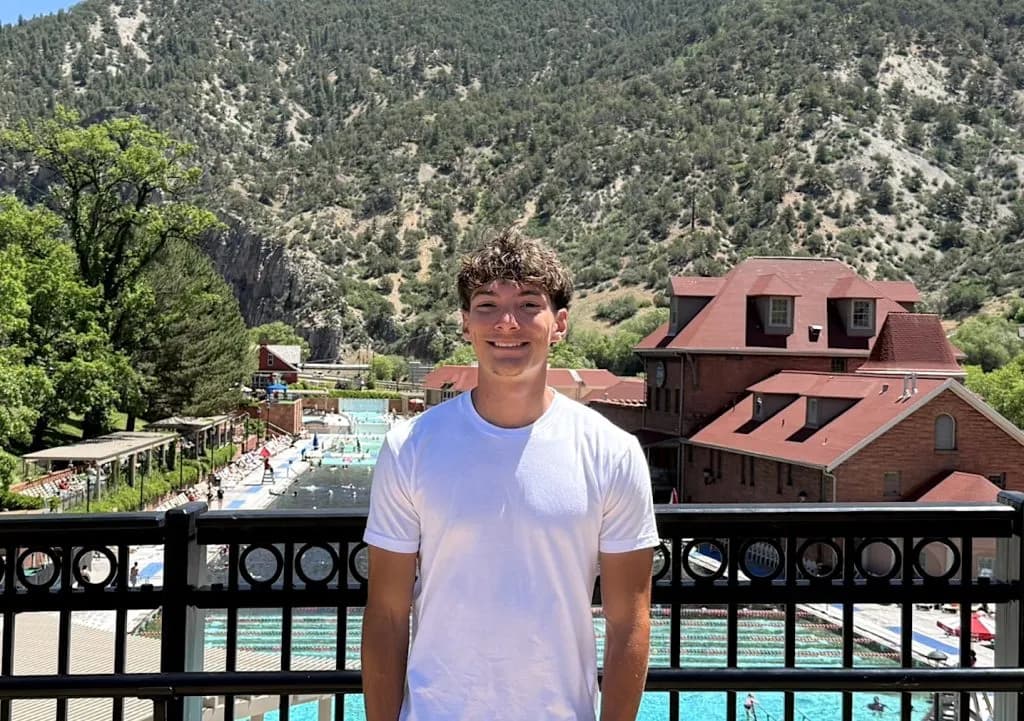
Glenwood Springs —A $16,000 scholarship. One local kid. Thirty-one years of payouts.
That’s the headline number from the Glenwood Hot Springs Resort, but let’s look at the math behind the applause. Since 1995, the resort has handed out $295,000 to local students. That averages out to roughly $9,500 a year per recipient, assuming a standard four-year payout structure. It’s not a life-changing fortune for a multi-millionaire’s child, but for a family in the valley trying to keep a kid in college without drowning in debt, it’s a significant chunk of tuition and books.
Jacob Cordova, a 2026 Coal Ridge High School graduate and current lifeguard at the resort, just took that check. He’s heading to Colorado Mesa University in the fall to study electrical linework. Why? Because he wants to stay in the valley. He wants to be near his family. And, presumably, he wants a job that doesn’t involve staring at a spreadsheet all day.
"It’s awesome," Cordova said. "The way they’re able to support a local kid like this is amazing. It really shows how much this community loves and supports each other."
Translation: The resort has a loyalty program, and it’s working. They pay you to be a lifeguard; you pay them back by staying local and getting a degree. It’s a closed loop of community investment that officials like to praise, and for once, the numbers actually back it up.
Stacey James, a board member for the scholarship, noted that this isn’t just about GPA. It’s about how you spend your time. Cordova has a resume that includes sports, community service, and the physical labor of keeping swimmers safe in the Hot Springs pool. James called him "such a smart kid" who looks at the world "in a very bright light." That’s corporate-speak for "he’s reliable and doesn’t cause trouble."
The scholarship itself is designed for "goal-oriented individuals." That’s a polite way of saying they don’t hand money out to kids who are just drifting. The funds are payable per semester over four years, contingent on the student staying in good standing. If Cordova fails out of his electrical linework program, the money stops. Simple.
But here’s the thing the press release doesn’t scream from the rooftops: This is a retention strategy. The Western Slope has a brain drain problem. Kids leave for Denver, for the Front Range, for anywhere with a bigger paycheck. Cordova is choosing Mesa. He’s choosing the valley. That’s what the resort wants. They want their lifeguards to become linemen, teachers, or tradespeople who stay put and pay local taxes.
Cordova got into electrical work through a friend’s apprenticeship. He’s looking for a "realistic opportunity." In a town where the tourism economy fluctuates with the weather and the ski season, a trade skill is a hedge against uncertainty. It’s steady. It’s outdoors. It’s local.
The board selected him from a pool of applicants who demonstrated excellence as both students and employees. The resort knows these kids. They see them in the pool, they see them in the classroom. They aren’t guessing. They’re investing in people they already trust.
So, what does this actually cost the community? Nothing, directly. It comes from the resort’s coffers, funded by the tourists who pay to soak in the mineral waters. It’s a marketing expense with a long-term ROI. The resort gets a loyal employee base; the community gets a skilled tradesperson who might not have stayed otherwise.
Cordova is the 31st recipient. The total pot is $295,000. He’s getting $16,000 of it. That leaves $279,000 for the other 30 kids over the last three decades. It’s a modest fund, but it’s consistent. And in a region where funding for education can swing with the budget cycle, consistency is a luxury.
Cordova will start at Colorado Mesa University this fall. He’ll work. He’ll learn. He’ll likely come back to the valley to string some lines. The resort gets its return on investment one wire at a time.
Keep up with Glenwood Springs
The day's Western Slope news, one email each morning. Free.
NWRM CASA Honors Judge O’Hara and Founders at 15th Anniversary
Craig Hosts Only Regional Special Olympics Bowling Competition