Gothic Marmot Dawn Wins Fat Marmot Week Amid Funding Crisis
A yellow-bellied marmot named Dawn won the inaugural Fat Marmot Week in Gothic, drawing 23,000 votes. The viral contest highlights a funding crisis threatening the lab's 65-year-old ecological study.
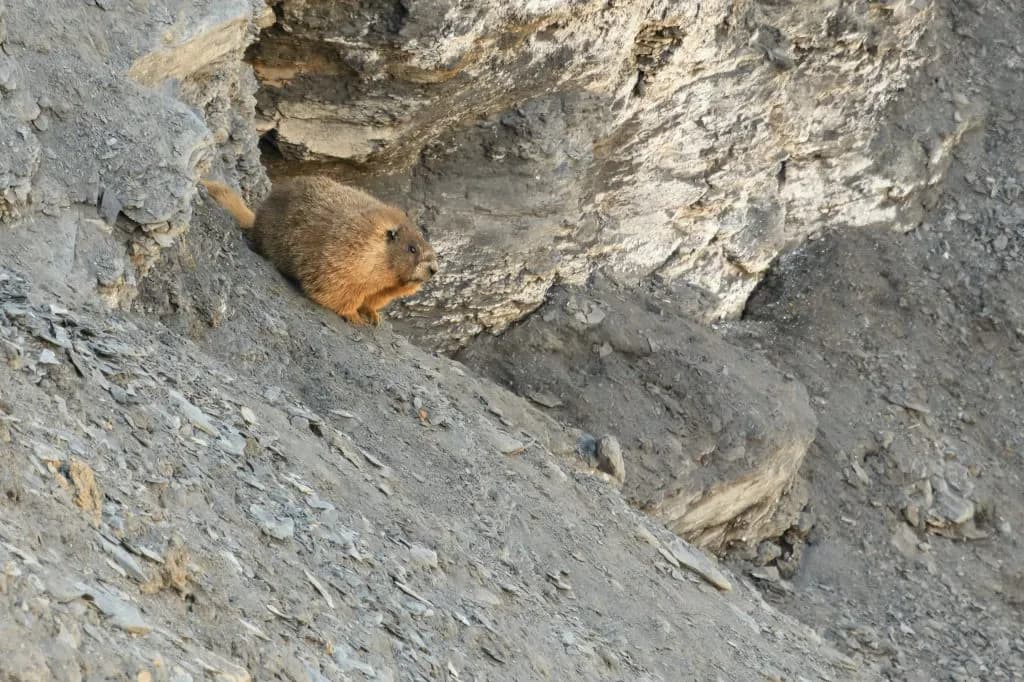
Aspen —The air in Gothic, Colorado, hangs heavy with the scent of pine and the faint, metallic tang of high-altitude dust. Down in the valley, where the Rocky Mountain Biological Laboratory sits nestled among the aspens, a different kind of weight is being measured. It isn’t the pressure of the atmosphere, but the sheer, undeniable mass of a yellow-bellied marmot named Dawn. He didn’t just survive the summer; he conquered it.
Dawn is what researchers call “a very special boy who enjoys the taste of rocks,” a description that captures both his eccentricity and his resilience. In the inaugural Fat Marmot Week, a bracket-style competition designed to engage the public with the lab’s nearly 65-year-old research project, Dawn emerged as the undisputed champion. He claimed both the people’s champion title and the merit-based crown for the most weight gained over the summer. Starting at 8.5 pounds, he rounded out August at approximately 13 pounds, a gain that Katie Adler, a third-year PhD candidate at UCLA and a researcher with the marmot project, noted is critical for his survival. “When marmots spend eight months underground, they really rely on those fat reserves to sustain them until flowers start blooming again in May or June,” she explained.
The competition was no small affair. Nearly 23,060 votes were cast during the weeklong event, with Dawn defeating eight other marmots from the Gothic colony, including runner-up G, in the final round of public voting on August 28. But the stakes extended beyond the whimsical nature of the contest. The Rocky Mountain Biological Laboratory has studied these individually marked mammals since 1962, making it the second-longest running study of its kind. Yet, as Dan Blumstein, a professor of ecology and evolutionary biology at UCLA and co-director of the Marmot Project, warned, the future is “looking very dire” due to federal funding cuts. The lab needs between $75,000 and $100,000 to support its graduate students, a sum that seems modest against the backdrop of national budgets but feels immense to a small research team in a remote valley.
To bridge that gap, the researchers have turned to unconventional methods. Alongside Fat Marmot Week, they launched an “OnlyMarms” page on OnlyFans, a move that Emily Renkey, a first-year master’s student at UCLA, argued fits the subject perfectly. Marmots, after all, possess complex social lives, distinct personalities, and, as Renkey put it, “a lot of character.” It is a strategy that blends the serious science of long-term ecological monitoring with the playful, viral energy of modern internet culture.
As the autumn winds begin to pick up in the San Juans, the marmots will soon retreat underground, their bodies relying on the fat reserves they accumulated during the summer. For Dawn, that weight is not just a number on a scale; it is a lifeline. The lab’s researchers hope that by drawing attention to these quiet, whiskered creatures, they can secure the funding needed to keep the lights on and the data flowing. The next time you hear about a marmot, remember that behind the cuteness lies a complex social structure and a vital role in the health of high-alpine ecosystems. The weight of the evidence, quite literally, is on their side.
Keep up with Aspen
The day's Western Slope news, one email each morning. Free.