Colorado Ruling Finds Vail Transit Violated Labor Law Firing Union Organizer
A Colorado labor ruling found Core Transit violated state law by firing a Vail employee for union activity, citing her protected advocacy and coercive internal emails.
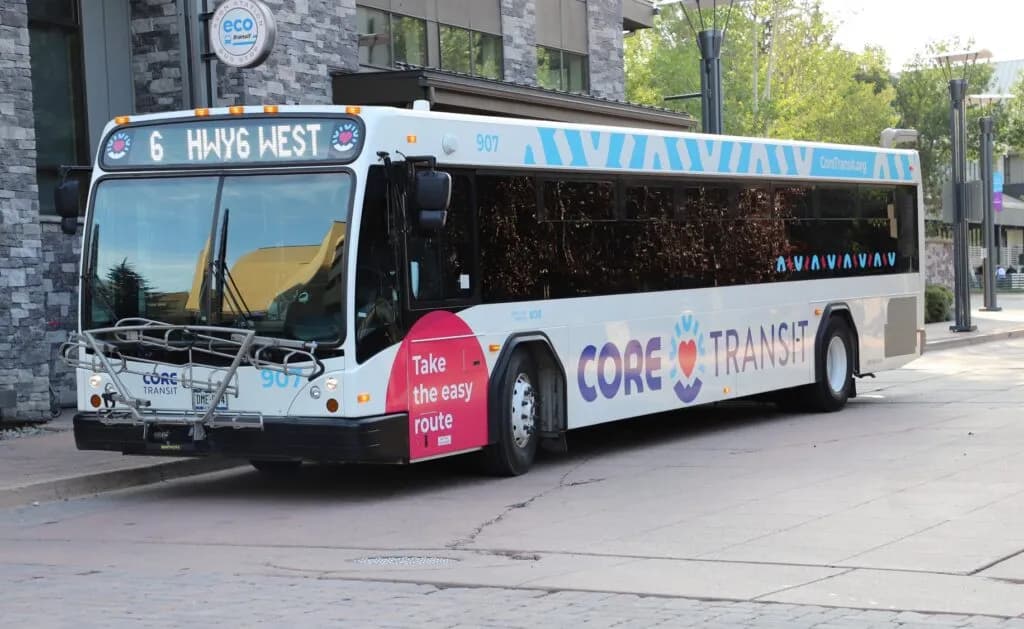
Aspen —The air inside the Vail Transportation Center usually hums with the low-frequency vibration of idling diesel engines and the shuffling feet of tourists dragging heavy suitcases. It is a place built on movement, on the promise that if you pay the fare, you get where you’re going. But for Stephanie “Sunshine” Samuelson, that promise broke on a Tuesday in May, leaving her standing in a parking lot with a decade of loyalty in one hand and a termination letter in the other.
The obvious narrative here is simple: a woman got involved in politics at work, and the company didn’t like it. But the Colorado Department of Labor and Employment’s ruling on October 13 suggests something more nuanced, and frankly, more damning. The state didn’t just say Core Transit fired her because she was unionizing. They ruled that Core Transit violated the Labor Peace Act by terminating Samuelson “based in part on her lawful concerted activity.” That distinction matters. It means the company didn’t necessarily have to prove she was a union organizer to fire her; they just had to prove she was advocating for her coworkers. And according to the state documents, they did exactly that.
Samuelson, who worked as a customer-service representative for the Eagle Valley Transportation Authority — which rebranded to Core Transit in 2024 — had been at the Vail Transportation Center for ten years. She wasn’t a stranger to the community. In a phone interview, she described herself as someone who “helped people find their way.” She had a following. She had a dream job. And then, in April 2025, she brought in the Amalgamated Transit Union to start an organizing drive. By May, she was gone.
“I’m grateful for the Amalgamated Transit Union, mostly because I had brought them in to do an organizing drive in April, and by May I was fired,” Samuelson said. “So when Core fired me, of course, everybody ran underground. We had pretty good momentum. And (Core) made a significant statement when they terminated me that … ‘because we’re an at-will state, we could terminate you.’”
That phrase, “at-will state” - is doing a lot of heavy lifting. It implies that employment is a privilege, not a right. But the state found that Core Transit’s own investigation identified Samuelson’s advocacy as a basis for her termination. In February 2025, she had spoken up against an operational rule that affected working conditions for other employees. That, the state ruled, was protected activity. And yet, Core Transit still fired her.
The state also found a second violation. On March 10, 2025, Core Transit sent Samuelson an email directing her to “communicate informatively and in a positive manner” regarding any disagreements with company practices. The state called this coercion. They were telling her how to feel, how to speak, how to behave. They were policing her tone. And when she didn’t comply, they fired her.
Core Transit’s response, delivered via email by Dayana Herr, the company’s marketing, communications, and customer relations manager, was characteristically thin. “Regarding the ULP (Unfair Labor Practices) decision, … Core Transit does not comment on personnel matters,” Herr wrote. That’s it. No apology. No explanation. No acknowledgment that they violated state law. Just a polite shrug wrapped in corporate jargon.
What strikes me about this case is the gap between the company’s self-image and the reality of its actions. Core Transit positions itself as a modern, efficient transit authority. It wants to be seen as progressive. But when it comes to labor rights, it acts like a mid-century factory owner. It wants the output without the input. It wants the service without the voice.
Samuelson’s story is not unique, but it is instructive. It shows us what happens when a company treats employees as interchangeable parts rather than human beings. It shows us what happens when a company confuses compliance with fairness. And it shows us what happens when a company forgets that the people driving the buses are the same people paying the fares.
The union push in 2025 ultimately came up short, but the seed has been planted. The Amalgamated Transit Union filed the complaint on Samuelson’s behalf, and the state agreed with them. Now, Core Transit has to post notice of its violations and spell out employee rights. They have to put it in writing. They have to make it official.
And maybe that’s the point. Maybe the best way to fix a broken system is to force it to admit it’s broken. Maybe the best way to win a labor dispute is to let the state say so.
Samuelson, for her part, seems to have taken the loss with grace. “I don’t have any ill will towards anybody,” she said. “I’m deeply saddened because it was my dream job. I would have retired there. I was a customer service rep, and I loved it, I did it well and I had a really great following with the community. I helped people find their way.”
She even tried to help the bus operators, the people actually behind the wheel. “None of (Core’s upper management) have their (commercial driver’s licenses), and none of them have driven,” she said. “I will say, with a preface, I don’t have my CDL, but I will be the first to admit that.”
There’s a humility in that. An admission of imperfection. A willingness to learn. And maybe that’s what Core Transit needs to hear. Not that they’re wrong. Not that they’re bad. But that they’re human. That they make mistakes. That they can fix them.
The Vail Transportation Center is still open. The buses are still running. The tourists are still shuffling through the doors. But the air feels different now. Thicker. Charged. Like the moment before a storm breaks. You can feel it if you stand still long enough. You can hear it in the idle of the engines. You can see it in the faces of the workers.
And somewhere in that parking lot, a woman is still waiting for her ride.
Keep up with Aspen
The day's Western Slope news, one email each morning. Free.