Gov. Jared Polis Highlights $4M State Funding for Grand Junction Affordable Housing
Governor Jared Polis announces that $4 million in state funds from Proposition 123 is keeping the 'The Current' affordable housing project on track in Grand Junction, highlighting the public-private partnership needed to offset thin operating margins.
Grand Junction —What does it cost to keep a neighbor from being priced out of the valley, and who actually writes the check?
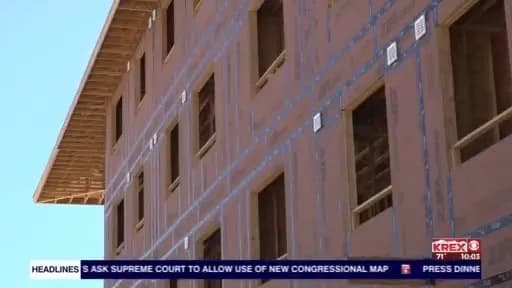
The answer, it seems, is a complex ledger of voter-approved state funds, city coffers, and the thin margins of nonprofit housing authorities. On Monday, Gov. Jared Polis stood in Grand Junction and pointed to a building nearing completion on 24 Road, arguing that the Colorado State Affordable Housing Fund — Proposition 123 — is the only thing keeping projects like The Current from remaining a blueprint on a drafting table. The state’s contribution? Approximately $4 million. That single figure represents the largest slice of the public funding puzzle for this specific development, a fact Polis emphasized as he detailed how the voter-approved initiative has become the backbone of local affordable housing strategy.
If you walk past the site on 24 Road, you might not immediately see the $4 million in state dollars embedded in the drywall and insulation, but you can feel the scale of the undertaking. It is the largest investment in local education infrastructure in over a decade, a fact that underscores how deeply intertwined housing stability has become with the broader civic health of Grand Junction. The city itself pitched in an additional $2.25 million, assisting the Grand Junction Housing Authority in acquiring the property, while the state provided the initial capital injection that made the deal viable. Grand Junction was the first city in Colorado to receive funding from Proposition 123, and it remains the seventh in the state overall, a statistic that highlights our position as an early adopter in a statewide race for affordable units.
But money, as Scott Aker, CEO of the Grand Junction Housing Authority, pointed out, is only half the battle. The other half is survival. “It takes money to build these and the operating margins on these types of properties are so thin that you can’t finance it the traditional way that apartment buildings get built,” Aker explained. “They don’t pencil out as they say.”
This is the rough edge of affordable housing: it doesn’t generate the profit margins that private developers crave, so it requires public intervention to exist at all. Aker views Proposition 123 as essential not just for this building, but for assembling affordable rental housing across our communities as construction costs continue to climb. “As the governor said, in other types of housing, as well, it’s just getting more and more expensive,” he noted, reminding us that without this state funding, the math simply doesn’t work.
The result is The Current, a facility where 54 of the 374 total units have been committed to the state, with the Grand Junction Housing Authority responsible for bringing 69% of those units to their commitment and preserving existing ones. Tamara Allen, the city’s community development director, sees this as a stabilizing force for households that otherwise spend a disproportionate chunk of their income on rent. “Housing in Colorado is such a big chunk of a household income that helping put some regulators on that costs like a project like this does is incredibly helpful and help stabilize and provide a healthy environment for our households and residents here in the city,” Allen said.
It’s a collaborative effort, too, involving a mix of nonprofit and for-profit housing providers, including Housing Resources of Western Co., working in tandem with the city and state. You can feel the weight of that collaboration in the quiet hum of the construction site, where the usual noise of development is tempered by the precision of subsidized construction. As the final touches are put on the units, the question isn’t just whether the building will open, but whether the state will continue to pour that $4 million equivalent into future projects, or if the funding will dry up, leaving us to figure out the thin margins on our own.
The sun dips lower over the 24 Road site, casting long shadows across the parking lot where the first residents will soon park their cars, unaware of the political and financial machinery that built their homes, but grateful for the roof overhead.
Keep up with Grand Junction
The day's Western Slope news, one email each morning. Free.
Grand Junction Rotary Delivers $14,000 in School Supplies to District 51
Aspen Giving Network Distributes $887K to 34 Nonprofits