Helicopters Gather Wild Horses West of Craig
BLM helicopters began gathering wild horses west of Craig on Sept. 19, delaying the start twice due to scheduling conflicts. Only 11 animals were captured by Sunday.
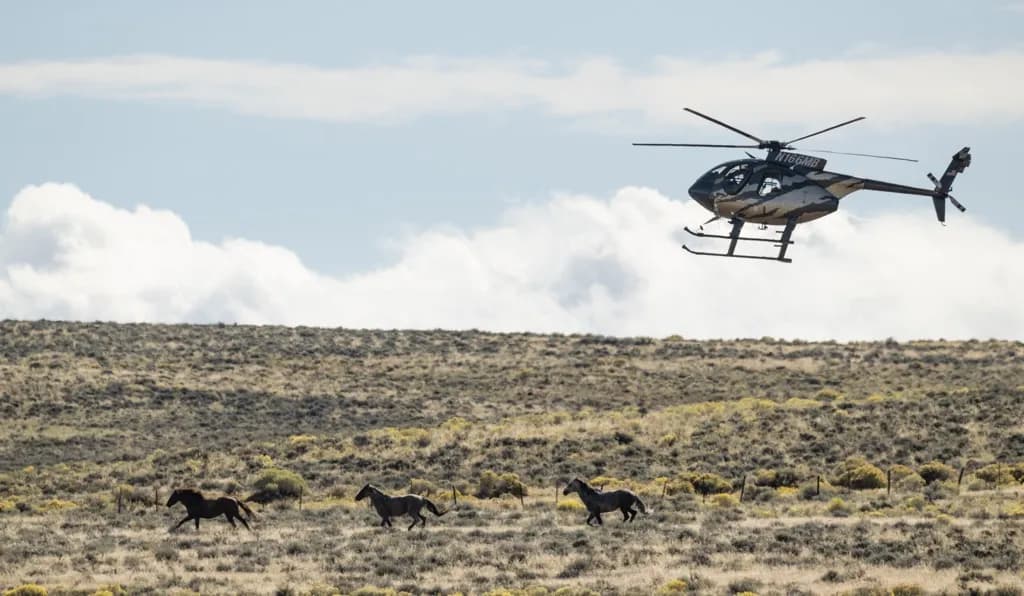
Steamboat Springs —The rotor wash flattens the sagebrush, kicking up a cloud of red dust that hangs in the still air of the Sand Wash Basin. It is a scene that has played out for generations, but this time, the target is specific: the wild horses of the herds west of Craig.
For locals watching the skies, the question is simple and urgent. Why did the helicopters finally show up now, and what exactly is happening to the horses they catch?
The answer lies in a mix of bureaucratic scheduling and hard logistics. The Bureau of Land Management (BLM) had originally planned to begin these gather operations on Sept. 10. But delays pushed the start date out to Sept. 17, and then further to Saturday, Sept. 19, due to what the agency called “scheduling conflicts.” As of Sunday, Sept. 20, only 11 horses had been gathered. That includes five stallions, three mares, and three foals. No deaths were reported, though Sunday’s activities were described by BLM officials as “reconnaissance only,” meaning pre-operational scouting rather than active capture.
This operation is part of a larger plan to gather 300 horses from the Sand Wash Basin Herd Management Area over approximately 11 days. Of those, only 55 will be returned to the range. The rest will be sent elsewhere, a fate that has long fueled debate among ranchers, horse advocates, and taxpayers footing the bill.
The timing is significant. This gather comes just weeks after a similar helicopter drive-trap operation in the Piceance-East Douglas/West Douglas Herd Management Area, where the BLM gathered 894 horses over roughly 31 days. Nine horses died during that operation. The contrast in scale and outcome underscores why the Sand Wash Basin effort is drawing such close scrutiny from neighbors who feel the impact of federal land decisions directly.
Since 1971, the BLM has removed nearly 4,400 animals from public rangelands in Colorado, according to the agency’s website. The BLM considers the appropriate combined capacity for all herd management areas in the state to be 812 animals. In five-plus decades, the agency has conducted gather operations on wild horse and burro populations in roughly 175 herd management areas across 10 Western states, funded through federal taxpayer dollars. The stated aim is to prevent wild horse populations from exceeding the carrying capacity of the land.
But the controversy runs deeper than numbers. It touches on the method of gathering — helicopter drive-traps versus bait traps — the ecological impact of wild horse grazing compared to livestock grazing on public lands, the cost to American taxpayers, and the uncertain destination of the horses after they leave the range. A recent investigative report by The New York Times claimed that in 2025, sales of wild horses more than doubled, with traders exploiting a legal loophole to increase profits when selling them for slaughter. That claim adds another layer of complexity to an already contentious issue.
Adding to the pressure, state leaders have weighed in. Earlier this month, Gov. Jared Polis and U.S. Rep. Joe Neguse called for an immediate halt to wild horse gathers in Colorado, citing what they described as “inhumane and unnecessary” practices. That political push against federal action highlights the tension between state and federal authority over public lands, a tension that locals feel in their property values, their water rights, and their sense of place.
Public observation days are designated for Sept. 19-24, offering a window for neighbors to witness the operations firsthand. However, public observation was not allowed on Saturday due to on-the-ground conditions, including impassable roads, flooding, washouts, and the potential for further flooding, according to the BLM’s website. Monday’s daily gather report was unreleased by publication time, leaving some details in flux.
Stand there long enough and you’ll see the landscape transform under the helicopters’ path. The horses move, the dust settles, and the questions remain. What happens next depends on the next 11 days of operations, the fate of the 289 horses not returned to the range, and whether the political and economic pressures continue to build. For now, the story is unfolding in real time, with each day bringing new information and new perspectives from those living and working in the basin.
Keep up with Steamboat Springs
The day's Western Slope news, one email each morning. Free.
The digital counter on the side of the bus in Carbondale ticks over, but the seats inside are half-empty

Eagle County Launches Aging Well Roadmap To Keep Seniors Housed