Hickenlooper and Baisley Clash Over Taxes and Medicaid
Colorado Senate candidates Hickenlooper and Baisley sharply disagree on the One Big Beautiful Bill, with Hickenlooper favoring higher top tax rates and opposing punitive Medicaid work requirements.
The air in the valley is crisp, carrying that distinct, dry chill that settles over the high plains just as the sun dips behind the mountains. It’s a quiet kind of stillness, but beneath it, there is a hum. A low-frequency vibration that you can feel in the floorboards of your home, or maybe just in the back of your mind. For folks around here, that hum has a name: it’s the 2026 U.S. Senate race.
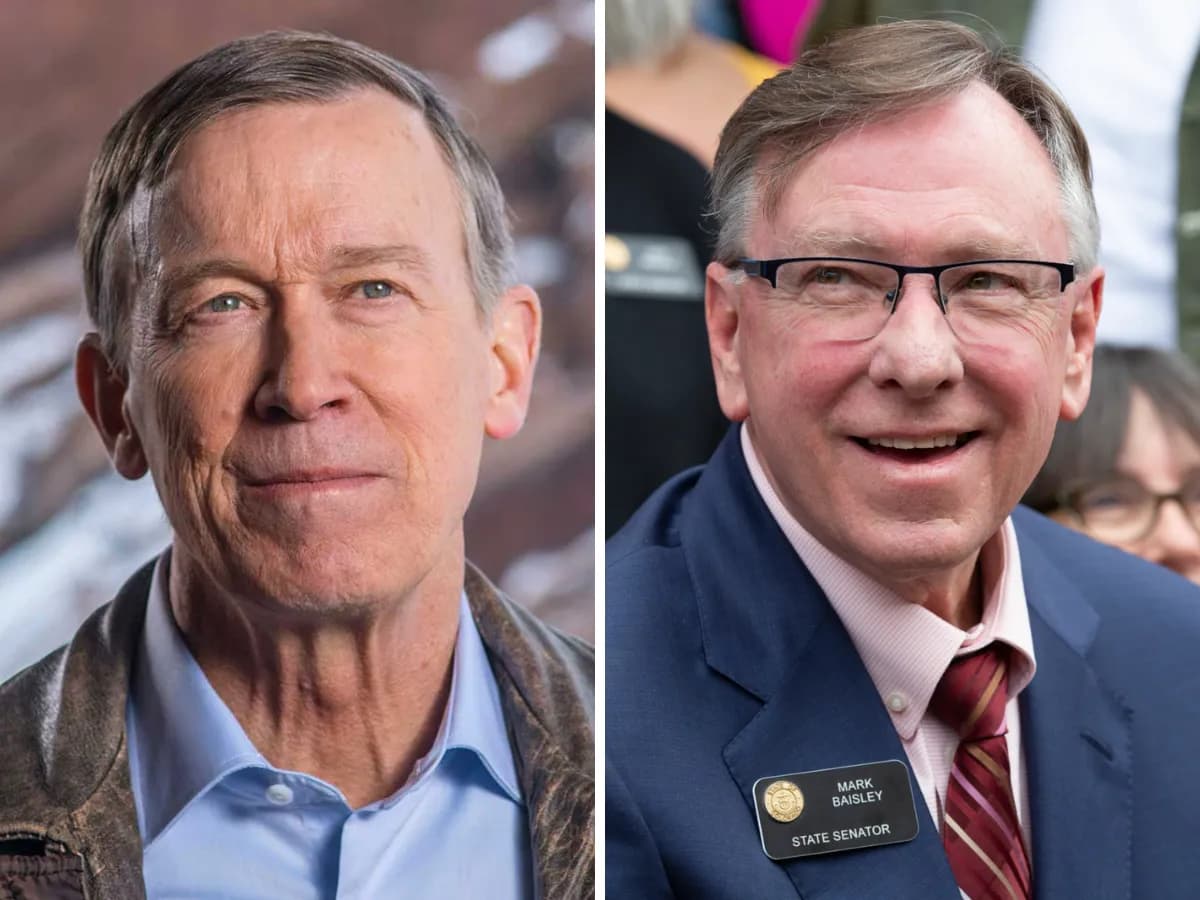
You’re probably asking yourself, who actually gets to decide the next four years for our state? Who is going to be sitting in Washington, D.C., making the calls on taxes that affect your property bill, or healthcare that determines if you can afford a prescription? The Colorado Sun sat down with the two main players to find out. On one side is John Hickenlooper, 74, the former Denver mayor and Colorado governor who unseated Cory Gardner in 2020. On the other is Mark Baisley, 71, a Woodland Park resident and state senator who spent his pre-political career in technology and aerospace defense at Raytheon and Lockheed Martin.
It’s a matchup of experience against industry, of the restaurant apron against the engineering blueprint. Hickenlooper brings a history of governing; Baisley brings a resume built in the boardrooms that often dictate federal defense spending. But what do they actually stand for?
When The Colorado Sun asked them to dissect the One Big Beautiful Bill Act, the differences sharpened into something you can almost taste. Hickenlooper, leaning on his roots as a restaurateur, said he would make permanent the tax break for tipped employees. He’s clear: he’d reimpose higher federal income tax rates on the nation’s biggest earners, a move that was reduced by the recent legislation. He sees the current tax landscape as needing correction at the top.
Baisley, meanwhile, doesn’t see a flaw in the current structure. He told the paper he loves that the bill made permanent nearly all of the federal income tax cuts from the 2017 Tax Cuts and Jobs Act. When pressed on what he’d change, he didn’t name a single provision to do away with. “I’m appreciative of everything that I’ve seen in that bill,” he said. It’s a stark contrast: one candidate looking to adjust the dial, the other satisfied with where it is.
Then there’s Medicaid, a program that touches thousands of neighbors in our valley who are navigating disability or low income. The new work requirements imposed by the bill have Hickenlooper bristling. He calls them punitive, arguing that they treat people going through difficult parts of their lives like they’re somehow corrupt. He sees a human cost that the paperwork misses.
Baisley supports the requirements, though he admits they may prevent some people who need the program from accessing it. He frames it as a metric: success is when someone comes off Medicaid, failure is when they are enrolled. He insists this isn’t a zero-sum game, but for the person on the other end of that application form, the stakes feel very much binary.
Minor-party candidates also appear on the ballot, including Bob Chew of the Forward Party, Christopher Baum of the Approval Voting Party, Blake Huber of the Libertarian Party, and Adam Withrow of the Unity Party. But the main event is this: Hickenlooper versus Baisley.
If you look closely at the way they speak, you can feel it. One speaks in terms of people and their struggles; the other speaks in terms of systems and outcomes. As the leaves start to turn color along the highways, the noise of the campaign is going to get louder. But for now, it’s just this quiet hum in the valley, waiting for you to decide who gets to speak for us.
Keep up with the Western Slope
The day's Western Slope news, one email each morning. Free.