Holy Cross Energy Hits 100% Clean Power in Glenwood Springs
Holy Cross Energy in Glenwood Springs achieves 100% clean power for its 45,000 members, shifting strategy to smaller projects and managed demand amid rising costs.
Glenwood Springs —So, what happens to your electric bill when the utility company you pay every month suddenly announces it’s running on 100% clean energy?
That’s the question facing the 45,000-plus members of Holy Cross Energy in Glenwood Springs this spring. In March, the cooperative delivered a full percentage point of renewable power to its grid. It’s a landmark moment for the Western Slope, but it’s also a signal that the national political shift back toward fossil fuels hasn’t stalled local climate initiatives.
The achievement didn’t happen by accident. Holy Cross Energy had already announced last year that it hit 96% solar and wind power for May 2025. Hitting that 100% mark in March 2026 was partly a weather event — the temperatures were mild, reducing the overall draw on the grid. But it was also about infrastructure. The utility holds shares in major solar farms that produced at high levels during that same mild stretch.
Now, the cooperative is looking at the bigger picture. They are on track for their “100×30” goal: producing 100% of its power needs with clean sources by 2030. So far in 2026, Holy Cross has averaged 92% clean power delivered to members.
But here is the catch. The easy days of cheap, large-scale renewable expansion are over.
Bryan Hannegan, the president and CEO of Holy Cross Energy, laid out the reality of the current energy market. It’s not just about building more solar panels anymore. It’s about whether those panels make financial sense in a world where everything costs more.
“Increased demand for energy, permitting delays and costs, labor shortages, tariffs, insurance premiums, the end of the incentive tax credit, and supply chain issues and the war all have had a big impact on prices,” Hannegan said. “It wouldn’t be economic for us even if we had room.”
The data supports that assessment. Power purchase contracts for large new projects are now double or triple what the utility locked in during its most recent building phase. If you’re a local business owner or a homeowner eyeing a major expansion, that inflation hits your bottom line too.
So, how do they bridge the gap between 92% and 100% without spending a fortune on massive new farms? They are changing their strategy.
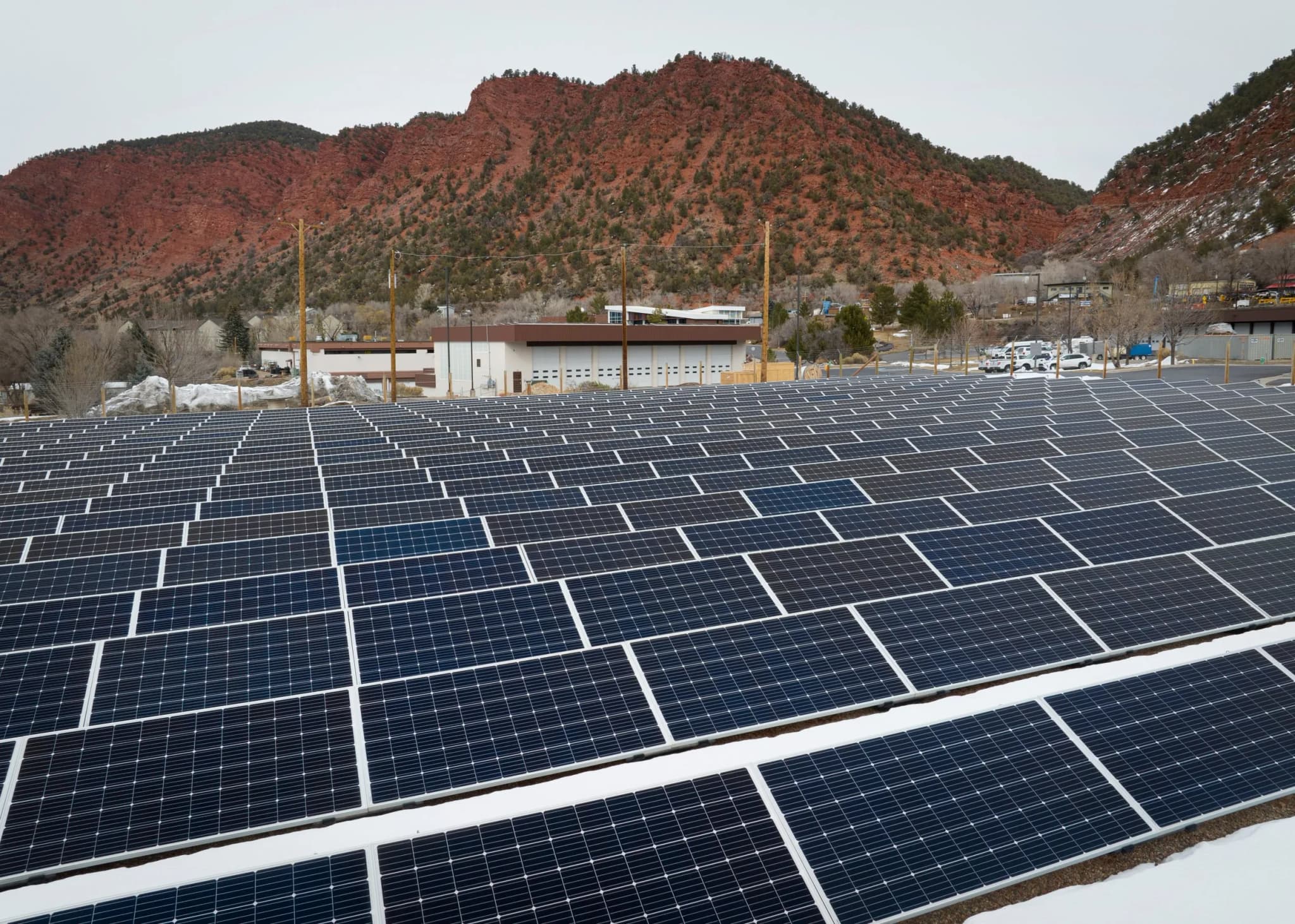
Hannegan said the focus has shifted away from giant, utility-scale renewable projects. Instead, the cooperative is leaning into smaller, more flexible projects connected directly to the Holy Cross electric distribution system. Think solar paired with battery storage.
“We are also leaning heavily into programs and incentives that encourage our members to shift their electricity demands to times when renewable energy is abundant,” Hannegan said in an email. “Helping us use more of the renewable energy our contracted projects are generating instead of selling it to the market.”
In plain English: they want you to run your dishwasher when the sun is shining, not at 7 p.m. when everyone else is cooking dinner.
This shift from massive infrastructure to managed demand is the new normal for utilities across the state. The federal government might be turning back toward fossil fuels, but in Glenwood Springs and the surrounding valleys, the economics of wind and solar are forcing a different path.
The future remains uncertain as the grid faces its next heat wave. But for now, the message from the top of Holy Cross Energy is clear. They aren’t stopping. They’re just getting smarter about where they put their money.
“We are on track,” Hannegan said, noting that the cooperative will continue to pursue renewable projects to round out its supply during months with higher demand and lower production.
The goal remains 2030. The method has changed. And the cost of getting there is higher than it was five years ago.
Keep up with Glenwood Springs
The day's Western Slope news, one email each morning. Free.