House Passes Bill Forcing Utilities To Cover Data Center Costs
The House voted 417-3 to require utilities to charge data centers for full grid upgrade costs, a move that pits AI innovation against rising consumer energy bills.
"Those are the stories you’re seeing in communities that have embraced it."
Rep. Steve Scalise, R-La., said those words during a floor debate that stretched into the final hours of Congress’s session before the midterm elections. He was talking about a new data center in Richland Parish, a project that generated bonuses of up to $50,000 for local teachers thanks to increased tax collections. It’s a tidy, optimistic narrative: the hum of servers brings cash to the school district.
But across the aisle, Rep. Frank Pallone, D-N.J., wasn’t buying it. He argued that the president’s social media posts — claiming communities opposed to data centers must want to be "backwards and poor" — showed a leadership team that had swept real voter concerns aside. Pallone promised the bill was "only the beginning" of their focus on these issues, not the end.
The House voted 417-3 to approve the legislation on Wednesday. It’s a slim, technical win that will likely mean very little for your electric bill in the short term. The bill requires state utility regulators to consider a standard by which utilities charge data centers for the full cost of new power and transmission upgrades needed to serve them. It is, in the words of its supporters, a "modest first start."
Kevin Freking of The Associated Press reported the vote from Washington. The bill essentially provides a federal recommendation while preserving state power to regulate electricity markets. That distinction matters because it keeps the heavy lifting on the shoulders of state commissions, many of which are already grappling with a surge in large-scale load requests.
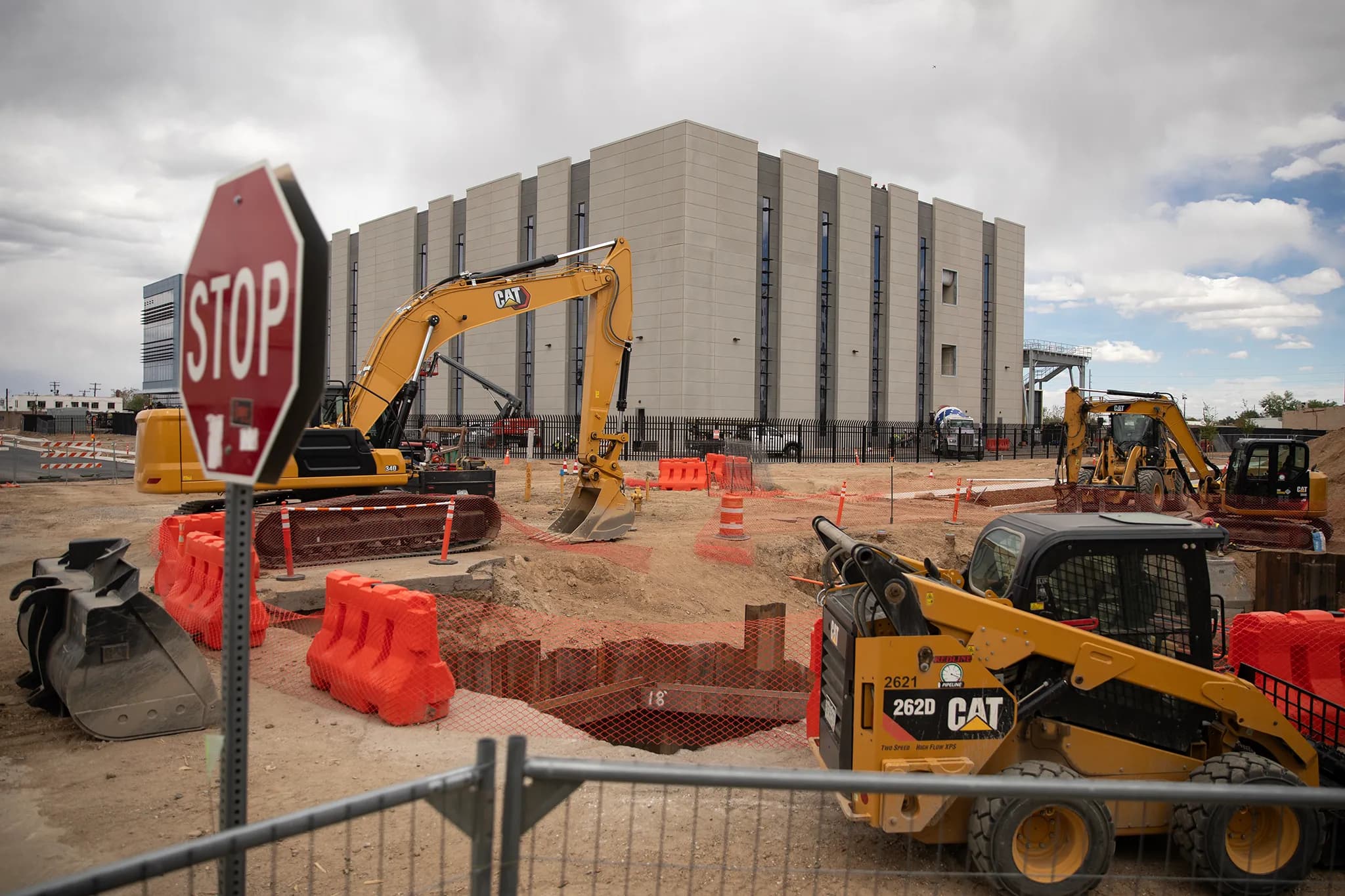
For folks around here, the geography of this fight is specific. Construction continues on a new data center in Denver's Elyria Swansea neighborhood, a site that has already drawn scrutiny for its energy demands. The AP-NORC Center for Public Affairs Research and the Energy Policy Institute at the University of Chicago released a poll this week showing that nearly two-thirds of Americans are extremely or very concerned about data centers’ impact on energy prices. Another 57% share that anxiety regarding water supplies.
Speaker Mike Johnson called the passed bill a measure that "strikes the right balance of protecting local communities while keeping America on the cutting edge of AI development." He’s framing it as a win for innovation. But more than 100 Democrats signed onto a letter this week calling on Johnson to keep the House in session until Congress advances meaningful artificial intelligence safeguards. They want a full moratorium on AI data centers until it’s clear the tech is safe, effective, and not quietly inflating utility rates.
Scalise’s teacher bonuses are real money. Pallone’s voters are paying for the grid upgrades that make those bonuses possible. The bill passed with a margin so lopsided it barely registered as a debate, yet the floor speeches revealed a fracture in how the country views its own power grid. One side sees a tax engine; the other sees a cost center that will show up on their next statement.
The legislation now moves to the Senate, where it faces a different set of hurdles and a different political calculus. But for now, the House is done with it. The servers are still being built in Elyria Swansea. The concrete is drying. And the question of who pays for the electrons that keep them running remains, for all practical purposes, a state-by-state experiment.
Keep up with the Western Slope
The day's Western Slope news, one email each morning. Free.