How Aspen’s Limelite Club Launched Folk Stars in the 1950s
Explore how Aspen's gritty Limelite Club and other small venues served as a strategic launchpad for folk stars like Bob Gibson and Glenn Yarbrough during the 1950s and 60s.
Aspen —The smell of stale beer and wood polish still lingers in the memory of Aspen’s old nightclub district, a sensory echo of a time when the air was thinner and the music was stripped back to its bones. It wasn’t the polished, ticketed concert halls of today. It was a gritty, intimate ecosystem where musicians slept on floors, shared meals with patrons, and built careers one hootenanny at a time.
This was the folk era of the 1950s and early 1960s, and Aspen, despite its small footprint, punched well above its weight class. While New York’s Greenwich Village and Los Angeles’ Ash Grove dominated the national narrative, Aspen served as a critical, if overlooked, node in the folk music network. It wasn’t just a stopover for skiers; it was a launchpad.
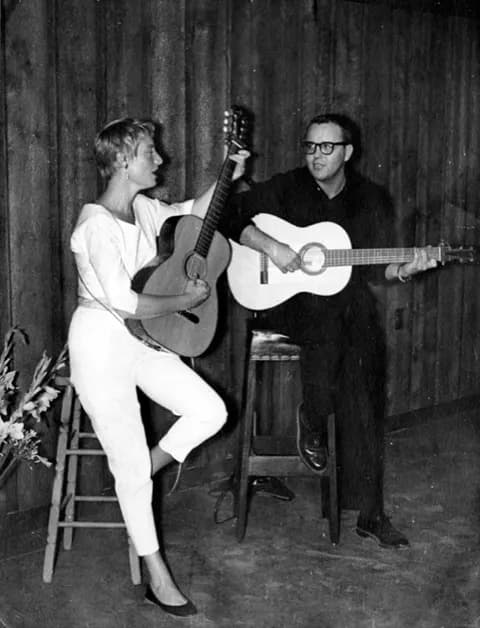
Let’s look at the infrastructure that made this possible. In 1957, Sheldon Rich acquired a nightclub building and renamed it the Limelite. That single acquisition changed the local cultural trajectory. Rich didn’t just book talent; he cultivated it. He brought in Glenn Yarbrough of the Kingston Trio and Marilyn Child, who performed often at the Limelite, sometimes for weeks on end. Child, who also worked on Broadway, became a staple of the local scene.
The financial implications of these bookings were modest for the artists but transformative for their careers. At one of the Limelite performances featuring Yarbrough, the president of Electra Records was in the audience. He signed them for a recording session that took place in 1958. That’s a direct line from a small Colorado club to a major record label deal.
Then there was Bob Gibson. Known for his banjo playing and high-energy performances, Gibson arrived in 1957. He had already recorded for Decca Records, but Aspen gave him a platform to refine his craft. He lived in Aspen until 1961, performing solo and with Child. He also played at the Jerome and the Red Onion. In 1960, he recorded “Ski Songs,” an album that capitalized on the local ski culture. He performed these tracks at apres-ski hours and even did dinner performances for children at the Jerome. This wasn’t just entertainment; it was community integration.
The Limelite wasn’t the only player. The Wheeler, refurbished and ready for business, hosted Burl Ives, one of the ’50s biggest stars, to kickstart Aspen’s folk era. The Bitter End in New York and the Hungry I in San Francisco were the training grounds for Dylan and Baez, but Aspen offered a different kind of stage — one that was less about industry politics and more about immediate audience connection.
On paper, this looks like a series of isolated events. In practice, it was a cohesive ecosystem. Musicians formed groups, connected with producers, and recorded live albums in these small venues. The Ash Grove in LA helped the Limeliters rise to popularity and hosted their first live album recording. The Troubadour introduced ’60s stars to folk music through its hootenanny open mic. Aspen did the same.
The infrastructure of these clubs — the small stages, the intimate seating, the direct access to industry eyes, created a unique environment. It allowed artists like Gibson and Yarbrough to test material, build a following, and secure recording deals. It wasn’t just about playing music; it was about building a career in a low-cost, high-impact setting.
For locals, this meant access to national talent without leaving the valley. For the musicians, it meant a chance to be heard by people who mattered. The Limelite, the Jerome, the Red Onion; they were the incubators. And while New York and LA got the headlines, Aspen got the history.
The bottom line? Aspen’s folk era wasn’t just a cultural footnote. It was a strategic hub. The investment in these small venues yielded outsized returns in terms of career launches and cultural influence. It proves that size doesn’t dictate impact; access and infrastructure do.
Keep up with Aspen
The day's Western Slope news, one email each morning. Free.
Aspen's ACES Returns Annual Harvest Party to Rock Bottom Ranch
Glenwood Ghostwalk Brings Frontier History to Life in Linwood Cemetery