How Gypsum’s Costco Deal Fractured Eagle’s Downtown Business Core
Former Eagle mayor Scott Turnipseed analyzes how Gypsum securing the Costco anchor tenant and later terminating the revenue-sharing agreement contributed to the fragmentation and decline of Eagle's downtown commercial core.
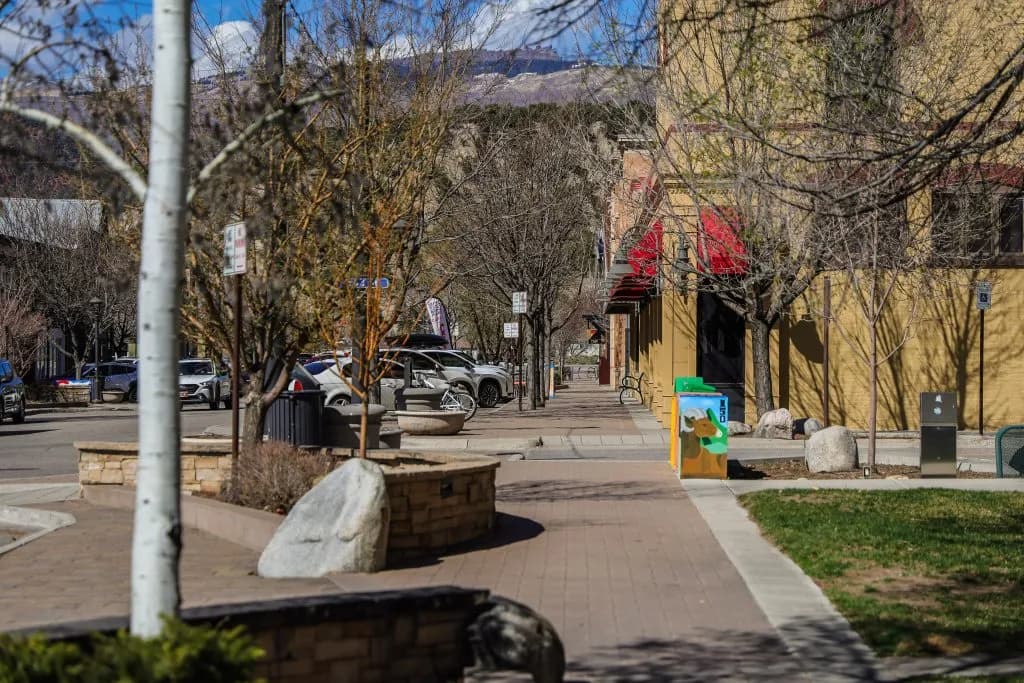
Aspen —“Even though our downtown isn’t as vibrant as we’d like, at least we have one.”
That’s Scott Turnipseed, former Eagle mayor, architect, and contractor, defending a commercial core that has been fracturing for decades. He’s looking west at Gypsum, where he argues there is no distinct commercial center to speak of, just a sprawl of big-box retailers that arrived via a revenue-sharing agreement that eventually went up in the trash.
Let’s look at the cost of that rivalry. When Slope & Hatch closed its doors in Eagle’s downtown this past winter, the owner blamed a lack of sustained, year-round foot traffic along Broadway. It’s a specific, localized failure. But it’s symptomatic of a broader issue: Eagle’s business community is bifurcated, if not trifurcated or even penta-furcated, depending on how you count the strips along Grand Avenue, Chambers Avenue, and the north side of Interstate 70.
Turnipseed doesn’t see the fragmentation as a death sentence. He sees it as a management problem. His priority is simple: keep finding ways to support businesses and collect sales taxes. But the history of how those taxes were shared with Gypsum tells a different story of political maneuvering.
The pivot point was Costco.
Twenty years ago, Eagle wanted the big-box behemoth. They had a site ready. They had the zoning. But Gypsum got it instead. At the time, the two towns had a revenue-sharing agreement designed to prevent a big-box arms race. Gypsum would get the Costco; Eagle would get a cut of the sales tax to offset the loss of that specific revenue stream.
Then Yuri Kostick became mayor of Gypsum in April 2012. Retired Gypsum Mayor Steve Carver, who famously derided Eagle politicians as too liberal and progressive — labeling Turnipseed “Bernie Turnipseed” — tore that agreement up. He threw it in the trash. The revenue sharing stopped.
Turnipseed insists he wasn’t on the council when the vote to turn down Costco happened, but he wanted it. He wanted the tax base. He wanted the foot traffic. Instead, Gypsum got the anchor tenant, and Eagle got to watch its commercial core dilute further.
“The one that did get away, in his mind, is the Costco originally proposed for what would have been a sixth commercial core in East Eagle,” Turnipseed noted.
Now, locals are left with a downtown that struggles to compete with the convenience of Gypsum’s commercial strips. The boutique hotel proposal that lost the mayoral race last year was an attempt to fix the foot traffic problem in Eagle’s historic district. It failed. The town hall stays. The shops remain vulnerable to the seasonal swings that plague Broadway.
Turnipseed argues that despite the sprawl, most people still prefer living in Eagle over Gypsum. It’s a claim rooted in perceived quality of life and perhaps the distinct character of the old town. But character doesn’t pay the bills. Foot traffic does. And right now, the foot traffic is thin, scattered, and increasingly insufficient to keep restaurants like Slope & Hatch open.
The practical impact? Eagle residents are paying for a fragmented commercial infrastructure that requires more maintenance, more marketing, and more political energy to keep viable. Gypsum got the Costco and the initial tax boost, then kept the rest. Eagle got the historical baggage and a downtown that’s trying to prove it can still work.
For context, the revenue-sharing agreement was supposed to level the playing field. It didn’t. It just delayed the inevitable competition between two towns that share a highway, a water supply, and a rivalry that has shaped their development for decades.
Keep up with Aspen
The day's Western Slope news, one email each morning. Free.


The digital counter on the side of the bus in Carbondale ticks over, but the seats inside are half-empty

Eagle County Launches Aging Well Roadmap To Keep Seniors Housed