Phil Shook's No-Vise Fly Design Lands in Fly Tyer Magazine
Fly writer Phil Shook’s 'Flicker No Vise Required' design is featured in the summer 2026 issue of Fly Tyer magazine, offering anglers a simplified tying method with pre-selected hair and premium hooks.
Aspen —A package of Ziploc bags. A single hook. No glue, no thread, just hair and intent.
Phil Shook sent them to me three years after he gave me fly-fishing advice for the Exumas, Bahamas. Now, his "Flicker No Vise Required" (NVR) fly is in the summer 2026 issue of Fly Tyer magazine. The concept sounds simple enough: tie a fly without the mechanical constraints of a vise. On paper, it’s elegant. In practice, it’s a test of whether locals will pay attention to an outdoor writer who travels everywhere with a rod.
Let’s do the math on what actually arrived in my mailbox. I didn’t get a single fly. I got tufts of hair, pre-cut and labeled in black Sharpie. The bags specified target species and hook sizes. Smallmouth bass. Redfish. Tarpon. Bonefish, labeled "Frankie’s Surprise," came in sizes 4, 6, and 8.
Shook didn’t just send materials; he sent instructions. He wanted input on how these flies behave in southern Florida’s peacock bass waters, and he specifically asked for thoughts on targeting trout. That last part matters to us here on the Western Slope. If a fly designed for invasive species in the Everglades can handle local trout, it’s worth a closer look.
The variety was distinct. A brown-haired version looked like a thin minnow. The orange model had sparse strands of natural tones mixed with dark, burnt-orange hair, giving it a fuller body. Then there were the "ghost" patterns with faint bars and translucent fibers that melted into the water color. The all-purpose Flickers for largemouth, redfish, and smallmouth bass featured distinct bars across light-toned hair. They looked fishlike. The blue-haired pattern delivered the look of a freshwater minnow, while the white-and-blue version was more subtle.
Shook included premium hooks with barbs to keep the body in place, though he fishes them smashed down. Both saltwater and freshwater hooks were included, built with a 2X shank for extra strength.
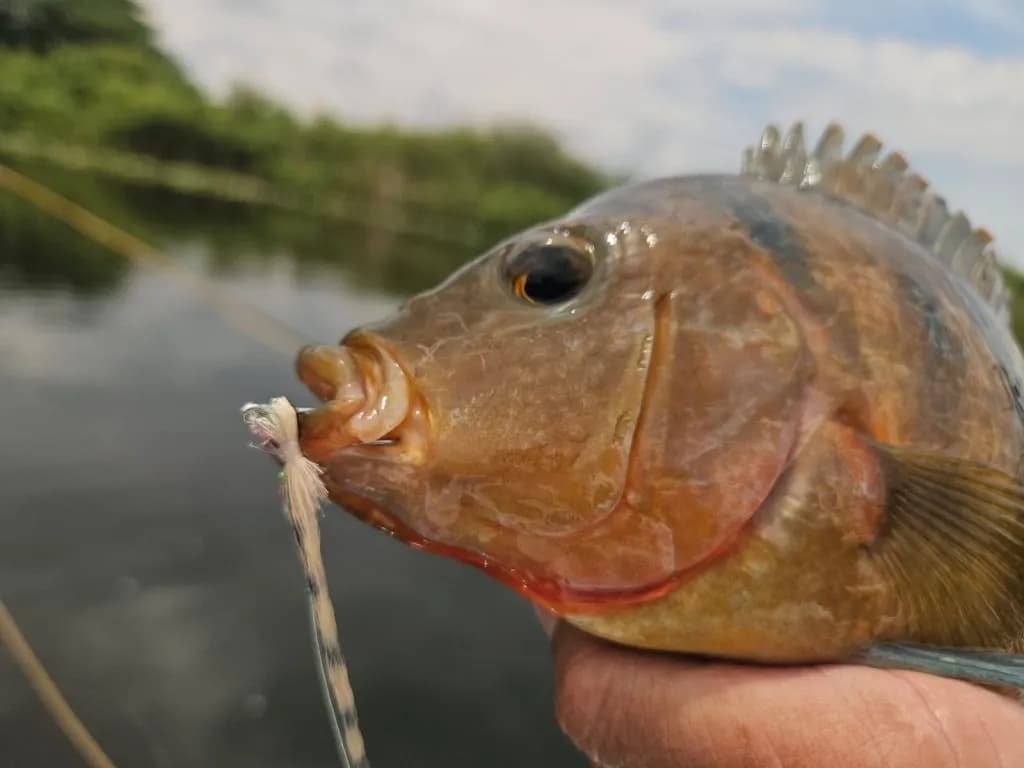
I took these to Alligator Alley in the middle of the Florida Everglades. I wasn’t alone. Capt. Justin Nguyen, a peacock bass specialist and guide, was there to help test the concept. He’s worked with well-known fly-fishing writer and tyer Joe Mahl on past trips, so the pedigree is there.
Shook has written books about fly fishing from the East Coast to Mexico. His work has garnered multiple awards. But does that translate to a fly you can tie yourself? The answer lies in the details he provided: tying instructions, a list of materials, and application advice.
For context, the NVR fly challenges the traditional method. You don’t need a vise to tie it. You just need hair, hooks, and the right technique. Shook welcomed any input on how the fly performed in saltwater and freshwater environments. He wanted to know if the "Frankie’s Surprise" bag held up for bonefish, and if the all-purpose patterns could handle the heavier strikes of largemouth bass.
The result was a package that felt less like marketing and more like data. The hooks were premium. The hair was pre-selected. The labels were clear. Shook didn’t just send a product; he sent a system.
This isn’t about replacing your entire fly box. It’s about having a reliable, no-vise option for specific species. If Shook’s method holds up in the Everglades, it might hold up in our local waters. The cost is in the time you save tying, and the money saved on materials.
The practical bottom line: Phil Shook’s Flicker NVR is a viable option for anglers who want to simplify their tying process without sacrificing performance. The hooks are strong, the hair is selected, and the labels tell you exactly what to expect. For those of us who fish both salt and fresh, it’s a flexible solution.
Keep up with Aspen
The day's Western Slope news, one email each morning. Free.