How Three Books Explain the Colorado River Water Crisis
Explore how key books by Norris Hundley Jr., Eric Kuhn, and Frank Waters reveal the political and scientific roots of the Colorado River's ongoing water crisis and aridity.
Aspen —The dust settles on the Grand Canyon differently than it does on the Delta County highway, but the feeling of aridity is the same. It’s a dry heat that pulls the moisture from your lips before you even realize you’re thirsty, a reminder that water here is never just a resource — it’s a negotiation, a history lesson, and increasingly, a source of anxiety. We talk about the Colorado as if it’s a static entity, a blue ribbon fixed on the map, but for those of us watching the reservoirs drop, it feels more like a living thing holding its breath, waiting to see if the seven states sharing it will finally stop fighting over who gets to drink first.
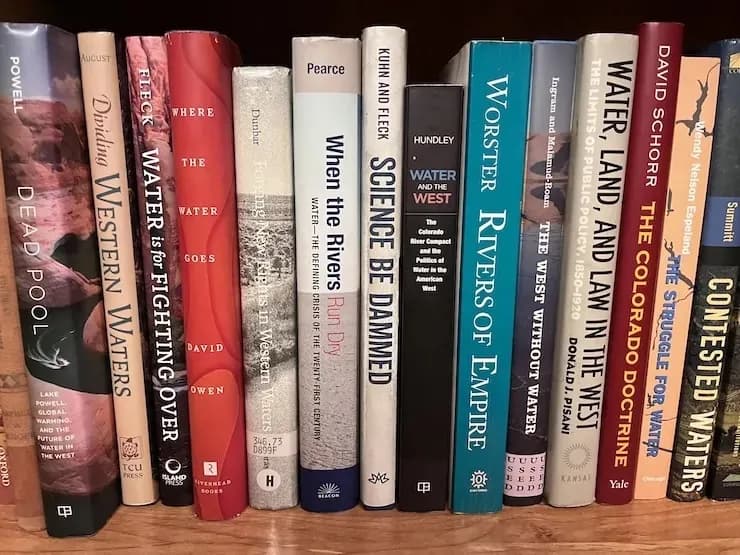
I treasure books on this subject. Not just as paper and ink, but as essential tools for understanding why our water bills rise and why the headlines about "California stealing our water" keep appearing despite the facts. The seven states are at loggerheads, each interpreting the Colorado River Compact of 1922 in ways that favor their own backyard, and the result is an impasse that threatens to shrink the waterway even further as climate-driven aridity tightens its grip on the Southwest.
If you want to understand the root of the conflict, you have to start with Norris Hundley Jr.’s Water and the West: The Colorado River Compact and the Politics of Water in the American West. The second edition, updated with a new preface, is the definitive text. Hundley, a historian, doesn’t just recount the political squabbles that led to the compact’s ratification in 1928; he exposes the baggage carried by that four-page document. It’s easy to skim the compact, but Hundley dives into the contentious politics of the time, showing how the division of waters was less a scientific certainty and more a political gamble. You can feel the weight of that history in the way we argue today.
Then there’s Science Be Dammed: How Ignoring Inconvenient Science Drained the Colorado River by Eric Kuhn and John Fleck. This 2019 book looks at the compact through the lens of hydrology, revealing how the creators based their divisions on optimistic, incorrect flow measurements. They had more realistic numbers at hand, but they chose the hopeful fantasy. That booster mentality — the belief that we could engineer our way out of nature’s limits, still drives our current problems. It’s a harsh truth, but one that explains why we’re here.
For a different perspective, Frank Waters’ The Colorado offers insights into the early history and culture of the flow, grounding the legal and scientific debates in the human experience of the basin.
Reading these books changes how you see the water. It stops being just something that comes out of the tap or fills the reservoirs, and starts being a story of human ambition, miscalculation, and the slow, steady pull of the desert. The next time you drive past the current on your way to Glenwood Springs, or look out at the drying fields in the valley, remember that the water you see is the result of a century of arguments, compromises, and yes, a few good books.
Keep up with Aspen
The day's Western Slope news, one email each morning. Free.
Aspen's ACES Returns Annual Harvest Party to Rock Bottom Ranch
Glenwood Ghostwalk Brings Frontier History to Life in Linwood Cemetery