Hudson Sued Over GEO Group Immigration Detention Center Zoning
An immigrant rights group sues Hudson, arguing the town has the authority to stop GEO Group’s $528.7 million immigration detention center despite federal claims of preemption.
Colorado —A $528.7 million contract. One small town. Twelve hundred beds.
The numbers don’t lie, but the town of Hudson certainly is trying to ignore them. This week, an immigrant rights group sued Hudson in Weld County District Court, arguing that the Trump administration and GEO Group are bypassing local law to turn a shuttered private prison into an immigration detention center. The lawsuit claims the town is powerless, but on paper, Hudson has the authority to stop it. It just hasn’t used it yet.
The facility sits 30 miles northeast of Denver in a community of roughly 1,600 people. Last week, GEO Group announced it had signed a five-year deal to operate the site as the Big Horn immigration detention center. The price tag is steep, but the zoning issue is sharper. The land is zoned for industrial uses. Detention centers and correctional facilities are not on that list.
Town officials say they don’t have approval authority over federal immigration detention operations at this private facility. They argue that because the facility is now serving a federal agency, local land use codes don’t apply. They’re relying on the fact that the facility closed in 2013 and has been vacant since. They’re also relying on the assumption that federal preemption shields them from local zoning disputes.
The lawsuit, filed by Together Colorado and Weld County resident Janet Carlson, says that logic is flawed. Workers rights group Towards Justice is litigating the case on their behalf. The suit points out that when the facility operated as a private prison for Alaska, it did so under a conditional use permit issued in 2008. That permit was approved by town voters through a ballot measure. The language is specific: “any proposed change to the specified use of the facility” must go back to the town government for approval.
David Seligman, executive director of Towards Justice and a Democrat who ran unsuccessfully for state attorney general earlier this year, says the town’s current stance is simply incorrect. “Hudson is not a bystander,” Seligman said in a statement. “The town has the authority and the obligation to act.”
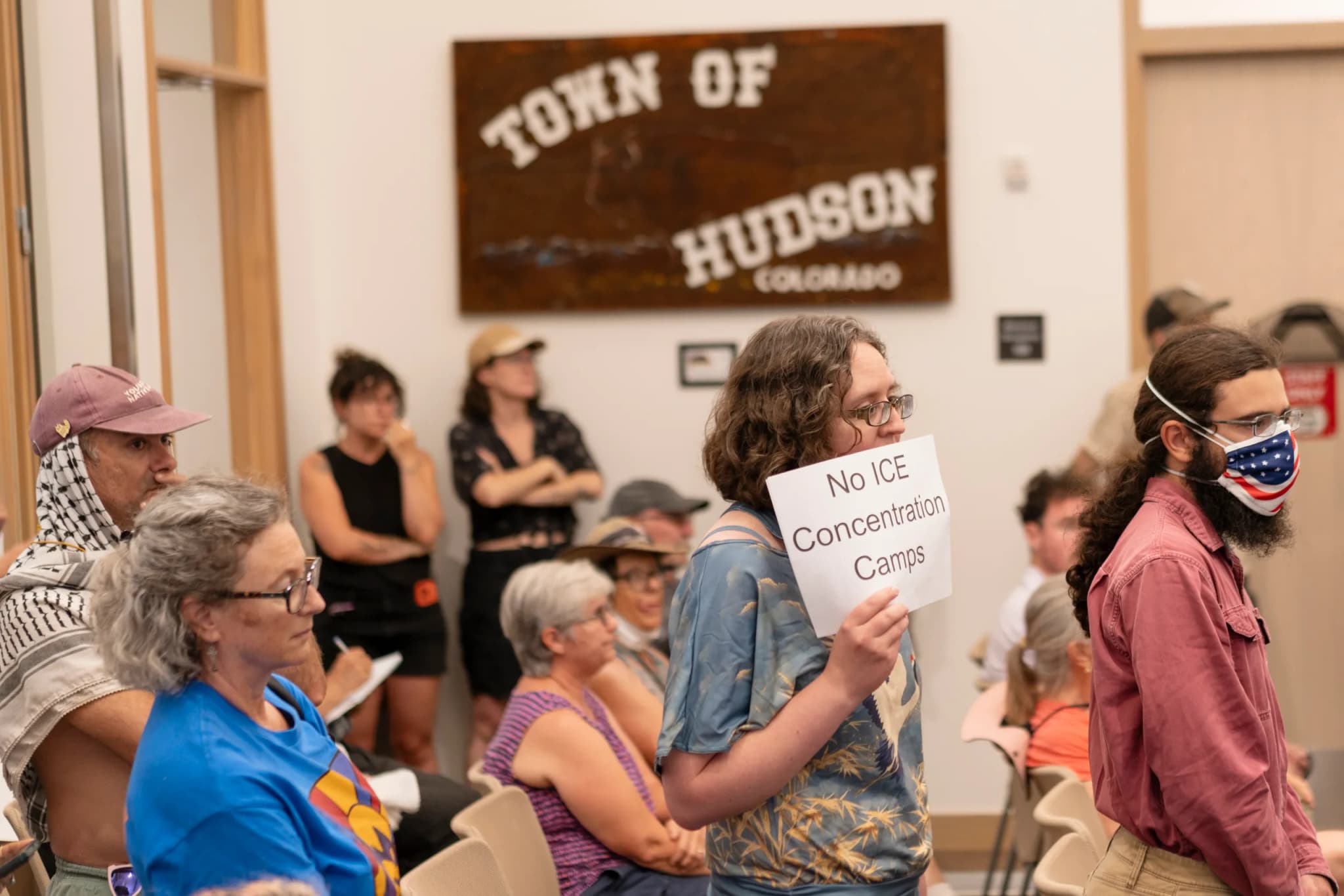
This isn’t just about zoning codes. It’s about control. The facility has been the site of months of protests. Locals packed last week’s town council meeting to voice their disgust with the project. They watched as officials shrugged off the federal contract, essentially saying, “Not our problem.” The lawsuit argues that Hudson is not powerless. It’s just choosing to be passive.
The property isn’t zoned for detention centers. The previous operator had a conditional use permit. That permit required town approval for changes in use. The facility closed in 2013. It’s been sitting empty. Now, GEO Group wants to fill it with 1,200 beds. The town says it can’t stop them. The lawsuit says the town can stop them.
Let’s do the math on the legal risk. If the court agrees with Together Colorado, Hudson could be forced to issue a special permit or deny GEO Group’s application. That doesn’t mean the detention center won’t open. It means Hudson gets a seat at the table. It means local voters, who approved the 2008 permit, get a say in whether their town becomes a federal holding pen.
Town officials did not immediately respond to messages seeking comment on the lawsuit. They remain quiet while the legal battle unfolds in Weld County District Court. For now, the facility remains a vacant building with a $528.7 million price tag and a zoning designation that doesn’t quite fit its new purpose.
The practical bottom line is this: Hudson has a legal argument that could delay or alter the project. It’s not a guaranteed win, but it’s a real one. The town isn’t just a location on a map anymore. It’s a party to the case. And if they lose, they pay for it in local governance, not just dollars and cents.
Keep up with Colorado
The day's Western Slope news, one email each morning. Free.


Federal Report Sets 200,000 Acre-Foot Water Conservation Target for Upper Basin

Colorado Parks and Wildlife Deploys Precision Drones for Weed Control