Hurd Promises Practical Governance for Rural Colorado
Candidate Hurd argues that rural Colorado voters prioritize practical results over political theater, focusing on geothermal energy, water rights, and bipartisan cooperation.
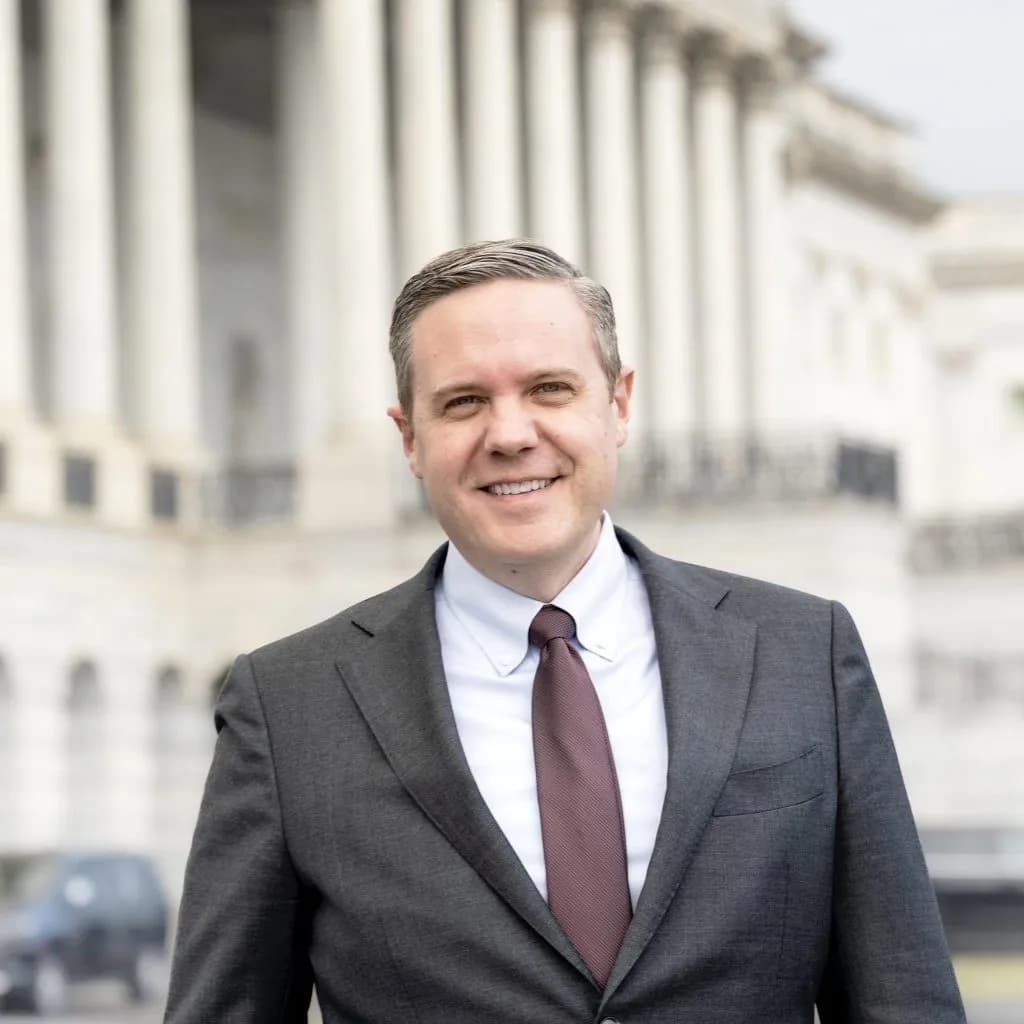
Aspen —The claim is simple: Washington doesn’t need another politician who spends half their time arguing on cable news and the other half fundraising.
That’s the pitch from Greg Gianforte’s colleague,或者说, in this specific context, the candidate is likely referring to a representative or senator running for Congress. Let’s look at the source material. The article is an opinion piece by "Hurd." If elected, Hurd promises to advocate for rural Colorado’s energy, water, safety, economy, and more.
It sounds like a standard campaign stump speech. But Hurd is making a specific counterintuitive argument: that the biggest barrier to progress in rural Colorado isn’t a lack of resources or even a lack of political will, but rather a lack of practical focus.
"Too often, Washington, D.C. rewards political theater over results," Hurd writes. "Most people in western and southern Colorado are far less interested in partisan arguments than they are in whether their elected officials are addressing the challenges they face every day."
That’s the hook. For folks in Delta, Montrose, or the San Juan Basin, the daily grind isn’t about the national debt ceiling or Supreme Court nominations. It’s about whether the water will be there for the alfalfa fields in June, and whether the grid holds up when the temperature drops.
Hurd argues that the 3rd Congressional District’s geographic diversity — from the Western Slope to the San Luis Valley, from the Arkansas Valley to the mountain communities of Garfield, Eagle, Routt, and Pitkin counties — creates a unique problem. Every town has different needs. But the solution is the same: practicality.
"Water remains one of the most important issues facing our region," Hurd says. "Agriculture, recreation, tourism and our local economies all depend on reliable water supplies."
The specific policy move here is preserving historic Shoshone water rights and supporting investments for drought resilience in the Colorado River Basin. That’s not just abstract environmentalism. That’s about keeping the ski resorts open and the farmers solvent.
Then there’s energy. The narrative in D.C. often pits renewables against reliability. Hurd wants an "all-of-the-above" strategy. The specific win mentioned is bipartisan legislation to improve the permitting process for geothermal energy.
"Geothermal has enormous potential in Colorado and across the West, but unnecessary delays and bureaucratic hurdles have slowed projects for too long," Hurd notes.
This is the kind of detail that matters to locals. If you’re in a rural county with geothermal potential, you don’t need another study. You need a permit that doesn’t sit in a drawer for five years. Hurd is arguing that the bureaucracy is the enemy, not the energy source itself.
The article also touches on federal land management and wildfire mitigation. Again, the theme is local voice. "Too often, policies are developed by people who have never lived in the communities affected by them," Hurd says. "I believe local communities deserve a seat at the table."
It’s a familiar refrain, but Hurd backs it up with a specific claim: bipartisan cooperation. "My first bill was signed into law with unanimous support in both the House and Senate."
That’s the contrarian angle. In an era of extreme polarization, Hurd is betting that rural voters care more about a bill that passes than a bill that passes with their party’s logo on it.
"We can responsibly develop our energy resources while protecting our environment and public lands," Hurd asserts.
The question is whether that bipartisan promise holds up when the rubber meets the road. Can a single representative really cut through the federal red tape for geothermal or water rights? The answer will come when the permits start getting stamped. But for now, the pitch is clear: stop the theater, start the work.
"If elected, I’ll advocate for rural Colorado’s energy, water, safety, economy and more in Congress," Hurd says. It’s a big list. But the promise is that the advocacy will be practical, not performative.
Keep up with Aspen
The day's Western Slope news, one email each morning. Free.