Iran Strikes Gulf Bases as US Blockade Drives Gas Prices Up
Iranian missiles hit Kuwait and Bahrain while US strikes radar sites, causing a fragile ceasefire to fray and driving global gas prices higher amid port blockades.
Aspen —Why are your gas prices still climbing while Washington argues over a ceasefire that keeps breaking?
The short answer: because the Gulf is still shooting at itself.
Iran fired ballistic missiles and drones at Bahrain and Kuwait early Saturday. Bahrain’s government called the strikes intercepted. They labeled Tehran’s moves a “serious escalation.”
Iran fired back at the U.S.
The U.S. military struck Iranian surveillance facilities on Qeshm Island and near Sirik. Tehran called it a violation of the fragile ceasefire. The U.S. said the drones posed an immediate threat to regional maritime traffic.
This isn’t a drill. It’s a daily reminder that the pause in fighting is thinner than a sheet of glass.
The U.S. Central Command confirmed hits on radar sites. One was on an island in the Strait of Hormuz. The goal was simple: defend against further attacks. The result? More tension. More uncertainty.
Iran’s Revolutionary Guard targeted the Ali Al Salem air base in Kuwait. That base hosts U.S. forces. They also hit the U.S. Navy’s 5th Fleet in Bahrain. The U.S. military reported no harm to U.S. personnel. Yet.
Earlier this week, Iranian drones heavily damaged a passenger terminal at Kuwait’s main airport. One person died. Dozens were wounded. The infrastructure is taking a beating. The people are paying the price.
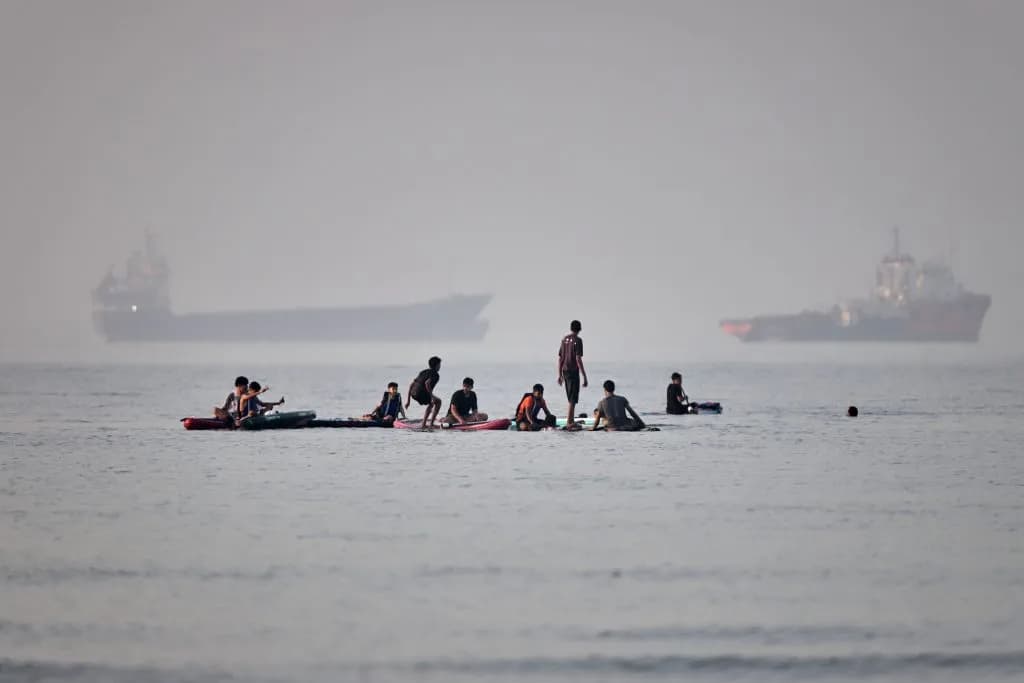
The U.S. military kept up its blockade on Iranian ports. Tehran has a chokehold on the crucial corridor for global oil and natural gas shipments. Energy prices are spiking. That’s not a prediction. It’s a fact.
President Donald Trump knows this. He’s facing political problems ahead of midterm congressional elections. His Republican Party is watching. The voters are feeling the pinch at the pump.
Trump told reporters Friday that “the situation with Iran seems to be going quite well.” He promised a quick end to the conflict. “We’re going to come out of Iran very quickly,” he said. “It’s going to be very strong one way or another.”
But the situation is deteriorating.
U.S. and Iranian negotiators reached a tentative agreement a week ago. They planned to extend the ceasefire by 60 days. They planned to start talks on Iran’s nuclear program. Trump wants unspecified changes. Iranian officials haven’t agreed publicly.
Trump blamed the delay on Iran. “It’s a very hard thing for them,” he told NBC’s “Meet the Press.”
The short version: neither side is blinking.
The blockade on Iranian ports continues. The attacks on Gulf neighbors continue. The global economy strains under the weight of disrupted energy flows.
Locals in the Western Slope don’t just see headlines. They see the cost of doing business rise. They witness the supply chain tighten. They observe the uncertainty in the eyes of their neighbors.
The ceasefire is fragile. The exchange of fire proves it.
Trump says it’s going well. The missiles say otherwise.
The U.S. struck radar sites. Iran struck air bases. The cycle repeats. The question isn’t whether the next missile will land. It’s who pays when it does.
The global economy is already strained. Hunger threatens vulnerable countries. The political stakes are high.
Read that again.
The U.S. military claims no harm to personnel. Iran claims violation of sovereignty. Both sides are right. Both sides are wrong.
The blockade holds. The drones fly. The prices rise.
That’s the reality on the ground. And in the air.
The ceasefire isn’t collapsing. It’s being tested. And it’s failing.
Keep up with Aspen
The day's Western Slope news, one email each morning. Free.


The digital counter on the side of the bus in Carbondale ticks over, but the seats inside are half-empty

Eagle County Launches Aging Well Roadmap To Keep Seniors Housed