John Young Built Snowmass Infrastructure During Brutal 1978 Winter
John Young left Sears for a $2.50 trail job, then built Snowmass Village’s police, roads, and 172 homes during a record-breaking winter.
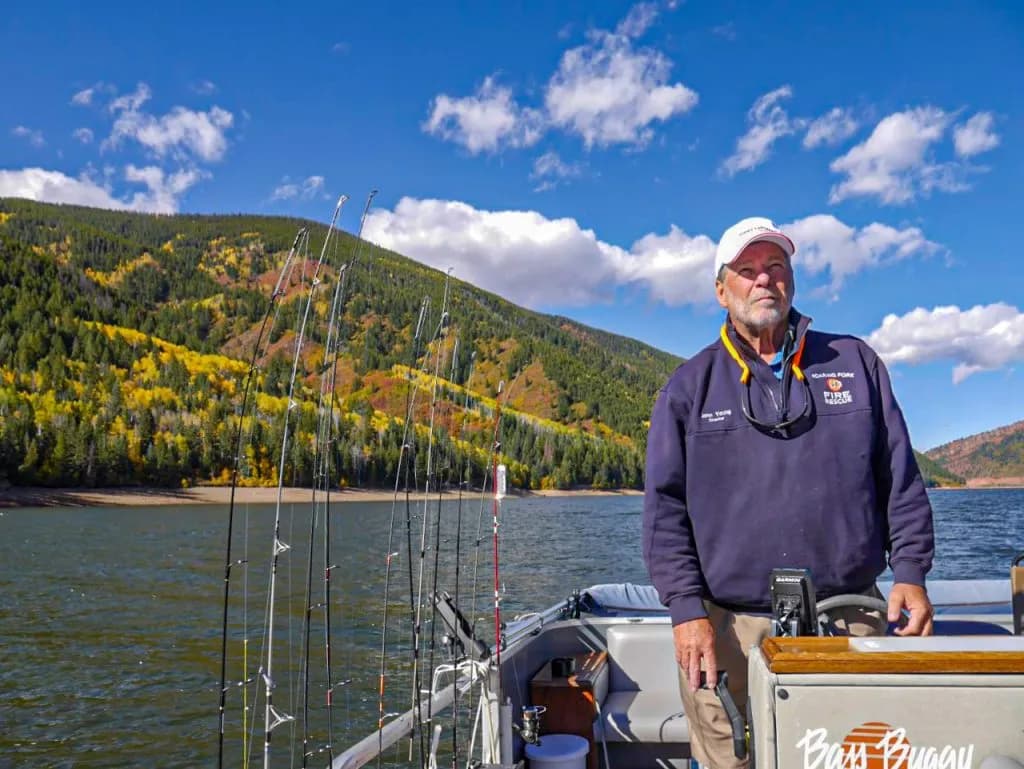
Gunnison —Forty straight days of snow. That was the winter of 1977–78 in Pitkin County, a stretch so relentless that the ground barely showed itself between Thanksgiving and New Year’s. For John Young, who had arrived in Aspen just two years prior, it was a proving ground. He wasn’t managing a corporate office anymore; he was keeping county roads open while the sky poured white.
Young’s path to that winter was anything but linear. In 1975, he left a management role at Sears Roebuck for a job digging trails for Pitkin County at $2.50 an hour. He packed his life into a Chevy Impala, headed west, and landed in the West End of Aspen. From there, the roles stacked up: terminal manager, trails director, assistant airport manager, and finally, road and bridge director.
The transition to leadership came with a dash of luck and a lot of confidence. When Snowmass Village began searching for its first town manager, Young was asked if their roads could match the quality of the county’s the following winter. He said, “Absolutely.” He believes that answer helped him beat out 147 other applicants.
Building a town from scratch meant creating the skeleton of government. Young oversaw the formation of the police department, the transportation system, the road department, the building office, and the planning office. It was a period of intense civic construction, where the goal was to establish a functional, self-governing entity.
Two specific achievements stand out from that era. First, the creation of a community-oriented police department. The philosophy was that officers were there to help people, not just to enforce laws. That approach has stuck for over 40 years. Second, the annexation of the Snowmass ski area. This expanded the town’s footprint from roughly 3,000 acres to 9,000 acres. It gave the village more control over its future and helped turn Snowmass into a world-class resort. Young credits Dave Myler, the town’s attorney, as the true architect of that deal. It required everyone to swim in the same direction.
Housing was the third pillar. During his nine years in the role, the town built 172 units. The logic was simple: a major resort cannot function if it cannot house its own workforce. Tom Baker, Pitkin County’s housing director, summed it up best: “John, in Aspen, we talk about housing. In Snowmass, you build it.”
Let’s do the math on that distinction. Talking is cheap. Building costs money, requires permits, and takes time. By 1986, when Young left the role, the town had a police force, a road network, a planning office, and 172 new homes. It was a small town with big infrastructure.
The story doesn’t end there. Young’s career continued to move in unexpected directions after Snowmass. But the foundation was laid in those early years. He watched the valley change for five decades. He saw the shifts in industry, the growth of population, and the evolution of governance. But one thing remained constant.
He remains fascinated by the people who make the valley remarkable. And he is certain about the one thing that never will.
The mountains.
They don’t move. They don’t negotiate. They don’t care about your budget or your timeline. They just sit there, massive and immovable. For a town built in their shadow, that’s both a blessing and a burden. It gives you identity. It limits your options.
In practice, that means every major decision has to account for the terrain. You can’t just build anywhere. You have to work with the land, not against it. That’s a constraint that never goes away.
For locals, the bottom line is this: the infrastructure you rely on today was built by people who understood that constraint. They didn’t fight the mountains. They worked around them. And that’s why the roads are still open, the police are still helping, and the housing is still standing.
It’s not magic. It’s math. And the math hasn’t changed in fifty years.
Keep up with Gunnison
The day's Western Slope news, one email each morning. Free.
Carbondale Teacher and Redstone Leader Janette Bier Passes
Glenwood Man Climbs Mount Sopris to Save Florida Theatre