Colorado House Speaker Julie McCluskie Ends Term
Julie McCluskie's time as Colorado House Speaker is ending due to term limits. Her legacy is still being written, but she used her position to amplify Western Slope issues.
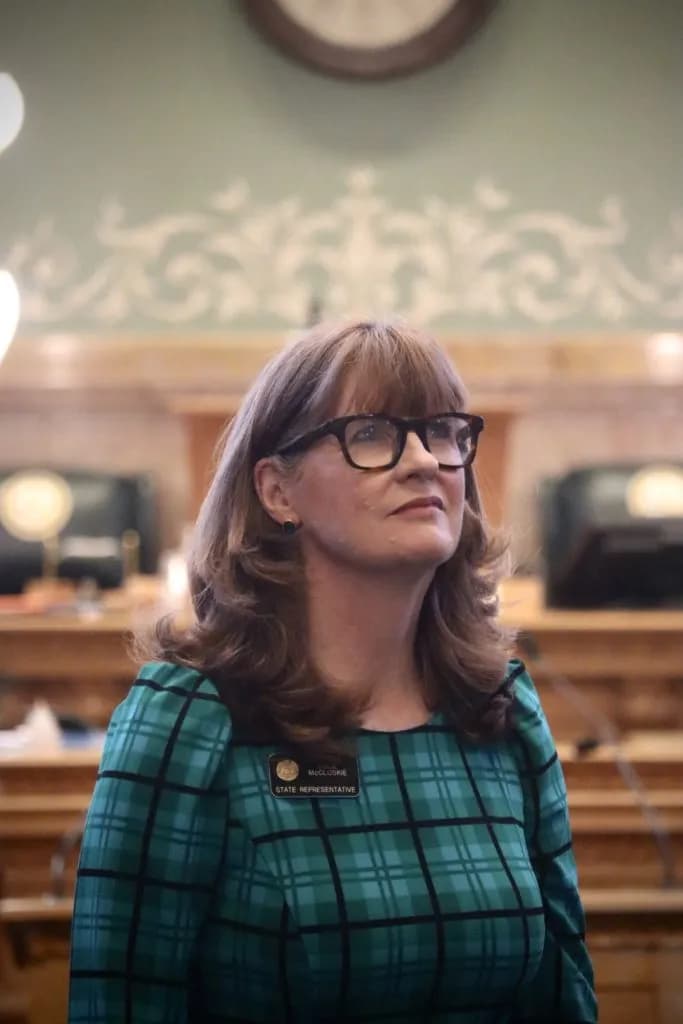
Glenwood Springs —Julie McCluskie's time as Colorado House Speaker is ending — term limits will force her out in January. Her legacy is still being written, but McCluskie used her position to amplify Western Slope issues. McCluskie, a Democrat from Dillon, represents a sprawling district that includes Summit, Grand, Jackson, Lake, Park, and Chaffee counties.
Make no mistake, McCluskie's role was a balancing act. She had to navigate the needs of her rural district while leading a large Democratic majority in the House. Rep. Matt Soper, a Delta Republican, acknowledges the benefits of having a Western Slope representative in a powerful position: "The Western Slope got far more benefit by her being speaker than we ever would have if she had never been speaker."
In May 2023, McCluskie pushed a bill to delay the reintroduction of grey wolves until Colorado could secure federal permission to kill wolves that attack livestock. The bill passed with bipartisan support but was vetoed by Gov. Jared Polis. McCluskie says she used her "bully pulpit" to give the issue attention — a rare instance where she could prioritize her district's needs.
McCluskie's leadership style has been criticized, particularly regarding transparency and speech. She and other Democrats have passed legislation exempting the legislature from parts of the state's open meetings law and limited floor debate. These decisions have exposed fault lines within the Democratic party. The short version: McCluskie's leadership has been marked by significant policy wins for her party, but also challenges in balancing the needs of her district and the House. As she prepares to leave office, it's worth watching how her legacy will be remembered, particularly in the Western Slope, where her impact has been most felt. Rep. Soper's assessment of the speaker's role is blunt: "Probably the worst job in Colorado is to be speaker of the House... Speakers never go on to do anything really significant in politics after they've been speaker."
McCluskie's district is diverse, covering both mountain resorts and rural communities. Her ability to navigate these different interests has been tested, particularly on issues like wolf reintroduction. The veto of her bill in 2023 highlights the challenges of balancing local needs with state-level decision-making.
As McCluskie's term ends, the community will be watching to see how her legacy plays out. Her accomplishments and challenges in the speaker's role will undoubtedly shape the Western Slope's relationship with the state legislature. Read that again: McCluskie's position has given the Western Slope a voice in the state legislature. Her ability to prioritize local issues has been a rare occurrence, and her leadership style has been subject to criticism. The question remains: what will be the lasting impact on the Western Slope?
Keep up with Glenwood Springs
The day's Western Slope news, one email each morning. Free.