Colorado Allocates $2.5 Million for Wolf Management in 2024
Colorado House speaker Julie McCluskie secures $2.5 million for wolf management, prioritizing Western Slope concerns and rural community needs
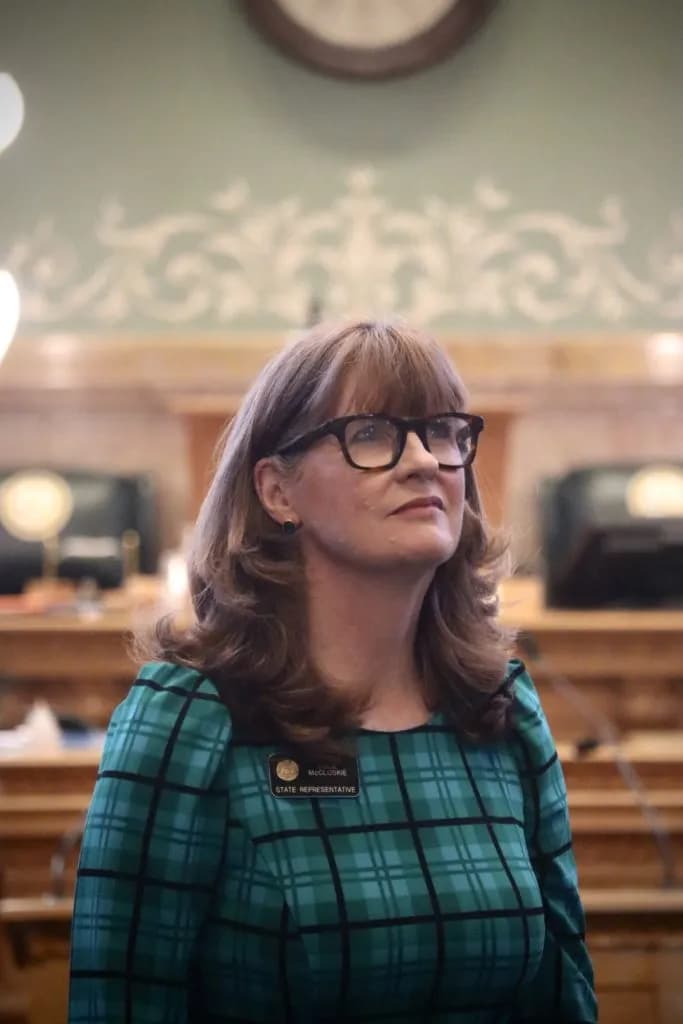
Aspen —$2.5 million — that's what the state will spend on wolf management in 2024, a direct result of Julie McCluskie's efforts to prioritize Western Slope concerns. McCluskie, the first woman from the Western Slope to serve as Colorado House speaker, made it her mission to give rural communities a voice in the state legislature. Her time as speaker has been marked by a delicate balancing act — pushing for policies that benefit her district while keeping the House's 64 other members in line.
McCluskie's district includes Summit, Grand, Jackson, Lake, Park, and Chaffee counties, areas that will be directly impacted by the reintroduction of grey wolves. She championed a bill that would have delayed the reintroduction until Colorado secured the ability to kill wolves that attack livestock. The bill passed the House with bipartisan support, but was ultimately vetoed by Gov. Jared Polis. McCluskie says she used her "bully pulpit" to bring attention to the issue, proving that even in a powerful position, she remains committed to her constituents.
Rep. Matt Soper, a Delta Republican, credits McCluskie's leadership with elevating rural issues that might have otherwise been overlooked. "The Western Slope got far more benefit by her being speaker than we ever would have if she had never been speaker," he says. Soper often works with McCluskie on legislation affecting rural Colorado, and notes that her position as a rural lawmaker and one of the most powerful politicians in the state has been a significant advantage for the region.
McCluskie's tenure as speaker has not been without its challenges. She's had to navigate the complexities of leading a large Democratic House majority, delivering major policy wins for her party while also exposing fault lines within the membership. She's faced criticism over transparency and speech, including passing legislation to exempt the legislature from aspects of the state's open meetings law. Despite this, McCluskie remains committed to her guiding principle: using her position to amplify the voices of her constituents.
As she enters her final year as a state representative, McCluskie's legacy as a champion for rural Colorado is cemented. Her ability to bring attention to critical issues, like wolf management, has made a tangible impact on the region. The question now is; who will fill the void she leaves behind? Make no mistake, McCluskie's departure will be felt, and it's worth watching to see how her successor will prioritize the needs of rural communities.
The short version: McCluskie's time as speaker has been marked by a commitment to her constituents and a willingness to take on tough issues. Her legacy will be measured by the impact she's had on the region, and the policies she's helped shape will continue to affect rural areas for years to come. Read that again - $2.5 million for wolf management is a significant investment that will have lasting effects. The real test will be how the state continues to support rural communities in the face of growing challenges.
As McCluskie looks to the future, she's clear about her priorities. "I do think the speaker has a duty to every member in the House. not just their own caucus, not just their own agenda," she says. This sense of duty has guided her time as speaker, and will undoubtedly shape her legacy as a voice for the people she represents. The community will be watching to see how her successor will build on the foundation she's laid, and whether they will continue to prioritize the needs of folks around here. McCluskie's impact on rural Colorado will be felt for years to come.
Keep up with Aspen
The day's Western Slope news, one email each morning. Free.