Kawuneeche Valley Restoration Collaborative Invests $4M to Restore Beaver Habitat
A $4 million collaborative effort led by Northern Water and Rocky Mountain National Park aims to restore the Kawuneeche Valley's wetland ecosystem by managing moose populations and reintroducing beavers to improve drought resilience.
Steamboat Springs —Have you ever stood in the shadow of the Never Summer Mountains and wondered why the land looks so tired, even when the snowpack is deep? It’s a question that keeps local water managers and ecologists up at night, especially as the Colorado River headwaters face increasingly erratic flows. The answer isn’t just about how much water falls from the sky; it’s about how we’ve forgotten to let the landscape hold onto it.
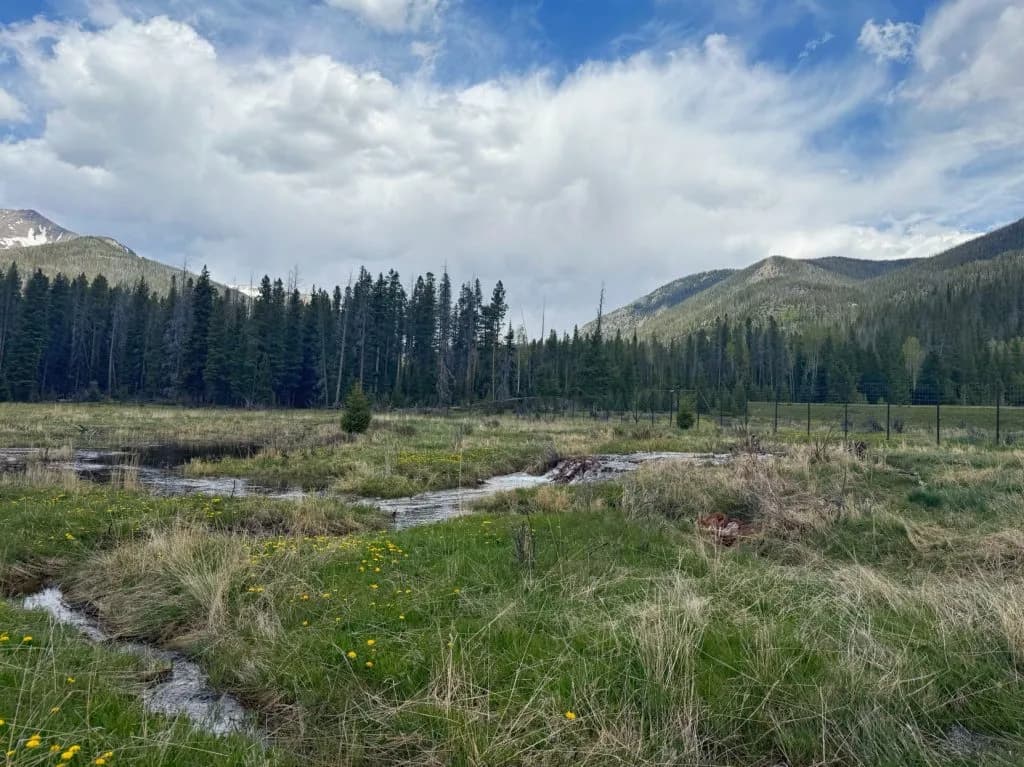
The story of the Kawuneeche Valley, that ribbon of land stretching from the high alpine down to Shadow Mountain Reservoir, is a story of loss and, now, a cautious return. You can feel the history in the soil here. Decades ago, this valley was a lush, eight-mile-long wetland, thick with tall willows and bustling with hundreds of beavers. It was a natural sponge, soaking up spring runoff and releasing it slowly through the dry months. But then, the balance shifted. Overgrazing by elk and moose, combined with neglected irrigation systems and changing hydrology, stripped the valley bare. The willows became “zombie willows” — ancient, skeletal structures surviving on stored sugar but no longer growing, unable to support the ecosystem they once anchored.
Now, a coalition of Northern Water, Rocky Mountain National Park, Colorado State University, and several other partners is trying to rewrite that ending. They’ve formed the Kawuneeche Valley Restoration Collaborative, raising over $4 million to restore the habitat and invite the beavers back. It’s not just a scientific exercise; it’s a practical response to the drought that has gripped our region.
I recently joined a tour of the first project site at Beaver Creek, where a tall, imposing fence marks a 35-acre perimeter. This isn’t just any fence; it’s a barrier designed to keep out the very creatures that helped dismantle the old ecosystem. Chris Clatterbuck, the natural resources program manager at Rocky Mountain National Park, pointed out that moose are “a perfectly-designed willow-eating machine.” Since their reintroduction in the late 1970s, without natural predators like wolves or grizzlies to keep their numbers in check, moose populations flourished and decimated the willow stands. The fence keeps them out, allowing the willows to recover and, eventually, for the beavers to return and do what they do best: build dams, slow the water, and create wetlands.
Jeremy Shaw, a research scientist with Colorado State University who has led these restoration efforts, puts it simply: “A healthy and functioning wetland is a sponge. It is a fire break. It is a drought resilience machine.” When you look at the current state of the valley, you see the rough edges of this transition. The ground is still dry in patches, and the new growth is fragile. But the intent is clear. By restoring the beaver habitat, they are trapping sediment and nutrients, outputting clean, reliable water, and slowing down the flow. It’s a lesson in humility, really. We’ve spent years trying to control water with concrete and pipes, but the beavers have been doing it for millennia with sticks and mud.
The collaborative isn’t stopping at Beaver Creek. They’re planning three additional sites within the national park, each one a small victory against the encroaching dryness. It’s a reminder that resilience isn’t just about enduring the heat; it’s about rebuilding the systems that make life possible. As the sun sets over the Kawuneeche Valley, the light catches the still water in the restored areas, reflecting the sky in a way that feels less like a memory and more like a promise.
Keep up with Steamboat Springs
The day's Western Slope news, one email each morning. Free.