Las Animas Democrats Fight Back on Rural Dirt Roads
Las Animas County Democrats are rebuilding local presence through personal outreach on dirt roads, arguing that candidates must drive to rural voters to reverse decades of political neglect.
The wind off the high plains carries a dry, dusty weight in September, kicking up fine grit against the windows of cars traveling the long stretch of highway that separates the valley from the New Mexico border. In Las Animas County, the largest county in Colorado by land area but home to fewer than 15,000 people, the landscape is a vast, open expanse where the horizon seems to stretch forever. It’s a place that often feels forgotten by those in the Front Range, a sentiment captured by Hallie Baca, treasurer of the county party and daughter of chair Pam Espinoza. “They think Colorado ends at Pueblo,” Baca quipped, highlighting the geographic and political isolation that defines life in this corner of the state.
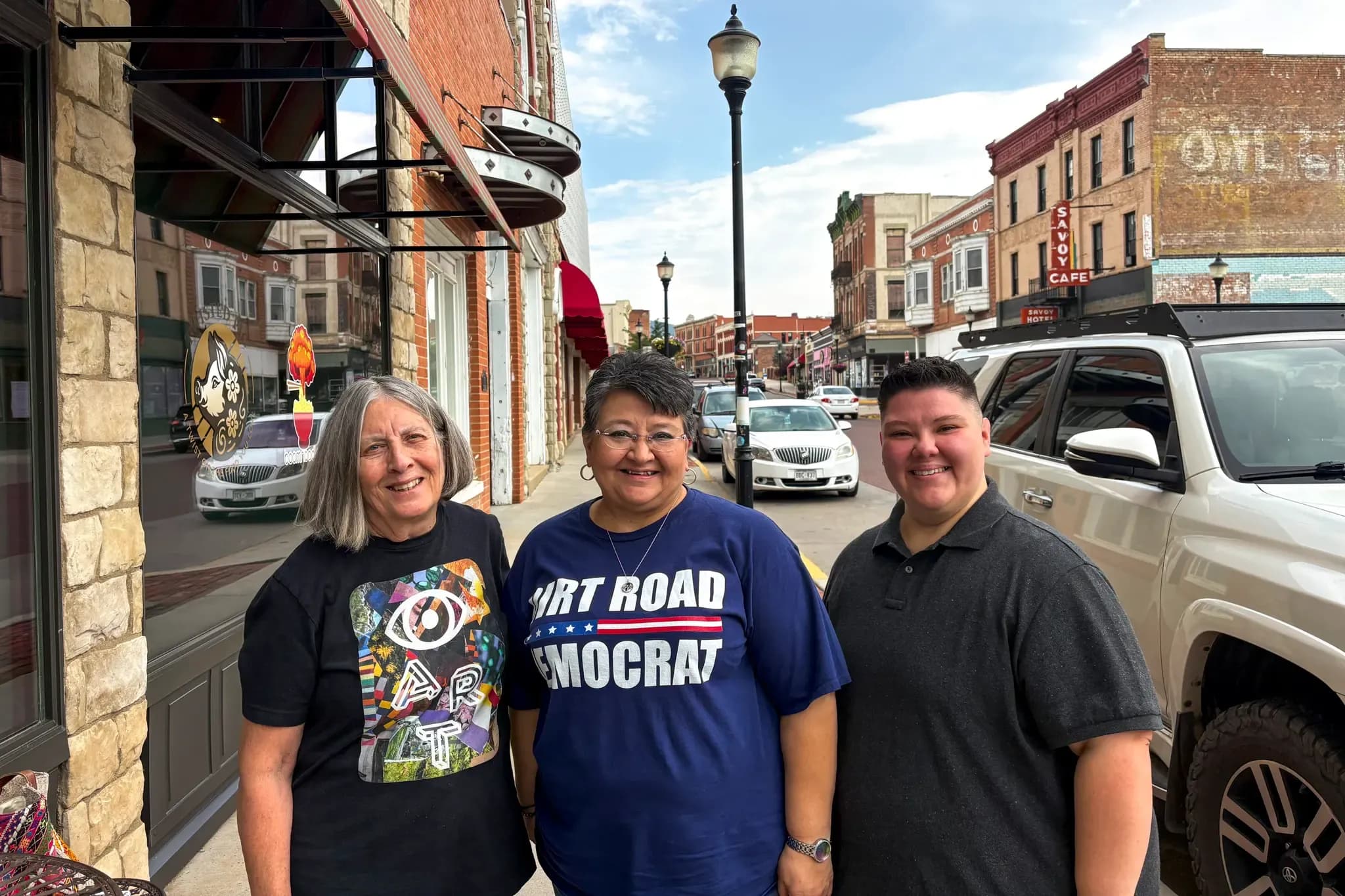
This sense of being overlooked is central to a broader question facing the Democratic Party: how do you win back voters in rural Colorado? The Colorado Sun reported on this struggle, noting that while registered Democrats slightly outnumber Republicans in the county, the political tide has shifted decisively red. Donald Trump won it three times. Espinoza, who learned her politics at her father’s knee — driving dirt roads and holding conversations in church basements — describes the local political landscape not as a binary choice, but as an ombre. “You run from the palest of blue to the color of my shirt and everything in between,” she explained. Her dark blue t-shirt, emblazoned with the words “Dirt Road Democrat,” serves as a physical manifesto for this nuanced reality. It is a nod to rural roots, a rejection of the assumption that people in these communities would trade their cherished dirt roads for pavement.
The challenge, as Espinoza sees it, is communication. The party must figure out how to talk to everyone across that spectrum of political belief. But the mechanics of rural campaigning are fundamentally different from those in urban centers. Baca pointed out that while a Denver Democrat can reach their neighbor by walking twenty feet, in the county, reaching someone often means driving twenty miles. This distance creates a logistical barrier that national and state-level strategists frequently ignore.
Dea Jacobson, chair of the Delta County Democrats on the Western Slope, acknowledges that this disconnect makes sense from a purely strategic standpoint. She noted that candidates are advised to go where the votes are. “Nobody who is consulting with a candidate is going to tell them to spend two days driving around in an area where they might get a handful of votes where they could go to a bigger county,” Jacobson said. She used to work for Ben Nighthorse Campbell, a rural Democrat who famously switched parties in 1995. For Jacobson, the logic is clear: time and money are finite resources. But she admits that this strategy has come at a cost, leaving rural communities feeling like afterthoughts rather than core constituencies.
The Democratic Party’s retreat from these areas is part of a broader trend across the state, affecting various types of rural communities, from the empty beauty of the plains to the high-altitude desert of the San Luis Valley and small mountain towns supporting farming and recreation. The loss isn't just about ideology; it's about presence. When candidates don’t show up, the message is clear: your vote doesn't matter enough to justify the drive.
For Espinoza and Baca, the work is slow and personal. It happens on front porches and in living rooms, not at podiums. The challenge for the party is to bridge the gap between the "palest of blue" and the deep, textured reality of rural life. Until then, the dirt roads remain, cherished by those who live on them, waiting for politicians to finally make the drive. The dust settles in the late afternoon light, coating the dashboard of a parked car outside a small farmhouse, a quiet reminder that while the politics may be distant, the land is not.
Keep up with the Western Slope
The day's Western Slope news, one email each morning. Free.