Western Slope Fishing Season Threatened by Drought
The Western Slope's fishing season is under threat due to low water levels on local rivers like the Yampa, caused by a dismal snowpack. Guides are adapting to the new reality, but the future of the river hangs in the balance.
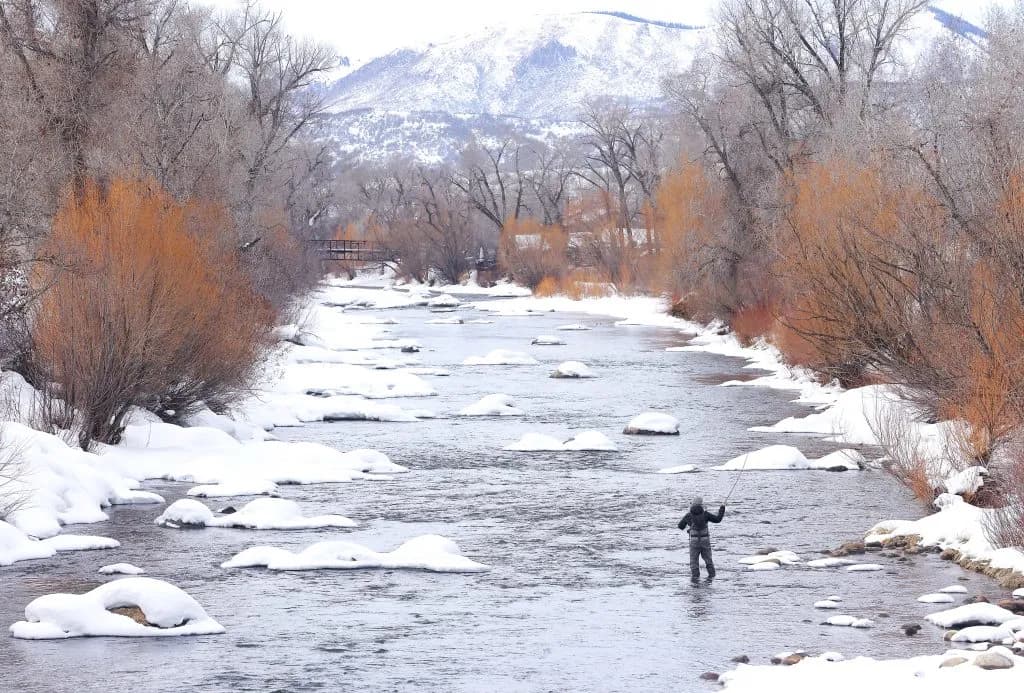
Steamboat Springs —Make no mistake, the Western Slope's fishing season is in trouble. Low water levels on local rivers like the Yampa will force guides to adapt — and fast. The culprit: a dismal snowpack that fell far short of the 10-year average. Just 171 inches of snow fell this winter, down from 289 inches typically. That's what Delta County spends on road maintenance in a year — a stark reminder of the drought's impact.
Guides are bracing for the worst. "Devastating," "worrying," and "unsettling" are the words they use to describe the upcoming season. Ryan Herbert, owner of Yampa Valley Anglers, says they're undertaking "historic preparations" for the drought. But even he admits, "it's not looking good." The last three winters were a different story, with snowfall totals of 302, 389, and 448 inches, respectively. This year's total is a far cry from that.
The Yampa River, a staple for local anglers, will be particularly hard hit. Guides like Johnny Spillane are already planning for alternative fishing spots, including high alpine streams and lakes. "We need to pay attention to what's safe for the fish," Spillane says. That means avoiding the Yampa during the hottest part of the day, when water temperatures can skyrocket. Once temperatures hit 66 or 67 degrees, it's game over for trout. At 68 degrees, guide Jon Almen won't even touch the river.
The short version: expect early morning fishing trips to become the norm. Guides will be carrying thermometers to check water temperatures, and clients may need to get used to still-water fishing. It's not ideal, but as Scott Graham, manager at North Park Anglers, says, "we can't push the issue." The community will have to adapt to a new reality, one where the Yampa River is no longer the go-to spot for fishing.
Read that again: the Yampa River, a river that's fed by winter snowpack, is on the brink of disaster. The historic low snowfall winter of 1980-81 saw just 133 inches of snow. This year's total isn't much better. Guides are pivoting to other spots, like the Flat Tops and Buffalo Pass, or even venturing into Utah to fish the Green River. It's a drastic measure, but one that's necessary given the circumstances.
The situation is worth watching, folks. As the summer months approach, local fishing guides will be keeping a close eye on water levels and temperatures. It's not just about the fishing; it's about the health of the river ecosystem. When guides like Almen say they won't touch the river at certain temperatures, it's a stark reminder of the delicate balance at play. The question is, what will happen to the Yampa River if this drought continues? The fate of the river hangs in the balance, and its future is far from certain.
A New Normal for Fishing Guides
Guides are game-planning for the summer, looking for alternative spots to take clients. Some, like Graham, are setting their sights on lake fishing and smallmouth bass and pike. Others, like Almen, are venturing into Utah to fish the Green River. It's a new reality, one where the Yampa River is no longer the top spot for fishing. As Spillane says, "we're very fortunate that we have so many other safer options than the Yampa." But make no mistake, the Yampa River is still a vital part of the local ecosystem, and its health is worth fighting for. Johnny Spillane's comment that "we need to pay attention to what's safe for the fish" will be crucial in the coming months, as fishing guides on the Western Slope navigate uncharted territory.
The community will have to come together to support the guides and the river. That means being mindful of water temperatures, avoiding the river during the hottest part of the day, and supporting local guides who are adapting to the new reality. It's not going to be easy, but as Herbert says, "we're hoping on a wet spring" to turn things around. Until then, local fishing guides will be doing everything they can to make the most of a bad situation. The real test will be what happens next, will the community rally around the Yampa River, or will it become a relic of the past?
Keep up with Steamboat Springs
The day's Western Slope news, one email each morning. Free.