Magpies Thrive in Local Ecosystem
Discover the fascinating world of magpies and their vital role in our local ecosystem, challenging common perceptions and highlighting their intelligence and adaptability.
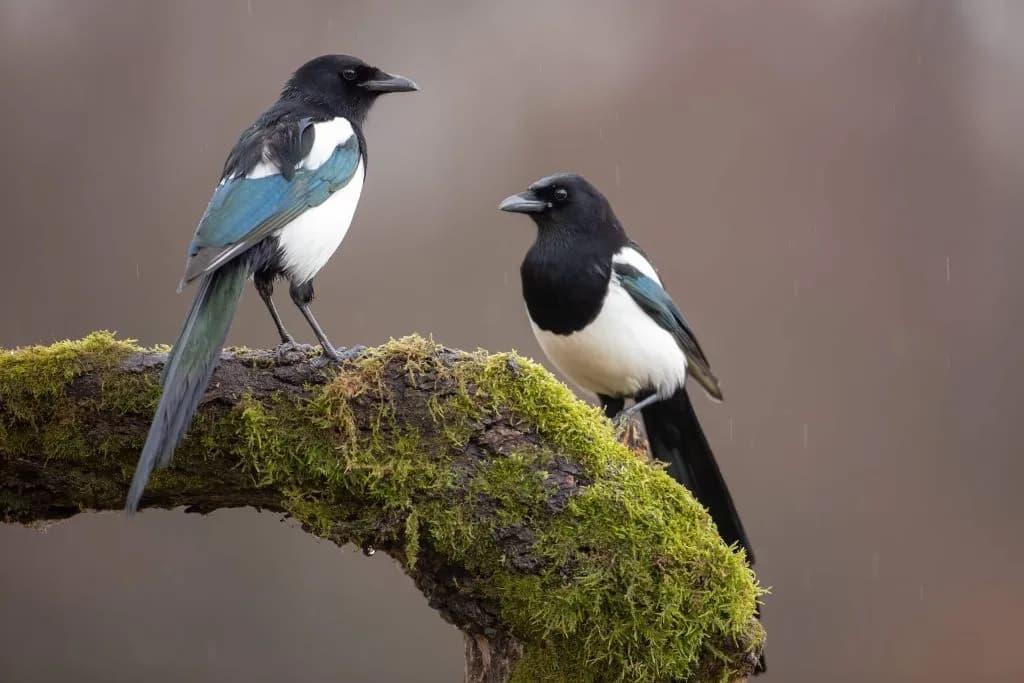
Aspen —As I step out into the crisp morning air, the sun casting a warm glow over the landscape, I'm greeted by the unmistakable calls of black-billed magpies, their distinctive chatter filling the air, a cacophony of sound that's both familiar and comforting, like the smell of freshly brewed coffee wafting from a nearby café. The trees, still adorned with the remnants of winter's chill, stand tall, their branches etched against the sky like a delicate pen and ink drawing, as the magpies flit between them, their iridescent feathers catching the light, sending shivers of blue and green dancing across the ground. It's a sight that never fails to captivate, a reminder of the beauty that's always present, if we only take the time to look, to really see, to appreciate the intricate web of life that surrounds us.
What is it about certain creatures that leads us to view them as pests, as less valuable than others? Is it the frequency with which we encounter them, or the perceived utility they provide? Take, for example, the humble dandelion, a weed to some, but a vital source of food for pollinators, with deep roots that improve soil health, and in this way, they play a crucial role in the ecosystem. I recall a conversation with a farmer who waged war against these very same dandelions, seeing them as a nuisance, a threat to his carefully manicured fields, but what if, instead of focusing on their perceived utility, we were to value the intelligence, the adaptability, of creatures like the magpie, a bird that's often maligned, misunderstood, but, as I've come to realize, truly remarkable.
As I walk through the campus of Walking Mountains, I'm struck by the presence of these birds, their bold, inquisitive nature, their complex social structures, a true marvel of evolution, and this complexity is what makes them so worthy of our respect, our reverence. The magpies, with their sleek black and white feathers, their sharp, intelligent eyes, are a ubiquitous presence, a constant in our midst, and their behavior is a fascinating subject to observe. The magpies, with their sleek black and white feathers, their sharp, intelligent eyes, are a ubiquitous presence, a constant reminder that we're not alone in this world, that we're part of a larger, more complex, web of life.
I've had the privilege of observing these birds up close, of watching them interact, of seeing the complex, often surprising, behaviors they exhibit, from the flirtatious displays of courtship, to the solemn, ritualistic, funerals they hold for their dead, which shows a level of emotional nuance that's rare in the animal kingdom. According to the Cornell Lab of Ornithology, magpies are known to mate for life, to recognize human faces, to hold grudges, a level of complexity that's remarkable.
As I stand there, watching the magpies, I'm struck by the realization that their social tendencies are not discriminatory, that they'll interact with other creatures, from dogs to humans, in a way that's both surprising, and heartwarming, and this ability to form connections with others is a key aspect of their nature. My colleague recalls a story about a magpie, a dog, and a dead deer, a tale that's both surprising, and poignant, and it highlights the intricate relationships within the ecosystem.
The magpies, as they go about their daily lives, are a fascinating sight to behold, full of surprises, full of wonder, and their presence is a welcome addition to our surroundings. As I stand there, watching them, I'm struck by the realization that, despite their reputation, despite the fact that they're often seen as pests, they're truly remarkable creatures, worthy of our respect, our reverence, and their beauty is something to be appreciated. The image of a magpie, perched on a branch, its eyes shining with intelligence, its feathers glowing in the sunlight, is one that stays with me, and the memory of this sight lingers.
Keep up with Aspen
The day's Western Slope news, one email each morning. Free.