Mesa County Climber Skips Independence Monument Flag-Raise for Falcons
Mesa County guide Jose Iglesias watches from the overlook instead of climbing Independence Monument this Fourth of July to protect a peregrine falcon nest, pausing a 31-year tradition.
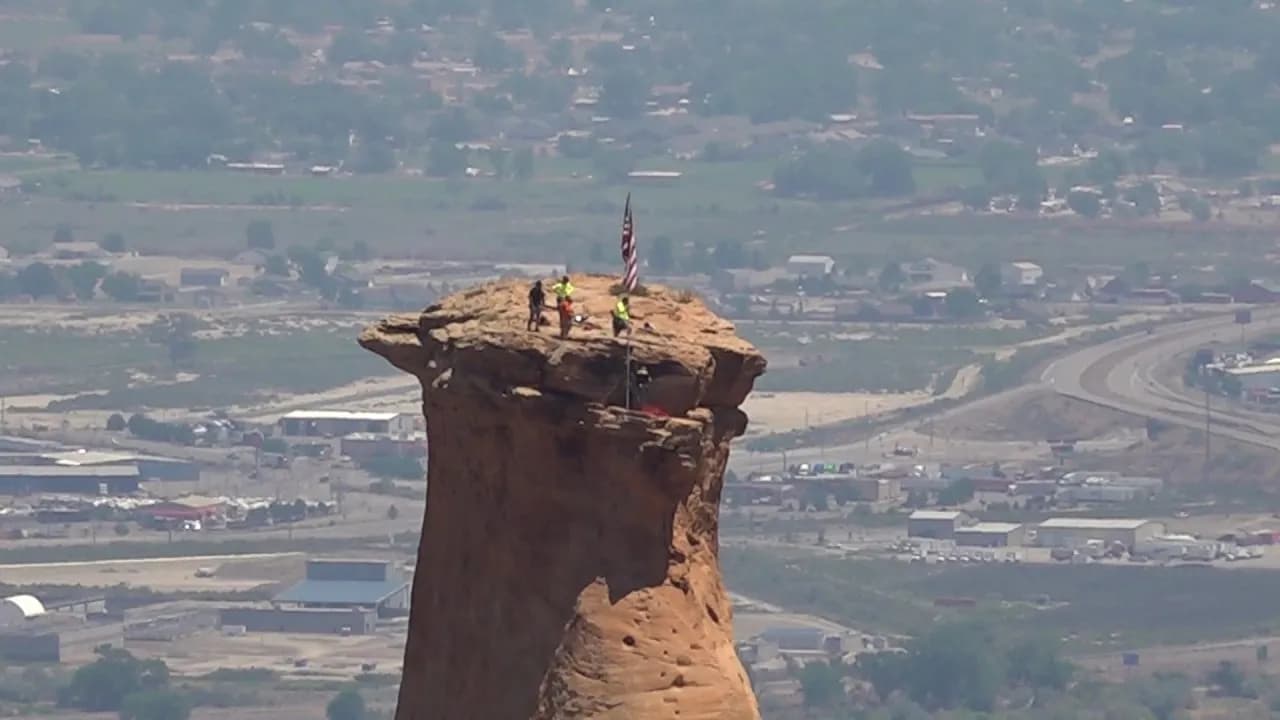
Grand Junction —Jose Iglesias has climbed Independence Monument 200 times. He’s done it for 31 years. Last year, he didn’t touch the rock.
The Mesa County Sheriff’s Office has handled the Fourth of July flag-raising on the Grand Valley landmark since 1911, but KREX reported that the human element behind the ritual is shifting. For three decades, Iglesias was the constant.
The reason? A nest of peregrine falcons.
Nature demanded a pause in the routine. The climb was put on hold in 2025 to protect the birds along the climbing route. Iglesias didn’t stay home. He stood on the other side, on the overlook, watching the moon and the falcons. He didn’t place the flag on top of the monument. He just watched.
“It was just weird that I was not there on top,” Iglesias told KREX.
It’s a small logistical tweak for the average driver heading to the monument for the fireworks, but it highlights the fragility of traditions that rely on a single person’s physical ability to navigate a specific rock face. Iglesias isn’t just a volunteer with a rope. He’s a world-class International Federation of Mountain Guides Associations guide. He summited mountains all over the world. He teaches people how to get up a mountain safely. He’s not some weekend warrior who got lucky; he’s a professional who treats this basalt column like any other peak, just with more tourists and a bigger flag.
The tradition itself dates back to John Otto, the first superintendent of Colorado National Monument. Otto started the climbing and hiking legacy. Iglesias feels a duty to keep that specific thread alive.
“[I] try to keep his tradition of climbing and doing something different for the park,” Iglesias said.
He’s been doing it except for one year. That one year is now.
The emotional weight of the climb hasn’t changed just because the birdwatching crowd got priority this time. Iglesias says every time he reaches the summit, he’s overwhelmed. He’s climbed it 200 times. You’d think the novelty wears off after the first dozen. It doesn’t.
“I mean, it’s always beautiful to be there,” he said. “Feel that that that sensation of, I don’t know, freedom, the Fourth of July, you know, thinking about our country, you know, and everything like that.”
He feels it the same way the first time. That’s the thing about ritual. It’s not about the novelty of the ascent. It’s about the consistency of the gesture.
For context, Independence Monument is a prominent basalt rock formation in Colorado National Monument, rising roughly 1,000 feet above the Grand Valley floor. It’s a visible landmark for locals in Grand Junction and surrounding areas. The flag-raising is a civic event, but the act of getting the flag there is a physical feat.
Iglesias has to be a rock climber, a backcountry skier, an ice climber, and a mountaineer to be a guide. That’s a lot of skills to maintain for a job that, in this specific instance, involves carrying a flag up a rock face. The bureaucracy of the park service can dictate when the climb happens based on falcon nests. The emotion, however, remains entirely in the hands of the climber.
Last year was an anomaly. The nest forced a deviation from the script. But the script is still being followed by the same guy who’s been doing it since the Reagan administration.
The bottom line for locals? The flag is still going up. The tradition is still being honored. But the spectacle of the climb itself is subject to the whims of wildlife and the physical limits of one man who’s been climbing this specific rock for 31 years. If the falcons stay, we watch from the deck. If they leave, he climbs again. Either way, the flag gets there.
Keep up with Grand Junction
The day's Western Slope news, one email each morning. Free.



Canadian Tariffs Force Grand Junction Startup To Triple Bike Rack Price

Vail Musician James Carstensen Dies After Choosing Hospice Care