Mesa County DA Clears Deputies in Clifton Death
Mesa County prosecutors filed no charges in the death of Johnny Herrera, citing meth and bupropion intoxication. The decision follows a coroner’s ruling that deputies exercised reasonable force during the Clifton incident.
Grand Mesa —The silence in a small-town jail cell is usually heavy, but on August 22, outside the Central Distributing Company in Clifton, it was shattered by the sound of shattering glass. That is the obvious narrative: a man, Johnny Herrera, 57, dies in custody, and the community waits with bated breath for accountability. But here is the counterintuitive claim that should make you sit up and take notice: the lack of criminal charges isn’t a failure of justice — it is, according to the legal record, a precise application of the facts.
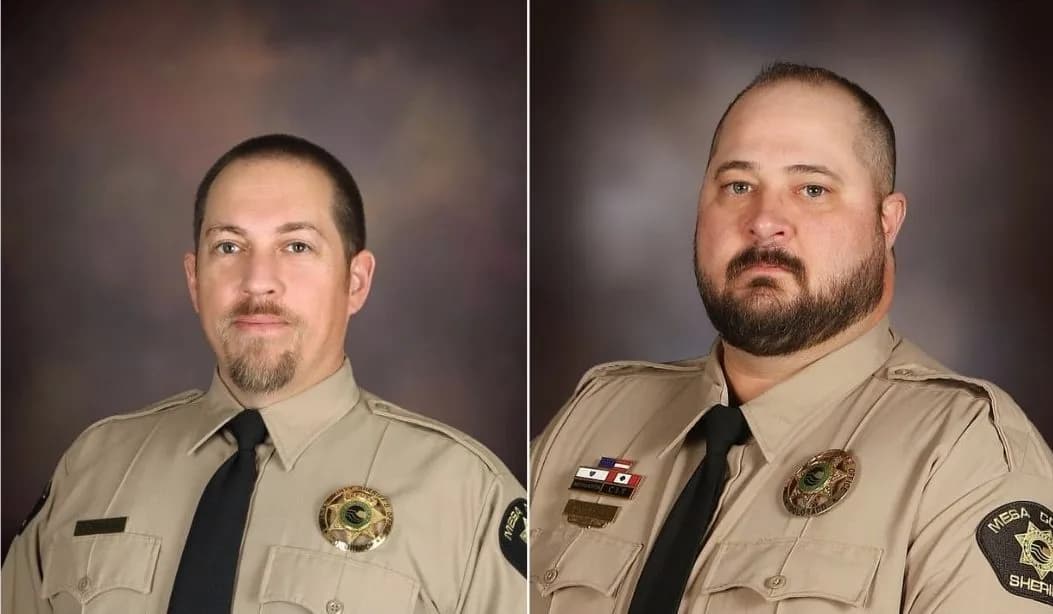
It is easy to look at a death in law enforcement custody and assume excessive force. We want to believe that if a deputy touched him, it was a crime. But the 21st Judicial District Attorney’s Office, led by Dan Rubinstein, announced Thursday that no charges will be filed. This isn’t a hasty decision. Rubinstein wrote that the incident required a thorough review. The autopsy found no injuries that contributed to Herrera’s death. No excessive force was suspected by the two deputies involved, Jeremiah Carbajal and Christopher Tinkle.
If you look closely at the coroner’s findings, the story becomes clearer. Mesa County Coroner Dean Havlik concluded that Herrera died from mixed methamphetamine and bupropion intoxication. Obesity and law enforcement were listed as contributing factors. It is a clinical list, but it tells a human story. His former wife and sister told investigators he suffered from schizophrenia, ADHD, multiple personality disorder, and diabetes. He hadn’t taken his medication for two weeks. On the day before his death, he told his family he was seeing aliens in the mountains. He texted them about a "flaming ball in the sky." He searched the internet for "I AM GOD."
These aren’t random details. They are the context that makes the legal conclusion possible. When deputies arrived, Herrera was shirtless, with his pants inside out. He was throwing coffee cups from a nearby Maverik gas station. He threw rocks at a window, ran into it, and kicked the outer pane. He was covered in blood and broken glass. Carbajal tried to handcuff him. Herrera pulled and spun away. Tinkle brought him to the ground with a bear hug. Carbajal controlled his legs. They told him to stop resisting. They handcuffed him, but he wasn’t responding. He wasn’t breathing. He had no pulse. They started CPR. Carbajal administered naloxone. Tinkle gave him more doses.
There is a warmth to the deputies’ actions, a desperate hope that one shot of a drug meant for opioid overdoses might save a man drowning in a different chemical sea. But the body had already decided. Rubinstein wrote that a reasonable person would not conclude there was a substantial and unjustified risk that death would result from their conduct. The evidence was insufficient to prove homicide beyond a reasonable doubt.
The story ends not with a gavel bang, but with the quiet finality of a medical certificate. The glass from the window in Clifton is long swept up. The coffee cups are gone. What remains is the image of a man who saw gods in the sky, and the cold, clear logic that finally explained why he fell.
Keep up with Grand Mesa
The day's Western Slope news, one email each morning. Free.