Cornell Assault Scandal Prompts CMU Students to Reassess Consent
Cornell University’s sexual assault allegations have sparked local reflection at Colorado Mesa University, prompting students and administrators to reevaluate consent communication and support systems.
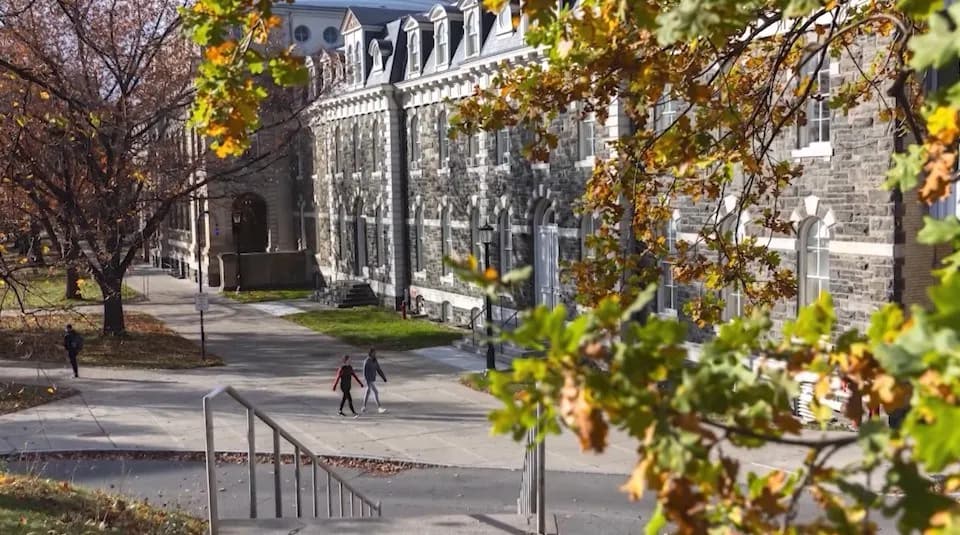
Grand Mesa —"I was heartbroken," Samantha Rasmus said, her voice steady but heavy with the weight of a national tragedy that has suddenly felt very close to home. "It was terrifying at the fact that an essay was given."
Rasmus is a student at Colorado Mesa University in Grand Junction, and like thousands of others across the country, she found herself pulled into a swirling social media storm after allegations surfaced that seven men sexually assaulted a woman known as Jane Doe at Cornell University. The incident has ignited a fierce, often painful debate over how higher education institutions handle campus safety and consent.
For folks around here, the distance between Ithaca, New York, and the high desert of Mesa County feels less like a geographic gap and more like a mirror. The national outrage has forced a local reckoning, prompting students and administrators at CMU to look closely at their own support systems.
Stephanie Rubinstein, the university’s Title IX coordinator, acknowledged that while CMU is a much smaller institution and has never had an incident quite like this, the national spotlight serves as a prompt for self-reflection. "How can we learn from lessons?" she asked, turning the question back on her own team. "And so, while obviously we’ve never had anything happen here... it also helps us to look at the things that we are doing and the support that we do provide here at CMU."
The response hasn't been limited to administrative meetings in quiet offices. It has spilled into the common areas where students actually live and socialize. Prince Tucker, a member of the Five Delta Theta fraternity chapter at CMU, said his group hosted an open meeting with Rubinstein to discuss the fallout. It wasn't a formal lecture, but a raw conversation about character.
"We had an open chapter…. what it means to be like a decent person," Tucker said. "I mean, that’s what it really boils down to. If you care about another human being and you care about humanity, you wouldn’t do that."
That simple assertion — care for others — is the pivot point of these discussions. Rubinstein emphasized that the core challenge isn't just policy, but communication. "Talking about sex is hard, talking about consent is hard," she noted. The goal, she explained, is to ensure students are having frank conversations so they feel prepared for whatever happens.
Rasmus’s reaction highlights the anxiety that often underpins these conversations. She admitted she doesn't like "op art", likely a transcription of "opt" or a specific type of assessment - and noted, "maybe in the two that I actually got charged with something. The charges were not that bad." It’s a small, personal detail, but it captures the confusion and fear many students feel when navigating a system that is supposed to protect them.
Rubinstein reiterated the office's primary directive: "We’re here to support... We are here to make sure that you are safe and you feel safe."
The national conversation continues to shift, but in Grand Junction, the focus has settled on the immediate. It’s about making sure that when a student walks across the CMU campus, they know who to talk to and how to ask for help. The storm is loud in New York, but here, the work is quieter, more personal, and entirely local.
Keep up with Grand Mesa
The day's Western Slope news, one email each morning. Free.
Mesa County Sheriff Books Five Over Weekend Violent Incidents
Mesa County Approves $2.2 Million Justice Center HVAC Upgrade