Michael Bennet narrows Colorado Senate successor to 500,000 Democrats under 50
Colorado Senator Michael Bennet reveals his successor must be a Democrat under 50, narrowing the field to half a million voters as he prepares for the governor's race.
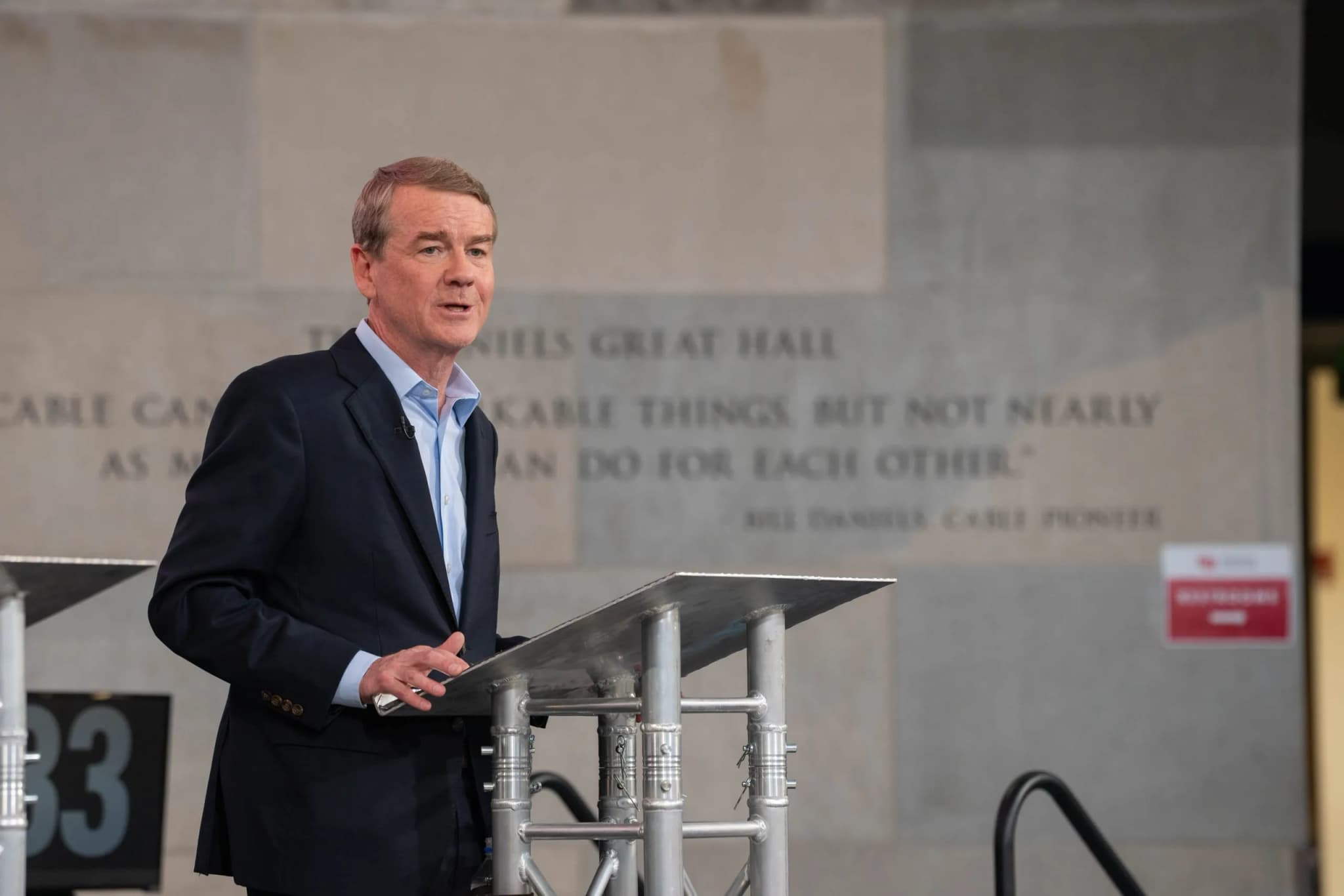
Colorado —“Who would Michael Bennet pick to replace himself in the Senate? He’s narrowed it down — to 500,000 people.”
That’s the math behind the mystery. A Democrat under 50, but over the mandatory minimum age of 30. That’s the only criteria Bennet has offered as a hint. It’s a broad brush, painting the entire state’s eligible voting population in a single stroke.
The question for locals isn’t just who the senator will be, but how the selection process works. Bennet has made a conscious choice to handpick his successor rather than let Governor Jared Polis do the honors. If Bennet wins the Democratic gubernatorial primary on June 30 — and polls suggest he likely will, given that Republicans haven’t won a statewide race since 2016, he becomes governor. And as governor, he gains the power to appoint the senator who will serve until at least early 2029.
But he’s keeping his mouth shut about who that person is.
“There is nobody on the shortlist,” Bennet said at a debate with Attorney General Phil Weiser in May. “I think we have an incredible bench in Colorado of young talent.”
His campaign spokesperson reinforced that silence in a statement: “Michael has not discussed a Senate appointment with anyone.”
It’s a deliberate strategy. Bennet could resign from the Senate the moment he wins the governor’s race, triggering a vacancy that Polis would fill. But Bennet wants the control. He wants to ensure the person who takes his seat in Washington shares his vision, not just his party affiliation.
“I believe that if I’m elected governor, I will be in the position to pick the replacement,” Bennet said when he launched his campaign in April 2025.
The rules of the game are shifting, too. Until recently, the governor could pick someone from any political party. That changed just a few weeks ago, when Polis signed a bill requiring the appointee to be a member of the same party as the senator they’re replacing. This tightens the pool significantly. It’s no longer just about finding a loyalist; it’s about finding a Democrat who can hold the seat.
Bennet has also ruled out one specific candidate: Governor Jared Polis. The reason? Polis commuted the prison sentence of former Mesa County Clerk Tina Peters. Bennet views that as a strike against him. Plus, at 51, Polis doesn’t meet Bennet’s own under-50 criteria anyway.
So, who are the 500,000 candidates? The state’s voter registration statistics as of June 1 suggest it’s anyone under 50 registered as a Democrat. That includes teachers in Delta, nurses in Grand Junction, and small business owners in Paonia. It’s a wide net.
Bennet hasn’t committed to picking a woman or a person of color, either. At a Colorado Sun forum earlier this month, he wouldn’t lock himself into that promise. It leaves the door open for a variety of profiles, as long as they fit the age bracket and the party line.
The stakes are high. The appointee won’t just serve until 2027; they’ll have to run for reelection in 2028 to keep the seat. That means Bennet isn’t just picking a temporary placeholder. He’s picking a long-term ally who will define Colorado’s voice in Washington for the next decade.
As Bennet puts it, the talent is there. The question is whether he’ll find the right one in the crowd of half a million, or if he’ll keep the mystery until the very last moment.
Keep up with Colorado
The day's Western Slope news, one email each morning. Free.

Federal Report Sets 200,000 Acre-Foot Water Conservation Target for Upper Basin
Colorado Parks and Wildlife Deploys Precision Drones for Weed Control