Museum of Northwest Colorado Director Dan Davidson Retires After 40 Years
Dan Davidson steps down as director of the Museum of Northwest Colorado after four decades, leaving a legacy of preserving Moffat County's history and transforming the institution at 590 Yampa Ave.
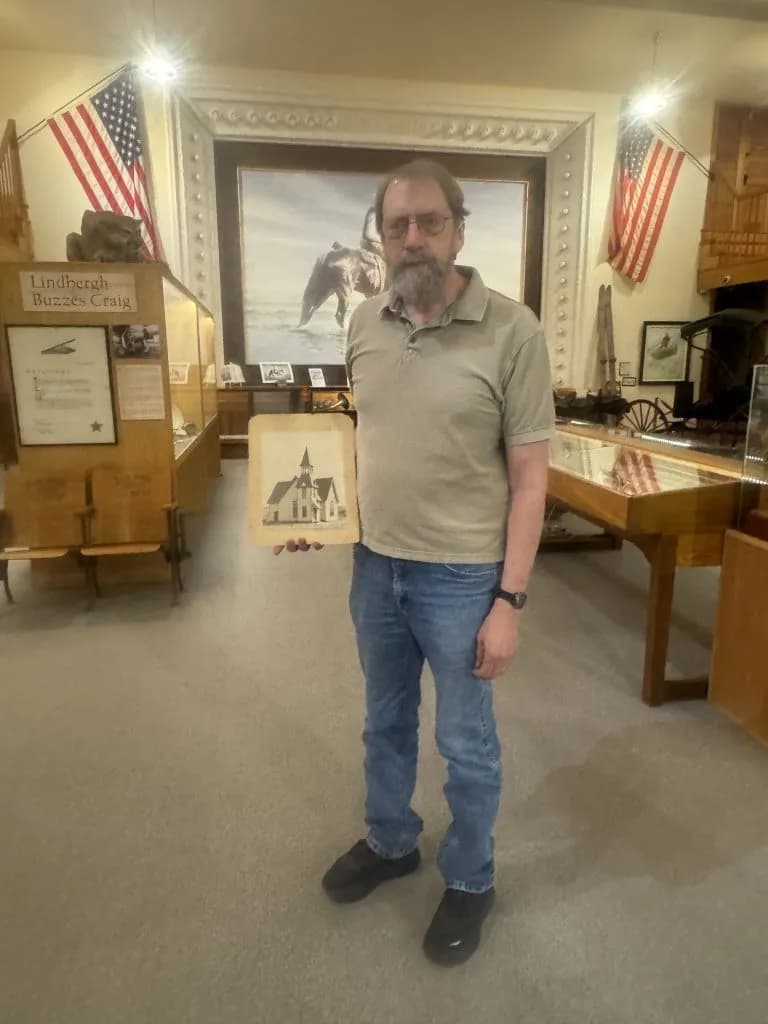
Steamboat Springs —“If need to have a passion for what you believe is important or passion, in this case for me, is to give people a voice or find out something that used to be common.”
Dan Davidson says that while standing in the quiet halls of the Museum of Northwest Colorado, a place that has served as the repository for Moffat County’s collective memory for four decades. He’s not just talking about dusty artifacts in glass cases. He’s talking about the act of listening. It’s the same impulse that drove him to raise his hand in elementary school classrooms across Moffat County, eager to share a rock, a shell, or a memory with his classmates.
Now, after 40 years of turning that childhood curiosity into a professional vritue, Davidson is set to retire. He’s passing the torch. The man who once intended to enter the ministry found his true calling in preserving the history of the region he calls home, transforming the museum from a cramped outpost in the county courthouse into a premier institution located at 590 Yampa Ave. in a former National Guard armory.
The transition marks the end of an era defined by a simple philosophy: history is just a story. Davidson doesn’t believe in forcing the past into a rigid political box. He thinks it’s criminal to set a narrative that’s against everything, preferring instead to let the artifacts speak for themselves. He points to the conflict between the Ute Indians and the U.S. Army as a prime example. It was an awful situation. It shouldn’t have happened. But it did happen. And Davidson insists that the soldiers’ story deserves to be told just as much as the homesteaders’ story. You don’t pick a winner. You just tell the truth.
This approach has helped the museum thrive. The city of Craig and the county provided a stable financial commitment, allowing the organization to build a healthy endowment. That money didn’t just buy bricks and mortar; it bought personnel. It bought archives. It bought the ability to connect the present with the past in ways that matter to locals who drive down Yampa Avenue every day.
“I could go on with stories for hours all day,” Davidson says, his voice carrying the weight of someone who has spent decades curating those stories. “But that is history. History is but a story.”
The methodology of history changes, sure. The tools get more digital, the presentation gets more interactive. But the core mission remains rooted in that early show-and-tell spirit. Davidson’s departure leaves a void that will take time to fill. The museum has grown from a small annex into one of the finest small museums in the country, a reputation built on the back of one man’s stubborn belief that preserving the past is the best way to understand the present.
As the new director steps in, they’ll inherit not just a building, but a legacy of passion. They’ll inherit the responsibility to keep giving people a voice, to keep finding out what used to be common. And they’ll inherit the quiet hum of the armory at 590 Yampa Ave., where the air still smells faintly of old paper and history.
Keep up with Steamboat Springs
The day's Western Slope news, one email each morning. Free.
Tribal members bless Mount Blue Sky summit for Colorado sesquicentennial
Craig Press Merges Two Magazines to Define Northwest Colorado’s Outdoor Identity
Steamboat Reporter Completes 409.6-Mile RAGBRAI Ride in Iowa
Steamboat Resident Tracks St. Mary’s Glacier Shrinking Before Summer Ends
Steamboat Chamber Awards Honor Nonprofit Leaders and 20 Under 40