Navajo Youth Build Water Systems for Rock Point and Kirtland Homes
Justice Ramos founded Fundamental Needs to install off-grid water systems for Navajo households. High school students in Rock Point and Kirtland build these units, earning stipends while addressing critical water access needs on the reservation.
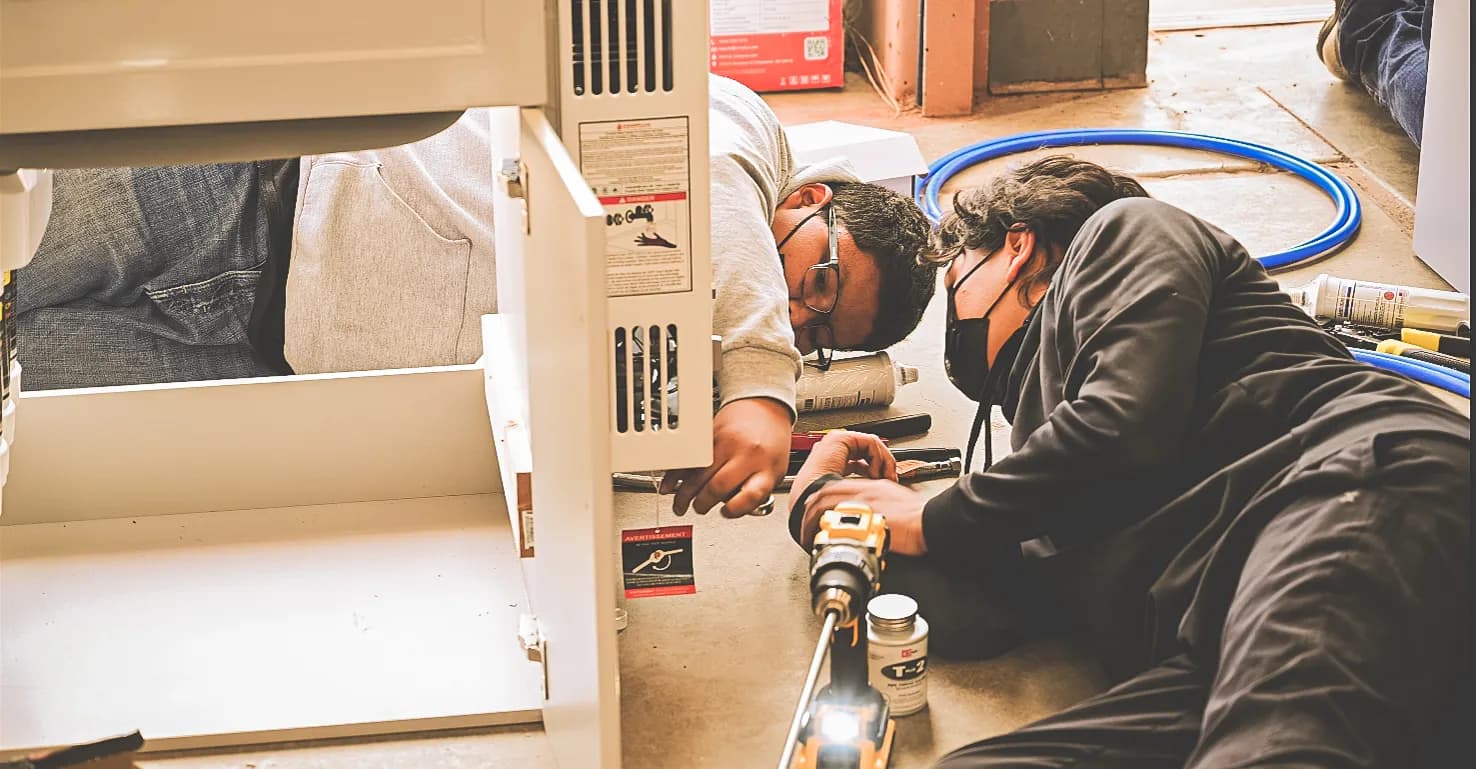
Durango —It is easy to assume that infrastructure on the Navajo Nation is a distant, federal problem, a matter of federal grants and distant bureaucrats. But look closer at the dust of Rock Point, Arizona, or the quiet hum of the Cortez Makerspace, and you will see that the gap between need and solution has been bridged not by a massive government agency, but by a 29-year-old man who decided that waiting for permission was a luxury he couldn’t afford.
Justice Ramos didn’t just inherit a name that sounds like a Gabriel Garcia Marquez novel; he inherited a geography of resilience. His mother spent her childhood in Rock Point, known as Tsé Nitsaa Deezʼáhí in Diné, a town about 90 miles southwest of Cortez. His grandparents were teachers there, grounding him in the educational ethos of the reservation. When the pandemic derailed his initial plan to join the Peace Corps, Ramos didn’t retreat. He pivoted. In 2020, he founded Fundamental Needs, a nonprofit born from the urgent necessity of delivering water, food, firewood, and PPE to citizens in lockdown.
The need was — and remains — stark. On the 17.5-million-acre reservation that spans Arizona, New Mexico, and Utah, between 30% and 40% of households lack access to running water in their homes, and roughly 10,050 to 13,000 households lack electricity. But Ramos wanted to move beyond simple relief. He wanted to build something that lasted.
“We wanted to build towards something more long term, so we started building off-grid water systems,” Ramos said.
Partnering with DigDeep, an organization dedicated to the belief that everyone deserves water, Ramos and his team installed their first three systems in 2021. By 2022, he had expanded the vision into a high school program at Rock Point Community School. Now, both Rock Point and Kirtland, New Mexico, a town just outside the reservation along the San Juan River - have school-based programs where Indigenous students build and donate these systems to needy households within an hour and a half of their schools. To date, more than 240 systems have been installed.
What makes this model work is that it turns infrastructural labor into a career pathway. Students don’t just watch; they learn plumbing and electrical and solar installation. They study agriculture and financial literacy. They get their hands dirty in the field at the Cortez Makerspace, an innovation hub created with the help of the very high school kids who now work there. And they get paid. A $100 stipend for every install, $50 for every repair. It is a tangible return on investment for the community, turning the abstract concept of "vocational opportunity" into cold, hard cash in a student’s pocket.
There is a warmth to this approach, a practicality that cuts through the usual jargon of development. It is not about charity; it is about capacity building. The systems are built by the community, for the community, ensuring that the knowledge stays local. You can feel the shift in the air when a student, who might have been unsure of their future, installs a water system and sees their neighbors drink from a clean tap.
The project has expanded beyond just water. The same students who install systems are learning to maintain them, creating a sustainable cycle of repair and renewal. It is a small thing, perhaps, to install a water system. But when you consider that 30% to 40% of households still lack running water, it is a monumental step. And it is all happening right here, on the edge of the Western Slope, where the mountains meet the mesa and the water still runs clear.
Keep up with Durango
The day's Western Slope news, one email each morning. Free.

El Jebel Grief and Glenwood Road Redesign Spark Community Debate

Aspen Old Gents Fall to Cardinals in Ruggerfest Opener

Vail Athletes Build Global Bonds Through Puck Diplomacy Trips
Solo Hiker Recounts Black Bear Tent Attack Near South Fork

Weiser Sues Durango Doctor Over $374K Expired License Billing
