Northwest Colorado Ranchers Face 50 Percent Herd Losses Amid Federal Water Plan
Northwest Colorado ranchers report herd losses of up to 50 percent as federal water cuts and extreme heat deplete forage, forcing immediate ecosystem adjustments.
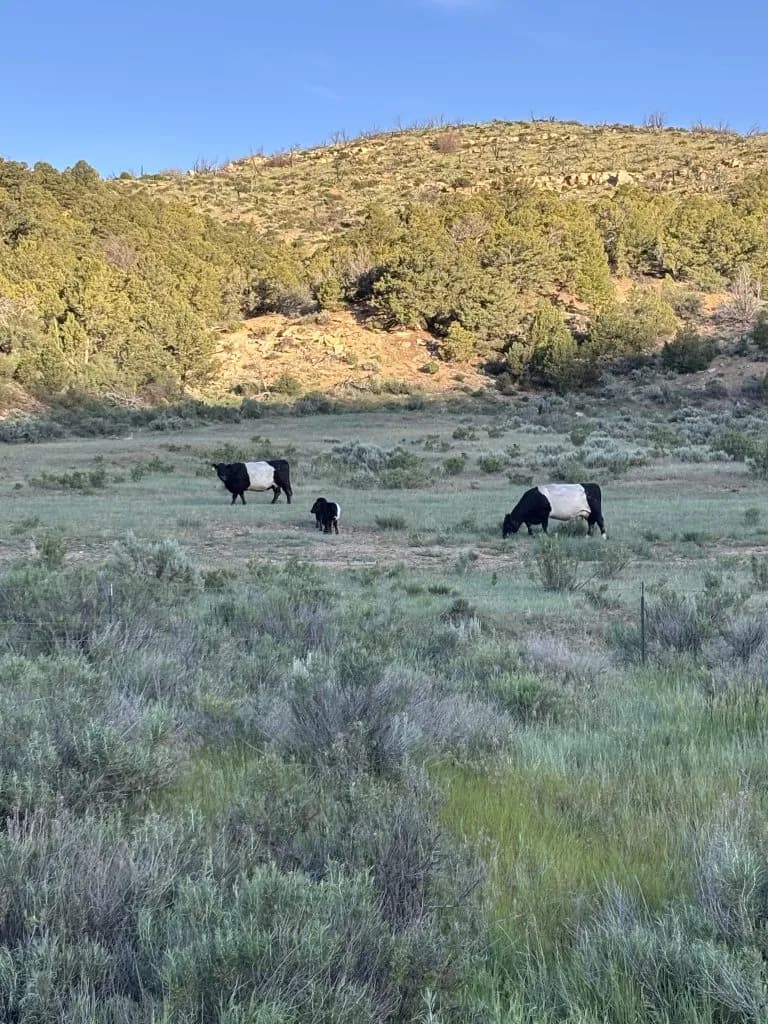
Steamboat Springs —A rancher in Northwest Colorado is watching herds shrink by 10 to 50 percent. That isn’t a projection for next year. That is the current reality on the ground, driven by a simple equation: no water, no forage, no hay.
This is the human cost of the federal government’s new outline for managing Colorado River water, a plan that promises severe cuts for the Lower Basin states of Arizona, California, and Nevada. But for folks on the Western Slope, the story isn’t just about who gets the short end of the stick in the long run. It’s about the fact that we are already broke.
The math on the river’s allocation has been broken for decades. The 1922 River Compact promised 7 million acre-feet to each basin. The western half of the system — Arizona, California, and Nevada — has been consuming 10 to 11 million acre-feet for at least a decade. They used Lake Mead and Lake Powell as a massive, unintended water bank to fuel exponential growth. We in the Upper Basin, Wyoming, Utah, Colorado, and New Mexico - have been forced to live within our means. We use about 4 to 4.2 million acre-feet. If it doesn’t fall from the sky, we don’t use it.
That discipline is now being tested by ten years of drought and one extremely dry winter. We are in real trouble.
The impact hits harder than just the water gauges. In Grand Junction, we’ve logged 24 days of 100-degree heat or hotter. That is a first. It’s not just a Colorado problem; it’s a global shift, but the local consequences are immediate and brutal.
Take the wildlife. A bear recently wandered into a yard in Grand Junction. In 15 years, that never happened. The bear was hungry. Colorado Parks and Wildlife is reporting a record number of bear incidents, with mama bears abandoning cubs because they can’t find enough energy to raise them. Deer and elk are struggling to bulk up for winter. If we hit a hard freeze, another record winter kill is all but guaranteed.
Then there are the feral horses. They aren’t overgrazing because they’re lazy; they’re overgrazing because they have no control over their movement. They go through fences to find water. They look okay on the surface, and there are plenty of foals, but the land is recovering slowly. Many are being rounded up this summer, held, or placed, because the arid soil can’t support the current density without human intervention.
The federal plan likely forces our hand. If the Lower Basin faces severe cuts, it validates the Upper Basin’s historical restraint, but it doesn’t fix the immediate deficit. One year of good snow won’t fix the degraded land. The infrastructure is there, but the resource is vanishing.
For context, the Upper Basin has been playing it safe while the Lower Basin built a city on a credit card. Now the bill is due. The cuts will likely come, but the damage to the local ecosystem, the bears, the horses, the herds - is already done. We aren’t waiting for the federal ink to dry to feel the pain. We’re feeling it now, in the heat and the hunger.
Keep up with Steamboat Springs
The day's Western Slope news, one email each morning. Free.