Paul Stamets Ties Psilocybin to Opioid Crisis at Vail GoPro Event
Famed mycologist Paul Stamets argues that psilocybin treats the root cause of depression and opioid addiction by boosting neuroplasticity, speaking to a packed crowd at the GoPro Mountain Games in Vail.
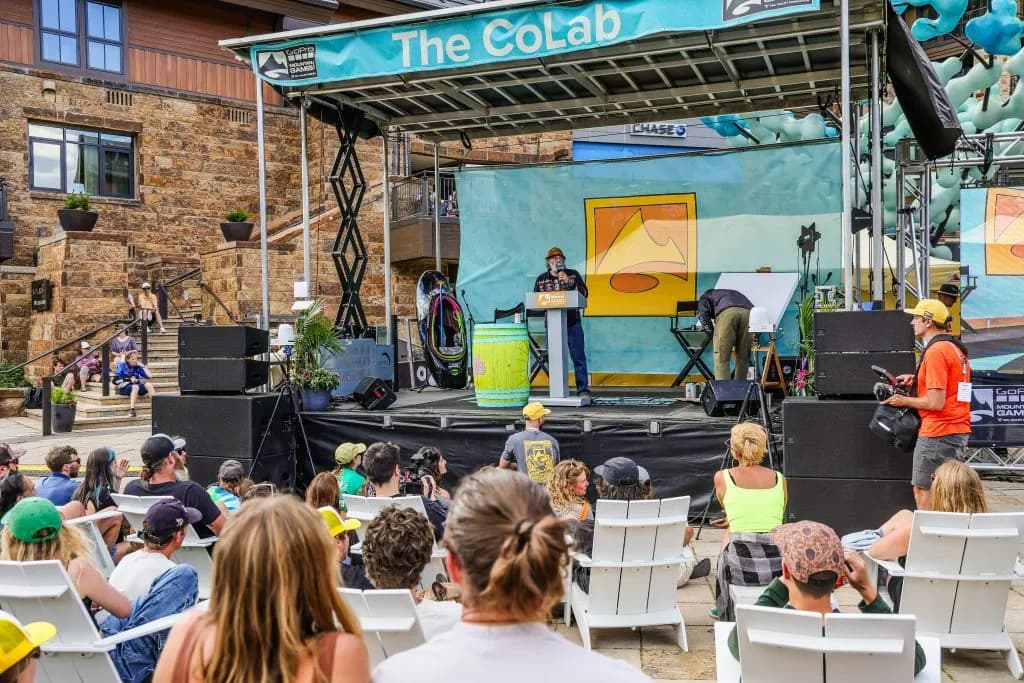
Aspen —“The question is whether we are ready to stop treating the symptom and start treating the root cause,” Paul Stamets said, addressing a crowd that had spilled out onto East Meadow Drive in Vail.
He wasn’t talking about the economy, or the housing crunch, or the cost of living that keeps locals up at night. He was talking about mushrooms. Specifically, psilocybin.
Last week, the famed mycologist took the CoLab stage at the GoPro Mountain Games, using the event’s “Athletes, Art, Music and Mountains” platform to argue that these fungi could save the world. It was a bold pitch for a community that already considers itself progressive. Colorado voters approved the Natural Medicine Health Act in 2022, making us the second state to decriminalize psilocybin for adults over 21. Since then, the local medical establishment has moved from skepticism to study. Vail Health kicked off its own trial last spring, looking at how the drug affects depression.
Stamets didn’t just want locals to know it was legal. He wanted them to understand why it matters.
“This is a much more profound subject than any of us realized,” he told the audience. “I know this is a controversial subject, but I have no fear of talking about it because I know that this is a deep truth.”
He didn’t leave it at abstract philosophy. He tied the science directly to health outcomes that affect our neighbors. He argued that depression isn’t just a mood; it’s a physical state of inflammation.
“It upregulates your immune system,” Stamets said. “When you are depressed, you’re immunologically depressed. It’s an inflammatory state. It’s a slippery slope into disease.”
The crowd seemed to absorb the message. When he asked how many hadn’t taken psilocybin mushrooms, only four out of 200 raised their hands. That’s a 98% familiarity rate in a town where the average age is creeping up and mental health resources are stretched thin.
The argument Stamets makes is that this isn’t just about feeling different for an afternoon. It’s about fixing the machinery of the brain. He pointed to neuroplasticity — the brain’s ability to rewire itself — as the key. “I think psilocybin creates geniuses,” he said. “We know that psilocybin increases neuroplasticity.”
But the most compelling data point for the Western Slope right now is addiction. Opioid use disorder has been a quiet crisis in our valleys for years. Stamets noted that people who have used psilocybin show a strong dissociation from opioid addiction. Universities and institutions are now studying the drug not just for depression, but for breaking the cycle of opioid dependence.
It’s a significant shift from when Stamets started decades ago. Today, he’s the owner of a multi-million-dollar mushroom supplement brand, the author of “Psilocybin Mushrooms in Their Natural Habitats,” and a pop-culture fixture who’s appeared on “The Joe Rogan Experience” and even has a Star Trek character named after him. But in Vail, he stripped away the celebrity to focus on the biology.
The timing of the talk matters. As healthcare providers like Vail Health validate the treatment, the stigma is evaporating faster than snow on a south-facing slope. The message from the stage was clear: the science is ready, the law is ready, and the community is ready.
“It’s being studied now in many universities and institutions for using psilocybin for breaking addiction to opioids,” Stamets said. “It’s not all about medical treatment either. It’s about a crisis in creativity.”
For a town built on creativity and endurance, that’s a pitch that lands.
Keep up with Aspen
The day's Western Slope news, one email each morning. Free.
The digital counter on the side of the bus in Carbondale ticks over, but the seats inside are half-empty
Eagle County Launches Aging Well Roadmap To Keep Seniors Housed