Record Colorado Snowpack Melt Drives Early Trout Spawning
Record-breaking heat accelerates snowmelt in northwest Colorado, causing early fish spawning and low water levels that create prime fishing conditions but threaten summer reserves.
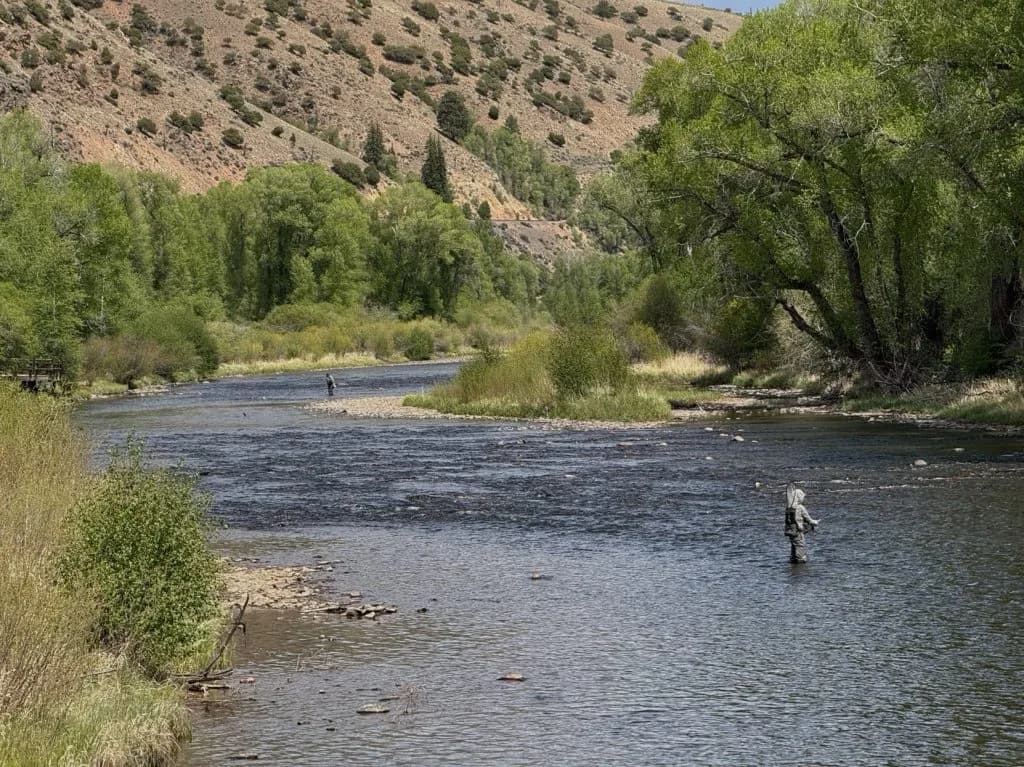
Aspen —The Colorado River runs thin and clear near Granby, the water slipping over rocks that usually sit submerged under a foot or two of flow. It’s quiet in a way that feels less like peace and more like holding your breath. You can hear the water moving, but you can’t see much of it.
This is the reality facing anglers and biologists in northwest Colorado as the region grapples with its lowest snowpack on record. By early June, 100% of the state was locked in some form of drought, a statistic that sounds abstract until you stand on the banks of the Grand Lake reservoir and watch the water level drop. The cause is a perfect storm of record-setting heat in March and warmer-than-normal temperatures throughout the winter, which melted the snowpack faster than anyone anticipated.
“This drought is something that’s being closely watched with a lot of anxiety by many, many people,” Jon Ewert, Colorado Parks and Wildlife’s aquatic biologist for Grand and Summit counties, told reporters during a June 2 drought tour in Grand County.
But here’s the thing though: if you cast a line right now, you’re likely having the best day of your life.
The early melt-off has created an anomaly. Everything is happening a month ahead of schedule. The rainbow trout spawned early. The caddisflies are hatching on the Colorado River in June, a event that usually waits until July 1. The depth is low, which makes the current clear, and the fish, coming out of a long winter, are hungry and aggressive. They’re eating everything in sight.
“Everything’s a month ahead of schedule this year,” Ewert said. “The rainbow (trout) spawned a month early … The caddis are hatching on the Colorado River, which is usually like a July 1 thing. And so the thing is that the water is low and clear, and the fish are hungry coming out of winter, and they’re very aggressive and the bugs are hatching early.”
It’s a deceptive spring. The early abundance of food and the warm water keeps the fish active and visible. But biologists aren’t celebrating. They’re looking at the calendar and seeing a problem. The early peak flow means the water levels will drop sooner, and when the summer heat hits in July and August, there won’t be the buffer of snowmelt to keep the streams cool and flowing.
“We all have some grim ideas about that,” Ewert said, when asked what July and August might look like.
The disruption isn’t just about water levels; it’s about timing. Ben Felt, Parks and Wildlife’s senior aquatic biologist in the northwest region, noted that the ice came off most reservoirs four to six weeks earlier than usual. This threw off the schedule for removing invasive northern pike. The pike spawned earlier, and because biologists couldn’t get out there early enough to manage the spawn, they’re likely to see an increase in northern pike numbers.
“We’ll likely see some increases in northern pike numbers, just based on our reduced ability to be out there that early when the pike are spawning — it’s just completely unprecedented in terms of the timing of this fish,” Felt said.
The implications ripple beyond the fish. For the locals who rely on these waters for recreation, tourism, and ecosystem health, the early spring is a gift that might turn into a curse. The climate models forecast a continued chance for heat, and with the snowpack already depleted, the reservoirs are starting the summer dry.
Russ Schumacher, Colorado’s state climatologist, pointed out that the current conditions are the result of a winter that broke records. The heat in March didn’t just melt the snow; it accelerated the entire biological clock of the river system. What happens next depends on whether the rain comes in July to refill the tanks, or if the heat continues to bake the land.
For now, the fish are biting. The current is clear. But the clock is ticking, and the margin for error is shrinking.
Keep up with Aspen
The day's Western Slope news, one email each morning. Free.