Rep. Jeff Hurd Ties Grand Valley Water Crisis to Federal Funding
Rep. Jeff Hurd tours the Grand Valley to address a historic 131-year drought, linking local irrigation infrastructure needs to securing federal funding and protecting Shoshone water rights from diversion.
Grand Junction —“Nobody has ever seen in 131 years of record.”
That’s the headline from Jackie Fisher, manager of the Orchard Mesa Irrigation District, and it’s not just a statistic. It’s a warning shot fired across the bow of anyone planning to plant alfalfa or keep their cattle fed this summer.
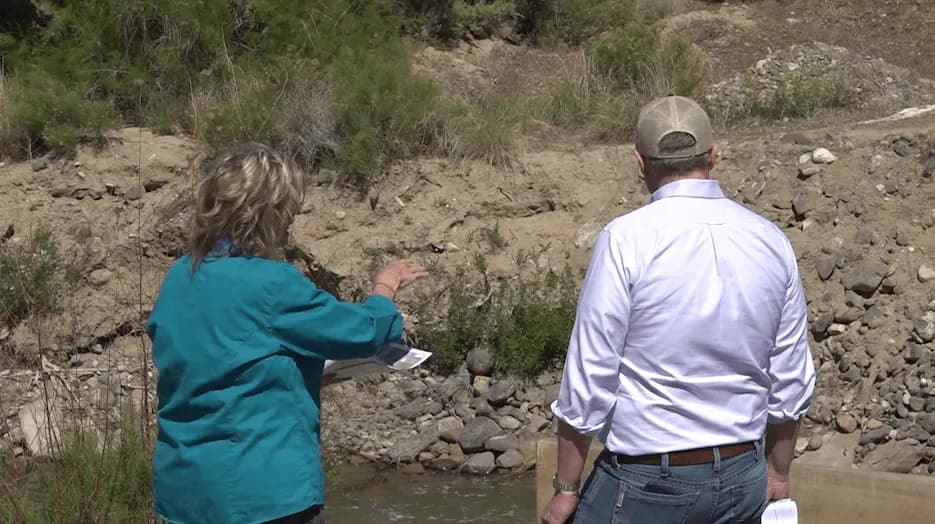
U.S. Rep. Jeff Hurd stood in the Grand Valley on Monday, listening to the people who actually turn sunlight and soil into food. He toured the irrigation district, shook hands, and listened to a group of farmers and ranchers who are tired of guessing whether their crops will survive the heat. The message was clear: the water is shrinking, the costs are rising, and the uncertainty is keeping the next generation on the fence about staying in agriculture.
Here’s the thing though. This isn’t just about whether your hay bales get wet. It’s about the entire economic engine of the Western Slope grinding to a halt if the water doesn’t flow.
“We’re all facing challenges and a lack of water supply that nobody has ever seen in 131 years of record,” Fisher said during a roundtable discussion that felt less like a political photo-op and more like a strategy session for survival.
The concerns piled up fast. Hay prices are climbing. The drought outlook is murky. And the young folks? They’re looking at the sky and the bank accounts and wondering if it’s worth the risk. Hurd, who has made securing federal funding for irrigation infrastructure a top priority, promised to fight for the resources farmers need to keep growing crops.
“Putting food on our tables is a top priority for me,” Hurd said, emphasizing the need for investments in irrigation canals and infrastructure.
But the fight isn’t just about building new canals. It’s about keeping the water here. Hurd pointed to the Shoshone water rights as a critical asset, arguing that federal funding should ensure water flows stay on the Western Slope rather than being diverted over the mountains to the Front Range. It’s the old tension, renewed: do we keep our water, or do we send it to Denver?
Tina Bergonzini with the Grand Valley Water Users Association added another layer to the confusion. She warned that misinformation is swirling on social media, leading residents to believe they know exactly how much water is available when they actually don’t.
“There is a lot of misinformation on social media about how much water is available,” Bergonzini said. “I would recommend checking in with your provider, speaking to them, educating themselves on their water supply and where it comes from.”
The key, she noted, is communication. Conditions differ wildly from one provider to the next. A neighbor in one district might be fine while the next district is rationing. You can’t just look at the river gauge and assume you’re safe.
Hurd isn’t stopping at local infrastructure. He’s looking at the big picture, specifically the Colorado River Compact. He argued that the lower basin states have been using more than their allocated share, and Colorado needs to ensure it gets its fair cut.
“We need to make sure that we fight for Colorado, Wyoming, New Mexico and Utah to ensure that we have our fair share of water under that river compact,” Hrd said.
It’s a lot to ask of a single rep, but the stakes are high. If the water doesn’t flow, the orchards die. The hay rots. The economy shrinks. And the 131-year record becomes a cautionary tale for the next century.
Outside the meeting, the sun beat down on the dry earth of the Grand Valley. The irrigation canals were running, but barely. The farmers packed up their trucks, checked their gauges one last time, and waited for the next drop.
Keep up with Grand Junction
The day's Western Slope news, one email each morning. Free.