Rifle Artist Charley Billy Paints Navajo Heritage and Boarding School History
Rifle resident Charley Billy uses painting to process his family's history with Haskell boarding schools, blending personal trauma and Diné heritage into vivid local art.
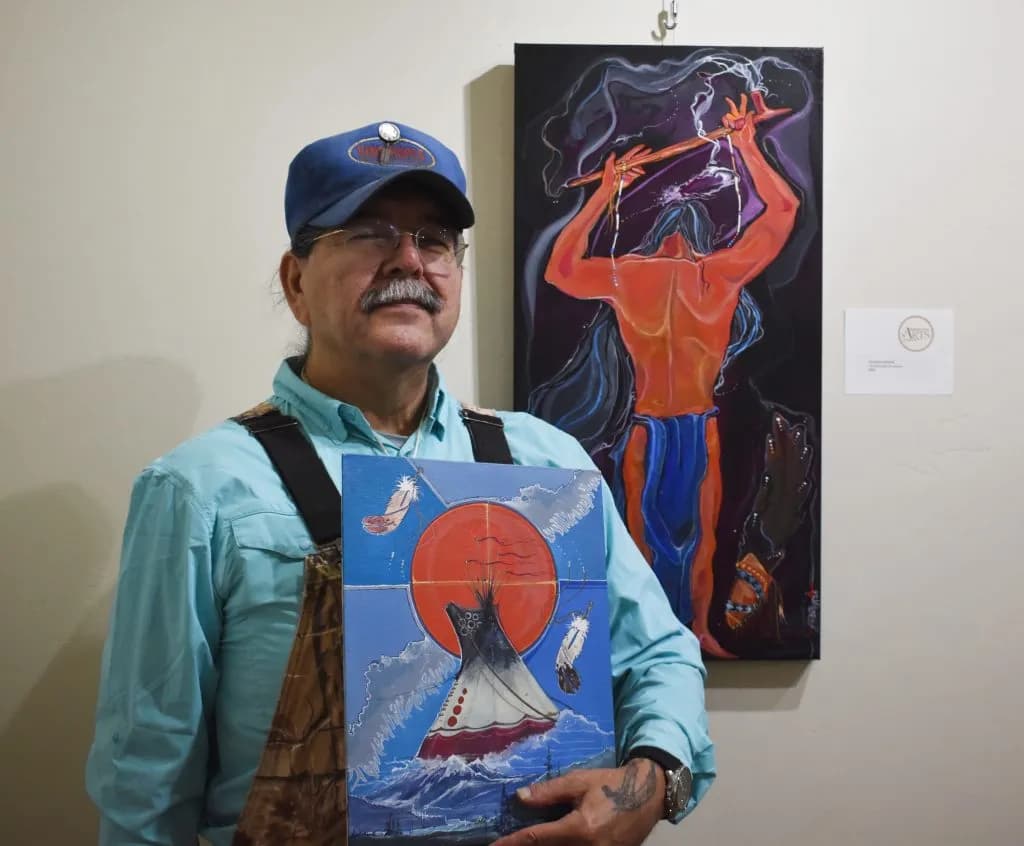
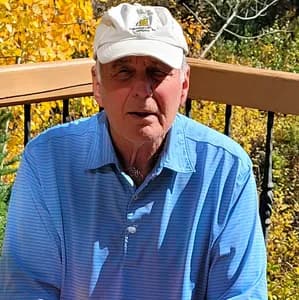
Rifle —The morning light in Rifle doesn’t just hit the windows; it crawls across the floorboards, catching the dust motes dancing in the still air before settling on a canvas leaning against the wall. Here, in the quiet of a studio that smells faintly of turpentine and old paper, Charley Billy is not just mixing pigments. He is excavating history.
Billy, a Rifle resident since 2024, lives with his wife, Kelly Murdock-Billy, who serves as the pastor of the Rifle United Methodist Presbyterian Church. But his brushstrokes reach further back than his recent move to the Western Slope. Born in Lawrence, Kansas, in 1961, his life is inextricably linked to the Haskell Institute, now the Haskell Indian Nations University. This institution represents a pivotal, and often painful, era in American history.
Opened in 1884 as the United States Indian Industrial Training School, it was part of a vast network of boarding schools designed to assimilate Native American children into white culture. The separation from family was abrupt and often traumatic. Billy’s own father experienced this firsthand. As Billy recounted, his father was thirteen, spoke no English, and was rounded up by men in Jeeps. They hobbled and handcuffed him, bringing him to Utah with a hood over his head. Told to go home, he navigated by the sun and the land, taking three days to find his way back.
Billy traces his heritage to the Diné (Navajo), the Assiniboine (Nakoda), and the Neshnabé (Potawatomi) people. His personal journey includes seventeen years in law enforcement and work with the U.S. Fish and Wildlife Service, but it is his art that has become his primary voice. This shift was driven by necessity. After surgery for a noncancerous brain tumor, Billy struggled with short-term memory and vision in his right eye. Listening to lectures for days yielded nothing, but drawing them made the information stick. What started as a mnemonic device evolved into a medium for storytelling.
His work preserves memories and helps others reconnect with their past. In a town like Rifle, where the landscape is vast and the sky is wide, art offers a way to anchor ourselves. It reminds us that we are not just passing through; we are part of a continuum. The colors on the canvas are vibrant, but they carry weight. They speak of resilience, of identity, of the struggle to remain oneself in a changing world.
As the afternoon shadows lengthen, the studio grows quieter. The final touches are applied, the brush set aside. The painting stands complete, a silent witness to a life lived and a history honored. It waits there, bathed in the fading light, holding the story steady until someone else comes along to read it.
Keep up with Rifle
The day's Western Slope news, one email each morning. Free.