Routt County Fires Ignite Evacuations and Close Roads
Two wildfires, the Fishhook and Stagecoach blazes, ignited within hours in Routt County, triggering mandatory evacuations for twenty homes and closing roads as crews battle the flames.
Aspen —Smoke hangs thick over the Priest Creek area, a gray shroud that turns midday into a hazy twilight. It’s not just weather here; it’s a signal. On Monday afternoon, you could see the plumes rising from the Fishhook Fire, a visual reminder that the mountains are dry and the wind is waiting.
Routt County’s first two notable wildfires of the season ignited within two hours of each other on Sunday afternoon, forcing evacuation orders, closing roads, and pulling every available resource from the local fire crews to the federal agencies. It wasn’t a gradual buildup. It was a double strike.
The first fire, the Fishhook Fire, started just north of Rabbit Ears Pass, four miles southeast of Mount Werner. It was reported around 12:30 p.m. Sunday. By 2:15 p.m. Monday, it had already spread to at least 100 acres. Zero percent contained.
David DeMorat, Routt County’s Emergency Operations Director, remembers the moment the phone rang. He and Sheriff Doug Scherar headed straight to the scene, joined by units from Steamboat Springs Fire Rescue. They knew right away it was on U.S. Forest Service land. They called in the federal agency and the state’s Department of Fire Protection.
“We knew it had the potential to grow fairly large, but it was all on federal property; it was up to them to determine how to manage that,” DeMorat said.
But they weren’t there too long before the second smoke report came in. The Stagecoach blaze. It started just south of Stagecoach Reservoir, less than two hours after Fishhook.
As of Monday afternoon, the Stagecoach blaze was holding at 44 acres and was 27% contained. It wasn’t as big as Fishhook, but it was dangerous in a different way. It was closer to people.
“There are two neighborhoods where the fire was within about .03 of a mile … and it was all on private property, so that became our priority,” DeMorat said.
Forty-four acres of wildland doesn’t sound like much until you realize it’s sitting right next to someone’s house. Twenty homes were under mandatory evacuation.
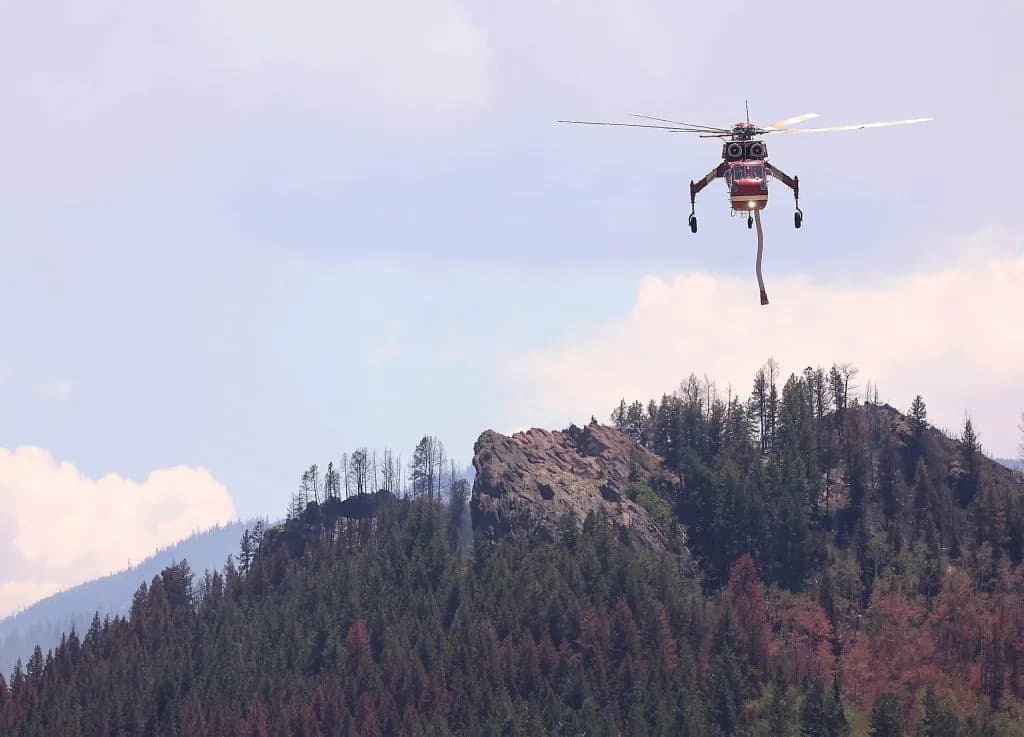
DeMorat watched as the response shifted gears. Aviation units that were originally slated for Fishhook were diverted down to Stagecoach. He saw a massive display of firefighting aircraft — helicopters and “Super Scooper” planes — scooping water directly from Stagecoach Reservoir to drop on the flames. Air tankers added retardant to the mix.
“They started very aggressively attacking that and they did an outstanding job,” DeMorat said.
The part everyone skips past is the logistics. You don’t just fly a plane anywhere. You need water. You need airspace clear. You need a crew that can coordinate drops while flying low over terrain that changes every second. The Stagecoach blaze demanded all of that, and it demanded it fast.
Now, the Fishhook Fire is still burning, still spreading, still on federal land. The Stagecoach blaze is contained enough to let folks breathe, but the threat is still there. The smoke is still rising.
Stand there long enough and you can smell it. It’s a sharp, pine-heavy scent that sticks to your clothes and your hair. It’s the smell of a county that’s awake and watching.
Keep up with Aspen
The day's Western Slope news, one email each morning. Free.