Routt County Nonprofits Push Countywide Tax for Funding Gap
A coalition of nonprofits proposes a new countywide tax to bridge the gap between planning and execution for wildfire mitigation and land stewardship in Routt County.
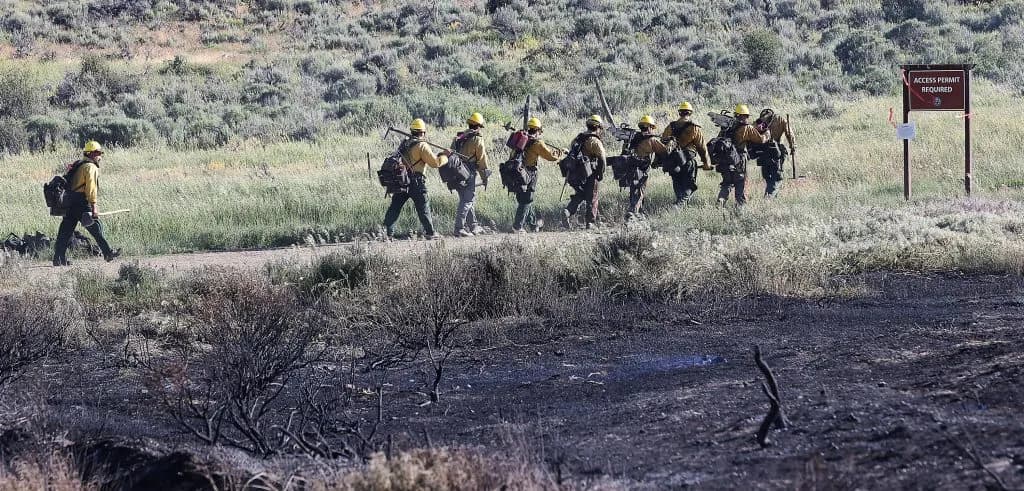
Steamboat Springs —Routt County has a planning problem. It’s not that locals lack ideas. It’s that they lack the cash to execute them.
That’s the blunt pitch from the Environmental Coalition — a trio of nonprofits led by the Routt County Wildfire Mitigation Council, the Community Ag Alliance, and the Trust for Public Land. They want a new countywide tax. They want it on the ballot. And they’re polling voters to see if you’ll bite.
The short version: The county is good at making maps. It’s terrible at funding the work those maps describe.
Commissioners heard the case during a June 22 work session. The groups argue that relying on federal grants and state dollars is a losing game. Those sources are shrinking. They are unpredictable. They come with strings attached. A local tax provides stability. It turns paper plans into physical reality.
“We are really good at planning,” said Amber Pougiales, Executive Director of the Community Ag Alliance. “We need the funding structure to carry out the work.”
Make no mistake — this isn’t a request for a specific project. It’s a request for a blank check with a label. The coalition isn’t asking voters to choose between wildfire mitigation and land stewardship yet. They’re asking if voters trust them to decide.
Polling will determine what the public values. It will determine the price tag. It will determine if this year’s ballot is already too crowded to handle another levy.
The financial options are rough estimates, designed to test voter appetite, not lock in a final deal. The Trust for Public Land outlined two paths.
First, a 0.2% sales tax. This would generate roughly $2.7 million annually. That’s $49 per household. Every. Single. Year.
Second, a 0.3-mill property tax increase. This would pull in about $706,000 annually. That’s $31 per household.
The numbers look small. They’re deceptive. Sales taxes hit tourists and locals alike. Property taxes hit homeowners who are already feeling the pinch of rising assessments. The coalition says this local support leverages outside dollars. It accelerates projects already in the pipeline. It gives organizations certainty.
But here’s what officials aren’t saying: How much of that $2.7 million actually stays in Routt County? And how much gets siphoned off by administrative overhead or distributed to non-local partners? The Trust for Public Land is national. The Wildfire Mitigation Council is local. The Community Agriculture Alliance is Yampa Valley-based. Who controls the purse strings?
The feasibility study is done. The polling is next. If the data shows support, a ballot measure follows. If it doesn’t, the planning continues, on paper.
Read that again. The coalition admits voter appetite for tax increases drops once the price tag becomes real. They are testing the waters with estimates. The final bill could be higher. The scope could be narrower. Or it could be everything and nothing all at once.
Locals know the drill. We vote for the plan. We vote for the tax. We wait for the execution. The difference this time is the flexibility. The money won’t be tied to a single dam or a specific road repair. It will go where the coalition says it’s needed most.
That’s the risk. Not the cost. The control.
$49 a year for a sales tax feels like a rounding error. Until you realize it’s a permanent deduction from every transaction. Until you realize it’s a tax on consumption, not just wealth.
The commissioners are listening. The nonprofits are ready. The question is whether voters are tired of paying for the privilege of hoping.
Keep up with Steamboat Springs
The day's Western Slope news, one email each morning. Free.