Shaw Cancer Center Marks 25 Years of Local Care in Eagle County
The Shaw Cancer Center celebrated its 25th anniversary, marking a quarter-century of local oncology care in Eagle County. The facility evolved from a $17 million gift into a comprehensive hub that keeps patients in their own community.
Aspen —The air in Eagle County is thin and sharp, a physical reminder of the altitude that defines life on the Western Slope. For decades, that geography was also a barrier to survival. If you were diagnosed with cancer in the valley, your options were binary: drive four hours to Denver or cross the state line to Salt Lake City. There was no middle ground. That gap, a vast stretch of empty highway with no comprehensive oncology care in sight, is what Howard and Mary Louise Shaw decided to fill.
The Vail Daily reported on the 25th anniversary of the Shaw Cancer Center, a milestone that marks two decades since the facility opened its doors in 2001. The center didn’t appear by accident. It was born from a specific, painful loss: the Shaws’ son died in a car accident on Vail Pass. Grief turned to action, and the family approached their doctor, Jack Eck, with a question about how they could serve the community. Eck pointed them toward the valley’s growing cancer population and its lack of local infrastructure. The result was a $17 million contribution from the Shaw family to build a dedicated facility in Eagle County.
On paper, $17 million is a significant sum for any local development project. In practice, it bought the community something more valuable than square footage: proximity. For 25 years, that building has served as the anchor for oncology care in the Central Rockies. It is no longer just a place to get chemotherapy; it has evolved into a comprehensive hub that holds the highest quality recognition available, a gold accreditation from the Commission on Cancer.
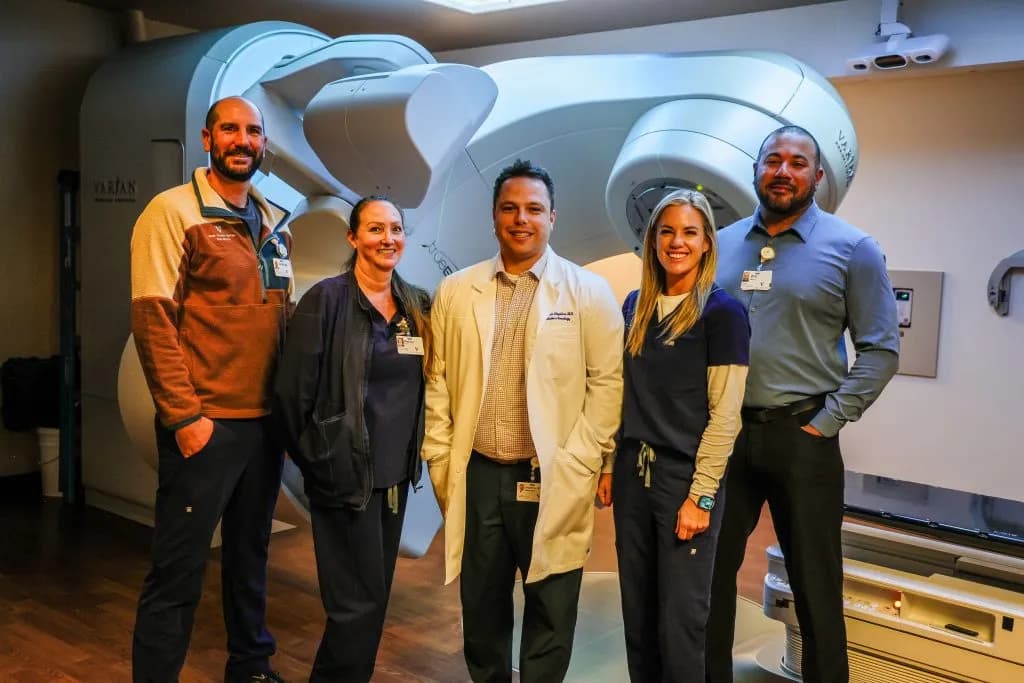
The center’s model has shifted how care is delivered in the region, moving away from treating a diagnosis and toward treating a person. Kim Sharkey, the director of oncology operations who has been with Shaw for 15 years, explained that they introduced a “whole-person” approach in the early days. This means the medical team isn’t just looking at tumors; they are coordinating dietitians, psychosocial support, and an exercise clinic. Sharkey noted that this level of integration is not standard practice in cancer care elsewhere, positioning the center as a leader in innovation.
The most striking evidence of this “whole-person” philosophy is logistical rather than medical. In 2007, the center introduced Jack’s Place, a cancer lodging house. The reason for its creation was grim: staff found that many patients were literally sleeping in their cars to stay near the center during treatment. Twenty years later, the model expanded again with Shaw at Home in 2023, bringing treatment services directly to patients’ residences for those too sick to travel.
This infrastructure supports a patient population that extends well beyond oncology. Karen Clous, a registered nurse at Shaw for 15 years, highlighted that the center functions as a community infusion hub. According to Sharkey, 30% of patients coming in for infusions are there for non-cancer treatments, such as multiple sclerosis. The facility also houses a high-risk program for those with genetic predispositions and a hematology team, creating a density of specialized care that is rare for a regional center.
For the neighbors in Eagle County and the surrounding valley, the practical impact of these 25 years is the elimination of the commute. The cost to a family facing a cancer diagnosis is no longer measured in fuel, hotel rooms, or lost work days spent on I-70. The $17 million investment from the Shaws has matured into a system that keeps patients in their own community, treating them as complete individuals rather than cases to be processed. That is the true value of the project: it kept people home.
Keep up with Aspen
The day's Western Slope news, one email each morning. Free.