Texas Early Voting Surges 50% Ahead of Midterm Senate Race
AP data shows 43 million Americans voted early, with Texas seeing a 50% surge. This structural shift concentrates in tight Senate races, challenging Republican incumbents.
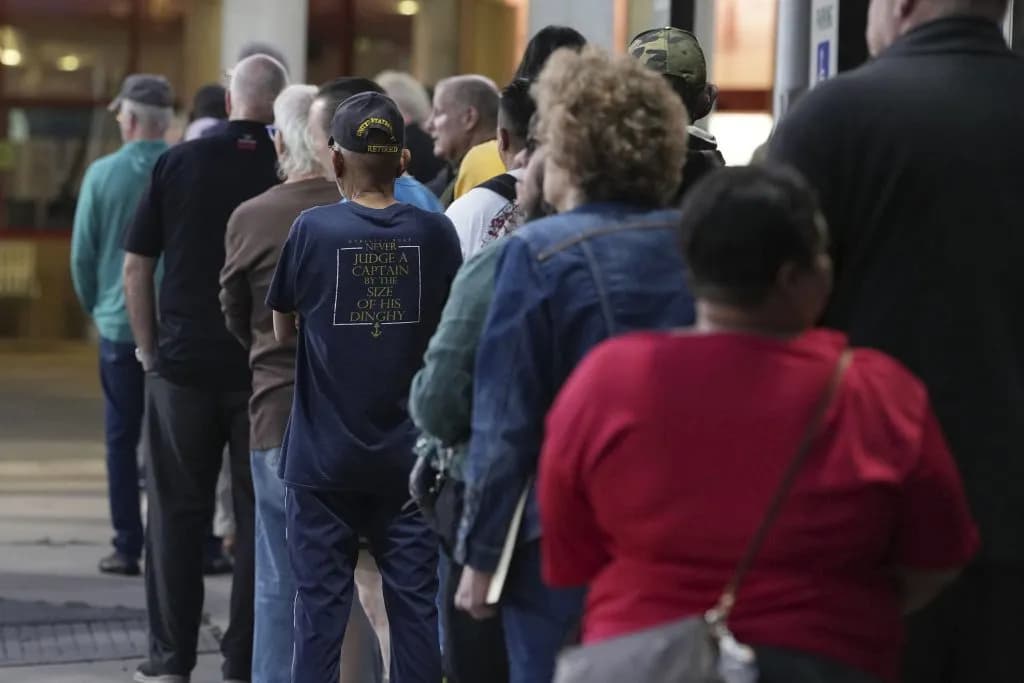
Aspen —The obvious take is that this is a record-breaking turnout story. Millions of ballots cast, percentages skyrocketing, a sea of voters in line at the polling place. It’s the narrative we expect to see five days before a midterm election, and it feels safe. But that framing misses the sharper reality hiding in the data: this isn’t just a surge. It’s a structural shift that is actively redrawing the map of who gets to speak, and where.
The Associated Press analyzed voting data from 47 states and Washington, D.C., revealing that more than 43 million Americans had already voted early or returned mail ballots. That is nearly 10 million more voters than at the same point in 2022. And that matters because it isn’t spread evenly. The jump is concentrated, almost violently so, in states where the Senate race is tight enough to matter.
In Texas, more than 6.3 million voters had cast ballots as of Wednesday, a 50% increase over four years ago. In South Carolina, where voters are choosing a successor to the late Sen. Lindsey Graham, early voting is up 83%. Maine, Michigan, North Carolina, and Kansas all saw increases of more than 30%. These aren’t rounding errors. They are seismic shifts in participation that happen before the ink dries on Election Day.
The AP reported that in states providing party affiliation data, about 6.8 million Democrats and 5.2 million Republicans had voted early. Those figures don’t tell you who they picked, but the gap is a warning light for Republicans defending their 53-47 Senate majority. The party that controls the House and Senate right now is facing a midterm where the base is showing up in numbers that defy the usual erosion patterns.
Consider Harris County, Texas. It’s a reliably Democratic stronghold, but one that has voted by varying margins in recent years. In 2024, Kamala Harris beat Donald Trump there by nearly six points, and Colin Allred beat Ted Cruz by roughly 11. This year, 862,700 people had voted as of Wednesday, compared with 564,500 in 2022. That’s a jump of nearly 300,000 voters in a single county. The part everyone skips past is that this surge is happening while Republican Attorney General Ken Paxton faces Democrat James Talarico in a race that has drawn hundreds of millions of dollars. President Trump visited Texas earlier this week, his third trip to the state in a month, pouring political capital into a contest where the voter turnout alone is reshaping the odds.
Stand there long enough and you see the strategy. Republicans are defending a state where Democrats haven’t won a statewide election in more than three decades, yet the early numbers suggest the ground is shifting under their feet. In a midterm two years into President Trump’s second term, the party in power is usually vulnerable to backlash. Here, the backlash isn’t coming from low turnout; it’s coming from high turnout in specific, pivotal counties.
The AP noted that the figures cover 47 states and D.C., compared with 48 states and the capital four years ago. One fewer state in the dataset, yet a massive increase in participation. The data is a snapshot, not a prophecy. But it’s a snapshot of people who have already made their choice, who have already done the work. They aren’t waiting for a last-minute ad or a final debate to decide if their voice counts.
In the parking lot of a polling place in Houston, or a community center in Columbia, S.C., the lines aren’t just long. They’re different. The people standing there have already decided that their vote matters enough to spend a Tuesday afternoon casting it, not a Tuesday in November. The election isn’t just about who wins the Senate. It’s about whether the infrastructure of democracy can absorb a turnout that is no longer an anomaly, but the new normal.
The early voting period in Texas ends Friday. By then, the numbers will be final for that state, and the shape of the Senate race will have hardened into something concrete. The rest of us are still waiting for November, but the story is already being written in the lines that formed weeks ago.
Keep up with Aspen
The day's Western Slope news, one email each morning. Free.