Snowmass Skiers Ride October Snow Saved by Insulation Blankets
Aspen Snowmass deployed Finnish insulation blankets to preserve snow, saving 3.5 million gallons of water and allowing early October skiing despite a historic drought.
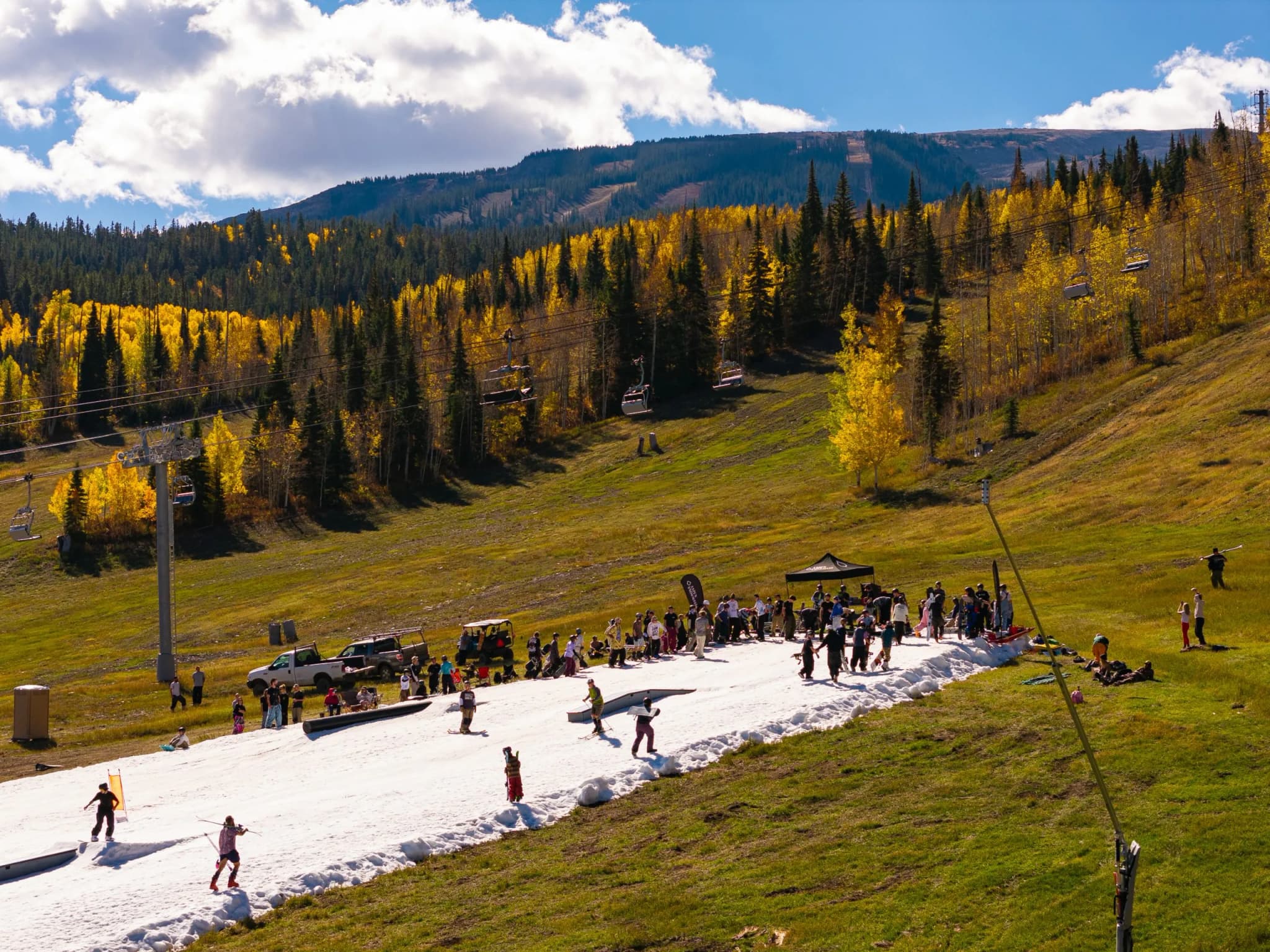
Aspen —Over the weekend, the lifts at Snowmass Bike Park spun for the final time of the summer season, but the mountain didn’t belong solely to the bikers. Skiers and snowboarders found themselves on actual snow in early October, a rarity that owed its existence to last winter’s precipitation. They were riding on roughly 300 feet of snow that had sat under insulated blankets for nearly five months. It was a strange, golden-leafed juxtaposition: mountain bikes bombing through the canopy while skiers carved up terrain that should have melted away by June.
This wasn’t magic; it was math. Aspen Snowmass became the first resort operator in Colorado to deploy Snow Secure insulating blankets, a Finnish technology that had previously made its U.S. debut at Bogus Basin in Idaho. The goal was simple: stop the sun from eating the snow. The company estimates that these insulated tarps saved snow that would otherwise require about 3.5 million gallons of water to manufacture. For context, the snow piles at Snowmass and Buttermilk were built in April using snowcats and heavy equipment, totaling roughly 10 acre-feet. That volume is substantial. It’s the difference between a thin, patchy base and a rideable surface.
The results were better than projected. When the blankets were removed late this summer, roughly 85% of the snow volume stored at Snowmass remained. At Buttermilk, where another pile rested above the half pipe, about 84% remained, accounting for both melt and the natural compression of the pile. Despite a dry winter that forced the resort to close some terrain early and a summer that broke historic drought records, the snow survived. Chris Miller, senior vice president of sustainability, community and advocacy at Aspen One, noted that the results speak for themselves. He confirmed that the company has already purchased additional blankets for next year.
The pilot is considered a success because it proved that passive insulation can preserve significant water resources. The 3.5 million gallons saved represent a tangible reduction in water usage for snowmaking. In a state facing historic drought and interstate conflicts over river supplies, freeing up that much water is no small feat. The blankets did exactly what they were supposed to do: they kept the snow cold and intact. Now, with more blankets on order, the question shifts from whether it works to how much more snow can be saved. The answer depends on the winter’s precipitation, but the infrastructure is ready to catch it.
Keep up with Aspen
The day's Western Slope news, one email each morning. Free.