Snowmass Council Approves Aspen One Workforce Housing After Compromise
Snowmass Village Council approved Aspen One’s 20-unit workforce housing project on second reading after a key compromise with The Divide Homeowners Association, clearing years of bureaucratic friction.
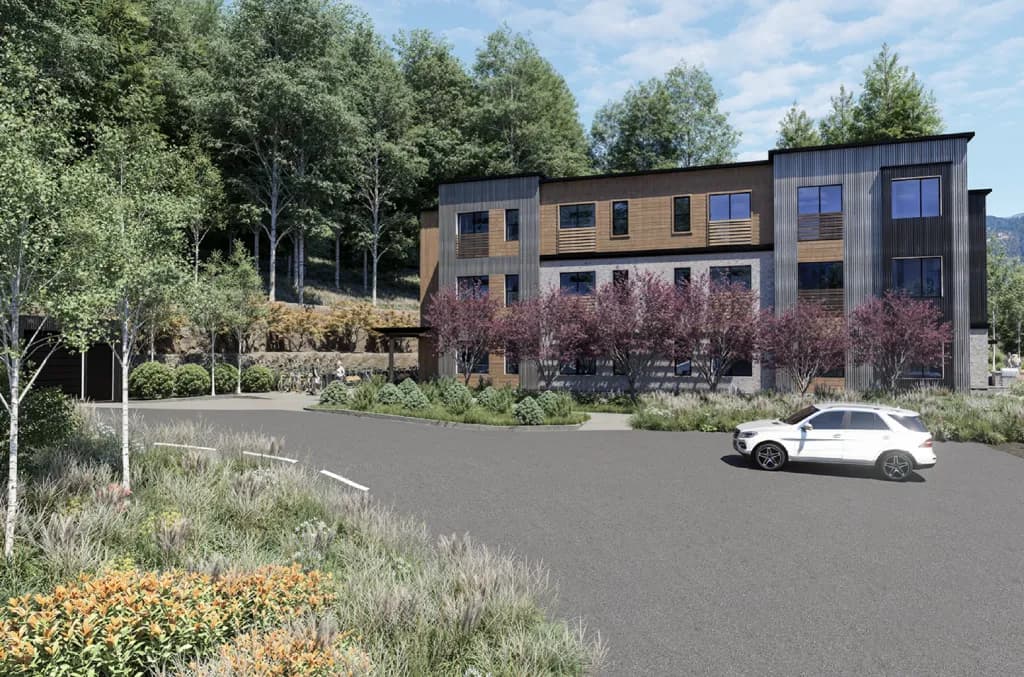
Aspen —The wind off the Maroon Bells usually carries the scent of pine needles and cold, thin air, but on Monday evening, the atmosphere in the Snowmass Town Council chambers felt distinctly different. It was thick with relief, a palpable shift in pressure after nearly two and a half years of bureaucratic friction. The gavel didn’t just bang; it seemed to exhale.
Here is the counterintuitive truth: The victory wasn’t won by the developers. It was won by the neighbors who hated them.
Aspen One’s proposed workforce housing project, known as SHOP, was approved on second reading. The plan features 20 units with a 30-occupant limit, housed in a 17,163-square-foot building. But the real story isn’t the square footage. It’s the compromise that finally broke the deadlock with The Divide Homeowners Association. For years, the HOA had been skeptical, viewing the project as an encroachment on their quiet subdivision. That changed with two specific amendments to the ordinance.
The first amendment reduced the letters of credit required from Aspen One. The second, and more critical, change extended the vacancy period in the restrictive housing agreement from 90 to 180 days. This was the turning point. Bill Kyrigagis, the attorney for the Divide HOA, explained the logic clearly during the meeting. He noted that the extension gave Aspen One, referred to in local parlance as the Ski Company, a greater ability to manage the property.
"It’s our preference because the Ski Company just has an inherently greater ability to manage things like noise from their own employees," Kyrigagis said. "This gives them the best chance to make sure they can get their own employees in there."
Heather Henry, Vice President of Housing and Childcare at Aspen One, echoed this sentiment, though with a touch of optimism that bordered on confidence. She described the 180-day window not as a safety net, but as a distant horizon.
"This is a back-up to a back-up," Henry said. "We don’t see three months going by. We don’t really see six months going by. We have high demand. These units are going to be in high demand."
With the ordinance passed, the team is moving quickly. They are currently securing building permits and finalizing construction documents. The goal is to break ground this spring, aiming for a two-year construction timeline. It’s a tight schedule for a mountain site, where weather is less a variable and more a character in the play. But the council’s approval suggests they believe the terrain can be tamed.
The parking design includes 30 spaces, four of which are reserved for electric vehicles. The reduction in scale — from the preliminary 20,725 square feet to the final 17,163 — was part of the negotiation to make the project palatable to the HOA. It’s a smaller footprint, but the impact on the community’s housing stock is significant.
If you look closely at the map, you can see how the project fits into the existing fabric of Snowmass. It’s not an isolated island; it’s a node in a network. The connection between the development and the surrounding area is what makes it work. It’s not just about bricks and mortar; it’s about relationships.
There’s a warmth to the council’s decision that goes beyond mere policy. It’s a recognition that progress often requires compromise, even when that compromise feels like a concession. In this case, the concession was small, the extension of a deadline - but the result was large. The project moves forward. The neighbors breathe easier. The developers get to build.
And somewhere in the background, the wind continues to blow, carrying the scent of pine and the promise of spring.
Keep up with Aspen
The day's Western Slope news, one email each morning. Free.