Softrock Runners Boost Silverton to Telluride Economy
Self-supported Softrock 100 hikers spend locally in Silverton and Telluride, fulfilling founder Dale Garland’s vision to boost the regional economy as mining declined.
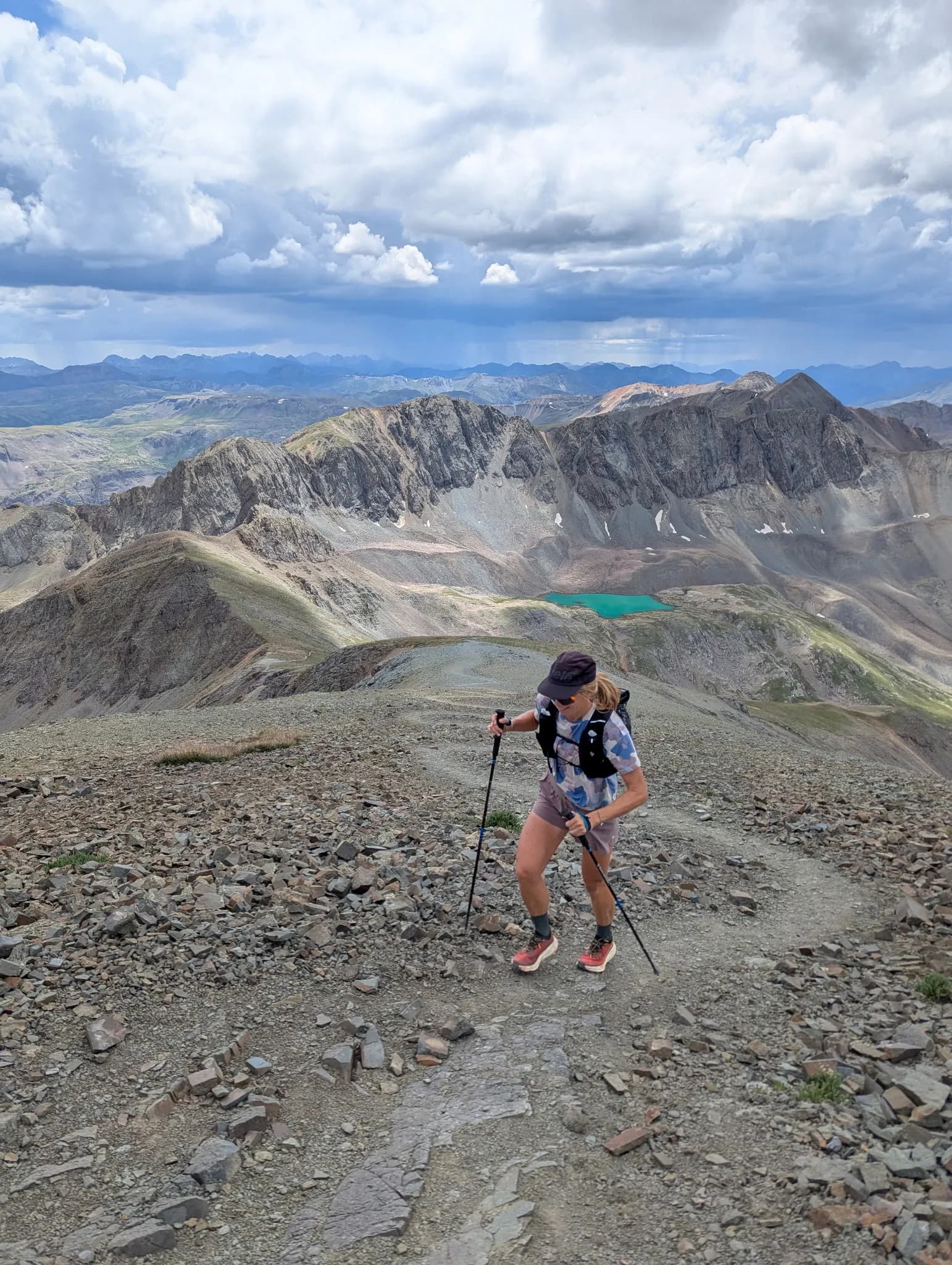
Silverton —The air in Putnam Basin smells like wet stone and pine resin, a scent that sticks to your skin long after you’ve left the trail. You’re standing on a ridge line, looking down at the jagged teeth of the San Juans, your legs burning from the third thousand-foot climb of the day. It’s quiet here, except for the crunch of scree underfoot and the distant rumble of thunder that seems to follow you regardless of where you turn.
This is the Softrock 100. It’s not a race with a starting gun or a finish line banner. It’s a pilgrimage, a self-supported trek that mimics the route of the Hardrock 100 ultra-marathon but strips away the elite infrastructure. There is no crew waiting with Gatorade at mile 50. There is no support vehicle hauling your gear. You have a backpack, a map, and the stubborn belief that you can walk 100 miles from Silverton to Telluride and back up through the high country.
Dale Garland, who has directed the Hardrock 100 since 1983, watched this unofficial version of the course unfold with a specific kind of satisfaction. He didn’t just want a race; he wanted a route that would breathe life into towns that were slowly suffocating as the mines shut down. When the last operating mine in Silverton closed in 1992, the economic engine that had driven the region for a century sputtered and died. The founders of Hardrock, including Garland, saw an opportunity. They weren’t just building a footrace for ultrarunners; they were building a billboard for the San Juan Mountains.
“We hoped people would go out and do the course at other times and spend some money in the communities,” Garland told the Colorado Sun. “Part of the founding was: Let’s bring some economic development to these communities as mining is shutting down.”
That logic still holds up on a Tuesday afternoon in August. If you’re running the Softrock route, you’re not just burning calories; you’re spending them. You’re buying a liter of Pacifico from the liquor store around the corner in Telluride. You’re eating enormous portions of fried rice and pad see ew at Thai Siam, ordering takeout just before they close at 9 p.m. You’re checking into the most expensive place you’ve ever stayed, which, in the quirky economy of Telluride, is also the cheapest place in town.
The journey itself is a study in contrasts. You start at first light, trudging out of Silverton on legs that already feel heavy. You cross the icy waters of Mineral Creek and shuffle up the Bear Creek Trail. The vegetation changes as you climb: magenta fireweed gives way to scarlet paintbrush, a colorful carpet that disappears as you ascend nearly 3,500 feet into Putnam Basin. You cross two 12,000-foot passes. You slide down a thousand feet of loose scree. You hunker down during a sudden thunderstorm, waiting for the lightning to move on.
And then you top out on Wasatch Pass. The mist clears, revealing Lewis Mine and Bridal Veil Basin unfurling below you. The views are spectacular. The legs are hurting. Now is the time to eat that bag of BBQ potato chips you’ve been carrying since Silverton.
By the time you drop into Telluride, you’ve covered roughly 30 miles and climbed more than 10,000 feet. You’ve spent two days on the trail, and you’re still two days from finishing the full 100-mile loop. You’re participating in the mythology of Hardrock without a race entry, without a car, and without a crew. You’re just another pair of shoes on the trail, adding to the economic engine Garland hoped for.
The part everyone skips past is the logistics. When you arrive in Telluride, you have to check into a hotel. The front desk staff asks for your vehicle make, model, and license plate number. You laugh. There is no vehicle. You walked here. You drove yourself to the trailhead, parked your car, and then walked the entire way. It’s a small detail, but it matters because it proves you’re doing it the hard way. You’re not just passing through; you’re inhabiting the space.
This is what happens when you take the route seriously. You don’t just run the miles; you live them. You feel the cold of the San Miguel River as you plunge into its frigid waters, drinking straight from the bottle. You feel the weight of the bag on your back. You feel the exhaustion that comes from climbing 33,000 feet over four days.
It’s not just a race. It’s a route. And it’s still bringing people to the valley, one step at a time.
Keep up with Silverton
The day's Western Slope news, one email each morning. Free.
Aspen's ACES Returns Annual Harvest Party to Rock Bottom Ranch
Glenwood Ghostwalk Brings Frontier History to Life in Linwood Cemetery