Southern States Consider Redistricting Plans Amid Voting Rights Concerns
Lawmakers in several Southern states convene to consider redistricting plans, sparking concerns over voting rights and representation. Protesters gather to voice opposition, citing potential disenfranchisement of Black voters.
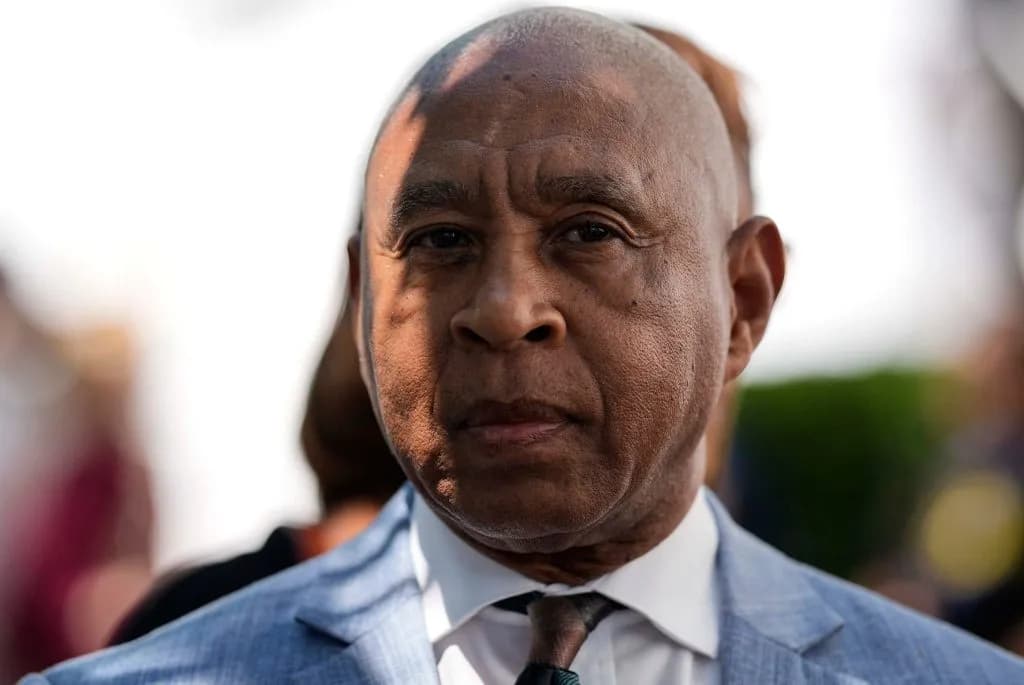
Aspen —"I'm afraid we're about to see a wave of nefarious actions across states that threatens to disenfranchise Black voters," Alanah Odoms, executive director of the American Civil Liberties Union of Louisiana, said on Monday, her words hanging in the air like a warning as lawmakers in several southern states convened to consider plans that could upend their congressional primaries and redraw U.S. House districts ahead of the November elections. The scent of freshly cut grass wafted through the streets of Montgomery, Alabama, as a special legislative session began, while in Tennessee, lawmakers prepared to start their own session on Tuesday, and in Louisiana, where lawmakers were already in session, the hum of discussion and debate filled the air.
As I walked through the streets, I noticed the signs of protest - "No new map" and "We fight back! Black Voters Matter" - carried by several hundred demonstrators gathered outside the Alabama Statehouse, their voices raised in a chorus of discontent. The sound of chanting and cheering filled the air, a stark contrast to the quiet, measured tones of lawmakers inside, who were considering how to capitalize on a U.S. Supreme Court ruling that weakened a key provision of the Voting Rights Act. Can you feel the tension, the sense of unease that settles over a community when the rules of the game are changed, and the outcome is far from certain?
The Supreme Court's decision, which struck down a majority-Black congressional district in Louisiana, has sent shockwaves across the country, with many interpreting it as a green light for Republicans to try to eliminate majority-Black districts that have historically elected Democrats to Congress. As I watched, a group of protesters locked arms, their faces set in determination, while inside the Statehouse, lawmakers pored over maps and demographic data, searching for ways to redraw the lines in their favor. The air was thick with the weight of history, the knowledge that the decisions made here would have far-reaching consequences, not just for the people of Alabama, but for the entire country.
But this situation has significant implications for our community, and folks around here are watching with a mix of concern and outrage. How will these changes affect the way we vote, the way we're represented in Congress, and the way our voices are heard? As I talked to people on the street, I heard a sense of disillusionment, a feeling that the system is stacked against them, and that their voices are being silenced. "I don't know what's going to happen," one woman told me, her eyes clouded with worry, "but I do know that I'm not going to give up. I'm going to keep fighting for what's right."
As the day wore on, the sun beat down on the protesters, but they didn't waver, their determination and passion evident in every step, every chant, and every sign they carried. And as I walked away, the sound of the protesters' chants still echoed in my mind, a reminder that this is far from over, and that the battle for voting rights, for equality, and for justice is ongoing.
In the end, it's not just about the maps, or the laws, or the court decisions - it's about the people, and the way they're affected by the choices made by those in power. The sun set over Montgomery, casting a golden glow over the city, and I thought about the words of Alanah Odoms, and the warning she issued, a reminder that the consequences of our actions will be felt for years to come. The stars were beginning to twinkle in the night sky, a reminder that even in the darkest moments, there is always hope, always a chance for change, and always a reason to keep fighting.
Keep up with Aspen
The day's Western Slope news, one email each morning. Free.


Vail Daily Column: Colorado Squeezed by Federal Tariffs and State Regulations
Iran and Qatar Dispute Pilot Custody Amid Rising Middle East Tensions