St. Mary's Glacier Vanishes After Record Hot Summer
St. Mary's Glacier melted out entirely for the first time in recorded history after a record-hot summer, leaving bare rock where a permanent snowfield once stood.
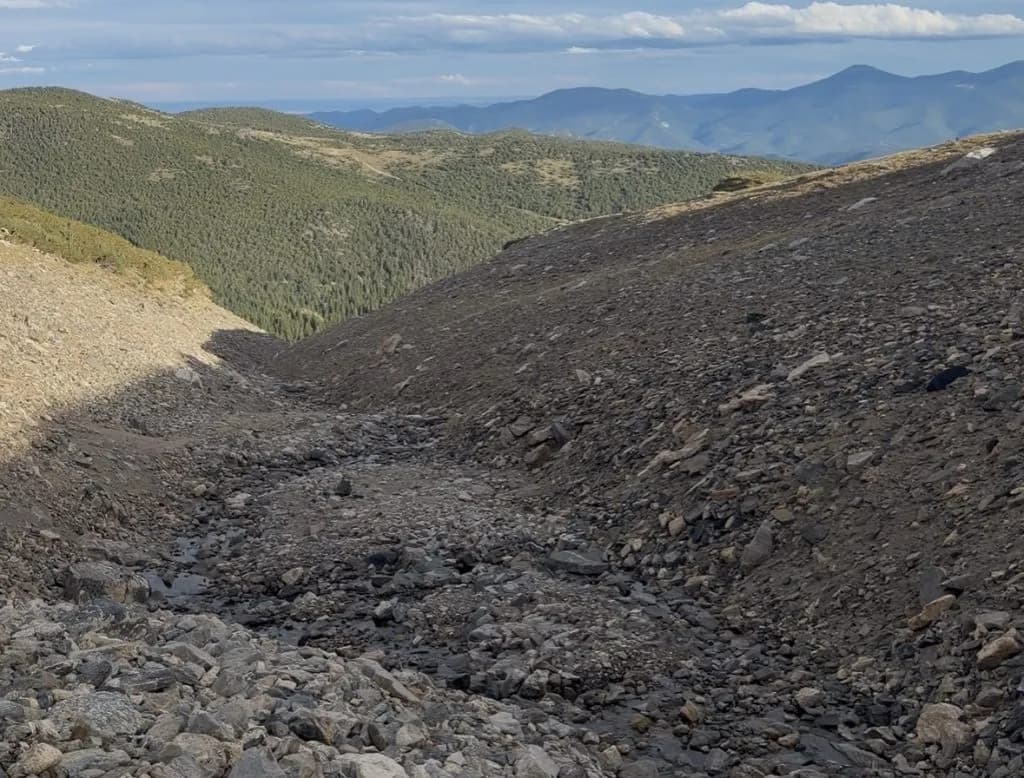
Steamboat Springs —The valley is empty. That’s the only way to describe it on a crisp September morning, where for centuries, a thick blanket of white ice sat in the shadows of the peaks. Jeremy Elder stood there on Sept. 14, looking at bare rock and scree where a glacier used to be. He has lived about five miles from this spot on Fall River Road for three years, and he said the sight was "honestly pretty sad."
Elder isn’t alone in his confusion. He’s just the first to stand at the bottom of that specific valley and confirm what many suspected: St. Mary’s is gone. Not reduced. Not shrunken to a trickle. Melted out entirely for what appears to be the first time in recorded history.
The Steamboat Pilot reported that this snowfield, often colloquially called St. Mary’s Glacier, is a remnant of the ancient glaciers that carved Colorado’s mountains into their current shape. It sits in a high-Alpine valley just 30 minutes off Interstate 70, making it one of the most accessible patches of year-round snow in the state. The hike is only 1.5 miles. For decades, that ease of access made it a pilgrimage site for skiers who wanted to keep their monthly streaks alive.
Jordan Lipp, a Golden resident, has been skiing that slope for 30 years. He made it up there on Sept. 1 to squeeze in a few short turns before the season officially ended. He remembered the ice. It was there, though perhaps thinner than in years past. When he returned less than two weeks later, it was gone.
That matters because St. Mary’s wasn’t just a ski spot; it was a landmark with deep roots in Colorado’s identity. Historic newspapers from the late 1800s show miners in the nearby town of Alice staring up at it with fascination. By 1902, the Idaho Springs Siftings was touting it as a site that "would attract every tourist that will cross the continent." It hosted a resort and a ski area for about 50 years, closing in 1986. For generations, Fourth of July ski competitions drew thousands to the slopes.
But the ice has been retreating for a long time. It’s always waned and waxed, but the baseline has shifted. Elder pointed to a "weak snowpack" last winter and a record-hot summer as the final nails in the coffin. He noted, "It’s just getting hotter and hotter, and we’re seeing the direct effects here."
Stand there long enough and you realize this isn’t just a story about one snowfield in Clear Creek County. It’s a marker for the entire region. The part everyone skips past is how quickly "normal" changes when you remove a permanent feature of the landscape. When a glacier that survived the mining boom and the ski era disappears in a single summer, it forces a reckoning with the temperature trends we’ve been debating for years.
The ski area is closed, but the trailhead remains. The parking lot on Fall River Road still holds cars for hikers who want to see the view, even if the ice isn’t there. The mountain is still steep. The air is still thin. But the white silence that used to define that valley is gone, leaving behind a landscape that looks more like the rest of Colorado than it ever has before.
Keep up with Steamboat Springs
The day's Western Slope news, one email each morning. Free.