Stefan Scheuermann’s 'King of the Gulls' Highlights Isolation in Colorado Sun Lit Series
Analyze Stefan Scheuermann's 'King of the Gulls,' featured in the Colorado Sun's SunLit series, as a visceral exploration of isolation and sensory overload through the eyes of a Scottish knight on the Isle of Skye.
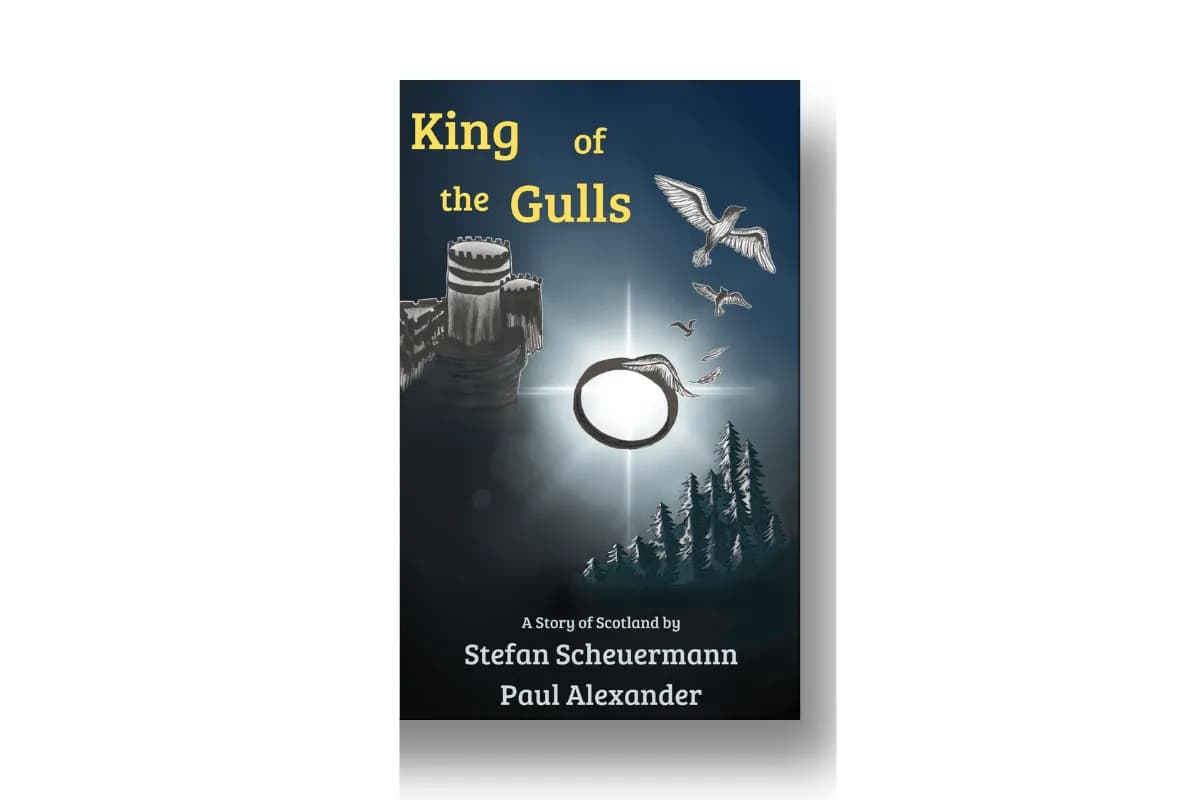
Colorado —The noise turned painful. He stood, buckled over, and cupped his ears with his hands. As he did, and the hovering chaos muted, it began to transition in tone, or so he imagined.
That is the opening scene of Stefan Scheuermann’s "King of the Gulls," a story currently being featured by The Colorado Sun and Colorado Humanities & Center For The Book as part of their weekly SunLit series. It’s not just a random excerpt; it’s a glimpse into a narrative where a Scottish knight, Lindsay, is hunting a legendary sword on the Isle of Skye. But let’s be clear: this isn’t a travel brochure. It’s a descent into a "dreary old building" where the grandeur has decayed to dust, leaving behind lonely stones and a man who is "tired. hungry, and in no mood to be toyed with."
Lindsay isn’t wandering a polished tourist trap. He’s exploring "every forgotten room" in a structure that has been plundered or decayed. He sits against a north wall, waiting for a mythical figure named Shadow Woman, or Dún Scáith. The source material doesn’t mince words. The wind and waves outside are in "jovial conversation," mocking him. The sun doesn’t stay to help; it retreats, leaving a hole in the roof that reveals only a "small cluster of brightening stars." And those stars? They aren’t guiding lights. They’re a distraction. A bird, or perhaps several, circles above, passing over the hole in "staccato patterns."
Then comes the gulls.
"There must be thousands of them!" Lindsay yells. But he can barely hear himself over the "riotous scream from the sky." The noise isn’t just loud; it’s painful. It transitions from a "delicate song of gulls in dulcet concert with the sound of the waves" into something "piercing and shriller." The source text captures the physical toll of this auditory assault. Lindsay cups his ears, trying to mute the chaos, and imagines the tone shifting. It’s a sensory overload that freezes him in place.
This is the reality of the setting in Scheuermann’s work. It’s not about the romance of the Highlands. It’s about the weight of isolation. Lindsay’s thoughts drift to Vanora, "unaccompanied and God-knows-where on the dark and wild isle." He tries to stand, to go search for her, but manages only a "twitch." The environment is an active antagonist here. The darkness is absolute, described as being placed into a "tightly latched trunk." The stars offer no illumination, just a fleeting, mocking visibility.
For context, this excerpt is part of a larger literary feature. The Colorado Sun uses these pieces to highlight local authors and stories. Scheuermann’s writing style in this passage is visceral. It relies on short, punchy observations mixed with longer, descriptive flows. "His eyes yearned for anything to embrace, so he turned them upward." That’s the kind of detail that makes the setting feel claustrophobic despite the open sky.
The "King of the Gulls" title itself suggests a hierarchy of noise and dominance. The gulls aren’t just birds; they are the new rulers of this decaying fortress. They announce themselves with a "single squawk," echoed by another, then multiplied into a chorus. The source material emphasizes the volume and the physical reaction it provokes. It’s not a background sound. It’s a central character.
So, what does this mean for us, reading this on a news site in Colorado? It means we’re getting a taste of a narrative that prioritizes atmosphere and psychological tension over plot speed. Lindsay isn’t just looking for a sword. He’s looking for meaning in a place that has forgotten it. He’s doubting the existence of Scáthach while cursing her for being late. He’s angry, not frightened. There’s a difference. Anger implies agency. Fear implies helplessness. Lindsay is choosing his poison.
The excerpt ends mid-sentence, cutting off as the gull noise transitions. It’s a deliberate cliffhanger. The source text leaves us with the image of the "tiny twinkling of those few stars" disappearing and returning, like a large hand passing over the hole. It’s a moment of suspended animation before the noise takes over completely.
This is the kind of writing that demands attention. It doesn’t waste words on exposition. It drops you into the dark room with Lindsay. You feel the cold. You hear the squawk. You understand why he’s on edge. It’s a stark contrast to the polished, sanitized stories we often see in travel guides. This raw, unfiltered version of the Isle of Skye is being served up to us as part of a cultural feature, not a fiction review. That’s the value add. We get the story. We get the atmosphere. We get the headache that comes with thousands of gulls screaming in your face.
The practical takeaway? If you’re looking for a quiet afternoon read, this might not be it. But if you want to understand how Scheuermann builds tension through sensory overload and environmental hostility, this excerpt is a masterclass. It’s not about the sword. It’s about the noise. And the noise is deafening.
Keep up with Colorado
The day's Western Slope news, one email each morning. Free.




Federal Report Sets 200,000 Acre-Foot Water Conservation Target for Upper Basin

Colorado Parks and Wildlife Deploys Precision Drones for Weed Control