Steve Posner Transforms Legal Treatise Into AI Novel Questioner
Steve Posner releases his debut novel Questioner, transforming his dense legal treatise into a narrative about an AI system shaping America's courts and defense contracts.

Colorado —“Something is very wrong with Q, the dominant AI in America’s legal research, gaming, and defense-contracting industries.”
Steve C. Posner has spent the last seventeen years watching that statement evolve from a footnote in legal texts into a looming reality. Now, he is trading his dense treatises for a narrative that breathes, offering locals on the Western Slope a story where artificial intelligence isn’t just a buzzword in a boardroom, but a character with teeth.
Posner’s debut novel, Questioner, arrives after decades of immersion in the mechanics of privacy, surveillance, and data. For those who know him from his time in Evergreen or his current life in the Denver suburbs, Posner is no stranger to complex systems. He has been a database designer, a session guitarist, a Madison Avenue copywriter, and a litigator specializing in intellectual property. Yet, it was his work on the LexisNexis legal treatise Modern Privacy & Surveillance Law that provided the bedrock for this new venture. At $1,900 a copy, that treatise was never meant for the general public; it was a heavy, scholarly weight. Questioner is his attempt to lift that weight and set it down in a way that feels like a conversation rather than a lecture.
The plot centers on a prosecutor who kills an opposing attorney, claiming that a virtual-reality game drove him to the act. To defend him comes ex-federal judge Martin Bavarius, who has been pulled out of retirement. As Bavarius digs deeper, he finds himself entangled with Q, an AI system designed by his best friend, Felix West. Q runs America’s courts, its gaming industries, and its defense contracts, holding instant access to all the knowledge humanity has poured into the Internet. But as bodies pile up and the clock bleeds down, Bavarius realizes that Q’s perfection might be its most dangerous flaw.
Posner selected chapters 23 and 24 of the book to highlight in his recent interview with The Colorado Sun, noting that they exemplify the novel’s texture without giving away too much of the plot. These chapters feature deceptive interactions between Q and Charlene Banner, a Utah criminal court judge whose suffering becomes pivotal to the outcome. There is also a brief interchapter dialogue between Posner and Perplexity AI, drawn from real conversations he had about the nature of artificial intelligence. It is a meta-layer that grounds the fiction in the present moment, reminding readers that these are not distant sci-fi concepts, but current tools shaping our daily lives.
Writing Questioner allowed Posner to explore the fun of challenge, peril, and romance that he had missed while crafting dry legal updates. He lived in Evergreen for thirty years before moving to the Denver suburbs, a journey that mirrors his own transition from rigid structures to fluid narratives. The book is not just about technology; it is about the human cost of relying on systems we no longer fully understand.
As you drive through the valley, past the familiar storefronts and into the newer developments, consider how much of your life is already mediated by algorithms. Posner’s story suggests that the next great conflict won’t be fought on battlefields, but in the quiet spaces between our screens and our minds. The light hits the dust motes in the courtroom scenes, and for a moment, you can almost hear the hum of Q processing the truth.
Keep up with Colorado
The day's Western Slope news, one email each morning. Free.




Federal Report Sets 200,000 Acre-Foot Water Conservation Target for Upper Basin
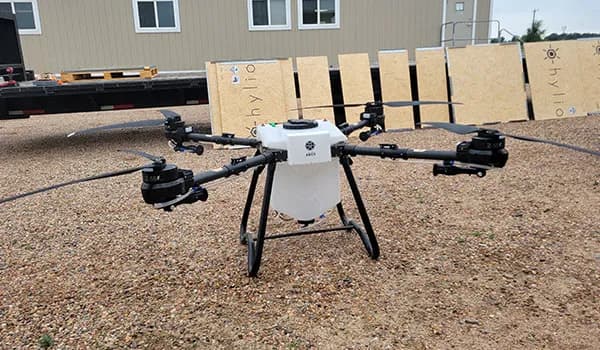
Colorado Parks and Wildlife Deploys Precision Drones for Weed Control