Telegraph Transformed Aspen's Pre-Founding Economy and Investment
Steve Sheinkin’s book explains how the telegraph connected New York to San Francisco, turning the Great Diamond Hoax into a national investment story that helped shape Aspen before its 1879 founding.
Aspen —The transcontinental telegraph connected New York to San Francisco in 1861. That single wire changed everything for the mining West. It meant a discovery in the Rockies didn’t stay local. It attracted investors from the East who had never seen a pickaxe, let alone a mine.
Steve Sheinkin’s new book, “Diamond Fever: A True Crime Story in the Wild West,” illustrates this shift perfectly. It’s not just about diamonds. It’s about how information moved. It’s about how capital followed that information. And it’s about the decade before Aspen’s founding in 1879, when the territory went from isolated hamlets to a connected economy.
Let’s look at the Great Diamond Hoax. It started in 1872. Two men found an isolated area near the Colorado-Wyoming border. They went to England twice. They bought low-grade diamonds and rubies. They planted them on the site. Then they went to San Francisco to scam investors.
The company formed to buy the mining rights was a who’s who of the era. William Ralston, founder of the Bank of America, was in it. Charles Tiffany of Tiffany jewelers joined the ranks. General George McClellan lent his name. Horace Greeley was part of the mix. They weren’t just guessing. They were betting on a story that had already traveled across the continent via telegraph.
Mining law didn’t list diamonds as a claimable mineral. So the group enticed a congressman. He bought shares. He swayed Congress to add diamonds to the list. That’s how you move capital when the rules don’t quite fit the asset.
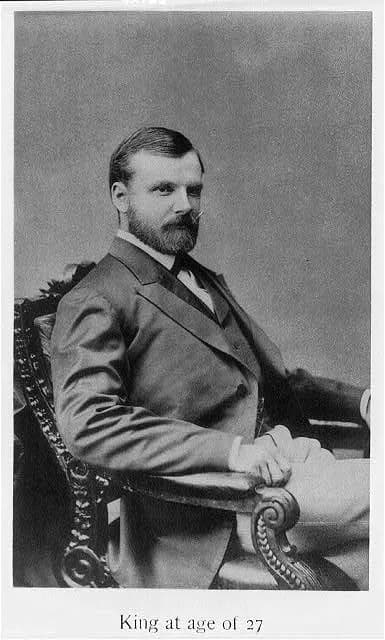
Newspaper readers rushed to find the location. Most ended up in Arizona because of rumors. Some of those involved were followed, especially when they traveled out of San Francisco. Geologist Clarence King was conducting his 40th Parallel survey. He knew the area. He was concerned about what it would look like if the diamonds were there and he hadn’t found them. So he searched.
He found the diamonds. But as a geologist, he knew they had been planted.
The Rocky Mountain News carried several stories of King’s discoveries. The articles were titled “Telegraphic Article.” They came by telegraph from San Francisco. King had frequent coverage after that. He made his first ascent of Mt. Witney. He worked in Colorado. He was appointed the first head of the United States Geologic Survey the year Aspen was founded.
By 1865, there were already 2,500 newspapers in America. That’s more than the rest of the world combined. Papers subscribed to other papers. They passed on stories. Public oratory reached its peak. Speakers traveled the country. Their speeches were published in papers. That initiated national celebrities.
Denver connected to the telegraph grid in 1863. New discoveries were announced and spread nationally. Investors followed.
For context, Aspen’s founding in 1879 came after about 14 years of vast changes. America went from isolated cities scattered across the continent to interconnected locals. Investment capital expanded. It distributed anywhere profitability seemed possible.
The diamond hoax wasn’t just a scam. It was a stress test for the new information age. It showed how quickly a story could turn into a company, a company into a stock, and a stock into a congressional act. It showed that geography no longer dictated opportunity. Telephones and telegraphs did.
Locals today might think of Aspen as a resort town. But its birth was engineered by the same forces that moved money and news across the continent. The telegraph didn’t just send messages. It sent wealth. And it sent risk.
The Rocky Mountain News reported on King’s findings. The readers trusted the wire. They followed the trail. They bought the shares. They didn’t know if they were buying diamonds or just buying the story.
That’s the reality of the decade before Aspen. It wasn’t just about digging holes. It was about reading the wires.
Keep up with Aspen
The day's Western Slope news, one email each morning. Free.
Sawatch Hummingbirds Power 3,000-Mile Migrations With Tiny Engines
Friends of GJ Depot Secure Majority Funding for Historic Union Depot Restoration