The helicopter banks hard over the Sand Wash Basin, its rotors kicking up a brown cloud that swallows the horizon
The helicopter banks hard over the Sand Wash Basin, its rotors kicking up a brown cloud that swallows the horizon. Below, the horses scatter, eyes wide, fleeing not just the noise but the very ground they’ve stood on for generations.…
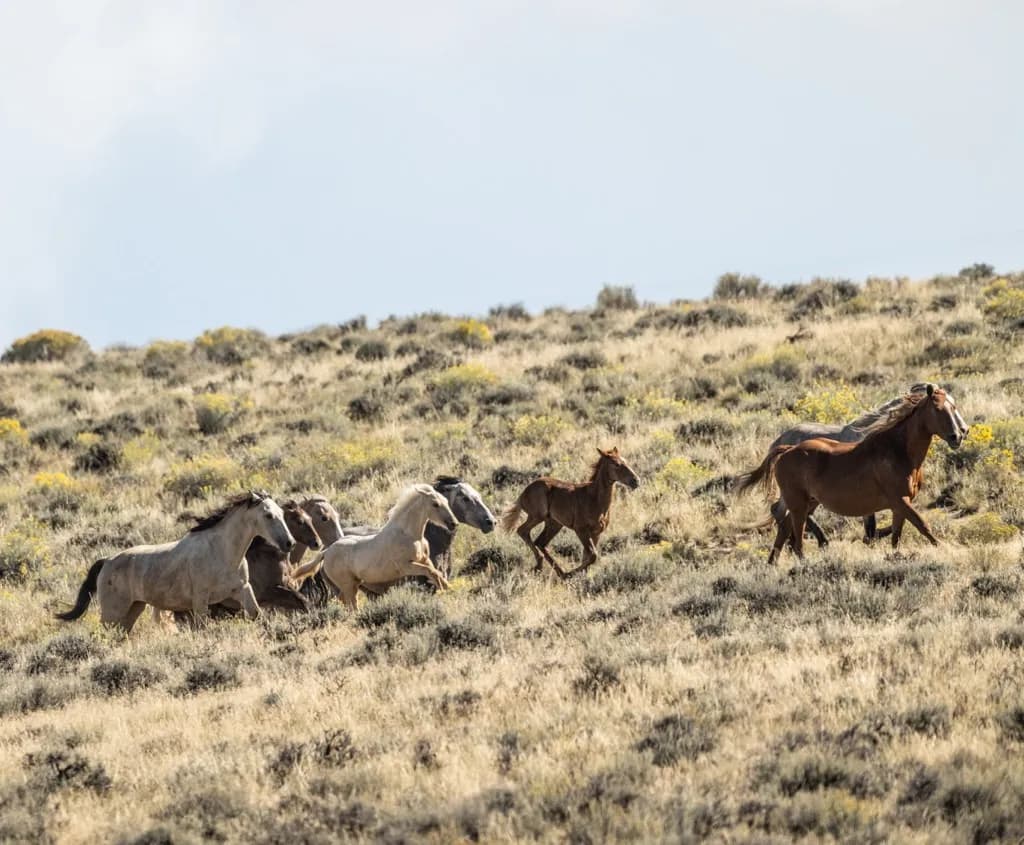
Steamboat Springs —The helicopter banks hard over the Sand Wash Basin, its rotors kicking up a brown cloud that swallows the horizon. Below, the horses scatter, eyes wide, fleeing not just the noise but the very ground they’ve stood on for generations. It’s a scene of chaos, yes, but also of a specific, calculated violence that the federal government prefers to call "management."
And that’s where the counterintuitive truth hides. The Bureau of Land Management (BLM) isn’t announcing a $30 million investment in wild horse fertility control because they’ve finally embraced a gentler, cheaper alternative to roundups. They’re announcing it because the roundups are getting expensive, politically toxic, and, frankly, harder to justify when the math doesn’t add up. The vaccine isn’t the hero of this story. The gather is still the main event. The vaccine is just the cleanup crew.
The Steamboat Pilot reported on the announcement, which was formally made at the National Wild Horse and Burro Roundtable. The money comes from the U.S. Department of Agriculture, and the goal is to "expand and accelerate" fertility control efforts. Secretary of the Interior Doug Burgum wrote in the statement that the "passion shown by the American people for safeguarding the Spirit of the West continues to guide and energize this work." It’s a poetic line, but it obscures a brutal reality: the BLM plans to gather 300 horses in the Sand Wash Basin alone, with only 55 returned to the range. The rest go to holding facilities, where they wait for adoption or, worse, death.
The part everyone skips past is the BLM’s own admission that fertility control can’t fix the problem on its own. "Fertility treatments cannot by themselves shrink an overpopulated herd," the representatives wrote. "Gathers are ultimately still required for fertility control treatment to be successful." That’s the key. You have to catch the horses to vaccinate them. So the helicopters stay. The traps stay. The stress stays. The vaccine just adds another layer of intervention to an already overloaded system.
This matters because it challenges the narrative that the BLM is finally listening to advocates who have long pushed for non-invasive solutions. The American Wild Horse Conservation, a vocal advocacy group, called the announcement a "positive step forward" in a Tuesday Facebook post. But the Animal Welfare Institute pushed back, calling the BLM’s track record "paltry." The agency used 921 fertility control treatments in fiscal year 2025, compared to 14,000 wild horses and burros targeted for removal in 2026. That’s a ratio of roughly 15 to 1. For every horse vaccinated, fifteen are rounded up. Is that progress? Or is it just a new way to manage the same old crisis?
The BLM representatives tried to preempt criticism, writing that "some advocates claim the BLM has 'ignored cheap fertility control options for 20 years,' but that is not true." They pointed to the 921 treatments as proof of effort. But effort isn’t the same as effectiveness. If you’re removing 14,000 animals a year, you need a much bigger vaccine program to keep up. The $30 million investment is meant to help close that gap, training more applicators and expanding vaccine delivery to remote herd areas. But it’s a drop in the bucket compared to the sheer scale of the problem.
Stand there long enough and you start to see the pattern. The BLM is trying to do two things at once: shrink the herd through gathers, and slow the growth through vaccines. But the gathers are the immediate fix, and the vaccines are the long-term play. And the long-term play is still in its infancy. The money is coming, but the results won’t show for years. In the meantime, the helicopters keep flying. The basin keeps losing horses. And the debate keeps raging, with no clear winner in sight.
The story ends not with a resolution, but with a question. Is the $30 million investment a sign of hope, or just a band-aid on a gaping wound? The BLM says it’s the former. The advocates say it’s the latter. The truth, as usual, lies somewhere in between. And until the next helicopter takes off, the horses will keep running.
Keep up with Steamboat Springs
The day's Western Slope news, one email each morning. Free.
The question hanging over every kitchen table in Grand Junction isn’t about the price of gas or the state of the economy
Tucker Vest Burton knows the problem

The chandelier in the East Room glints off the polished floor, casting long, sharp shadows across the carpet
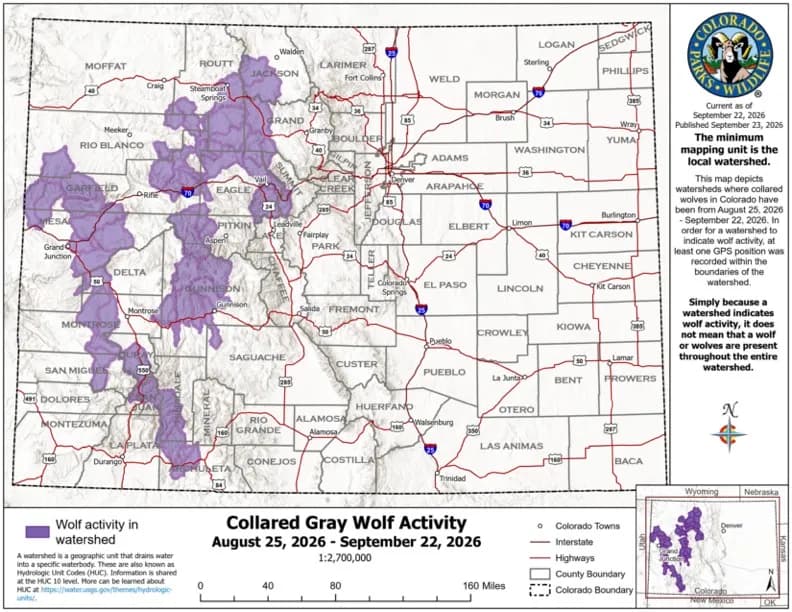
The map glows on the screen, a digital ghost of the landscape we walk every day
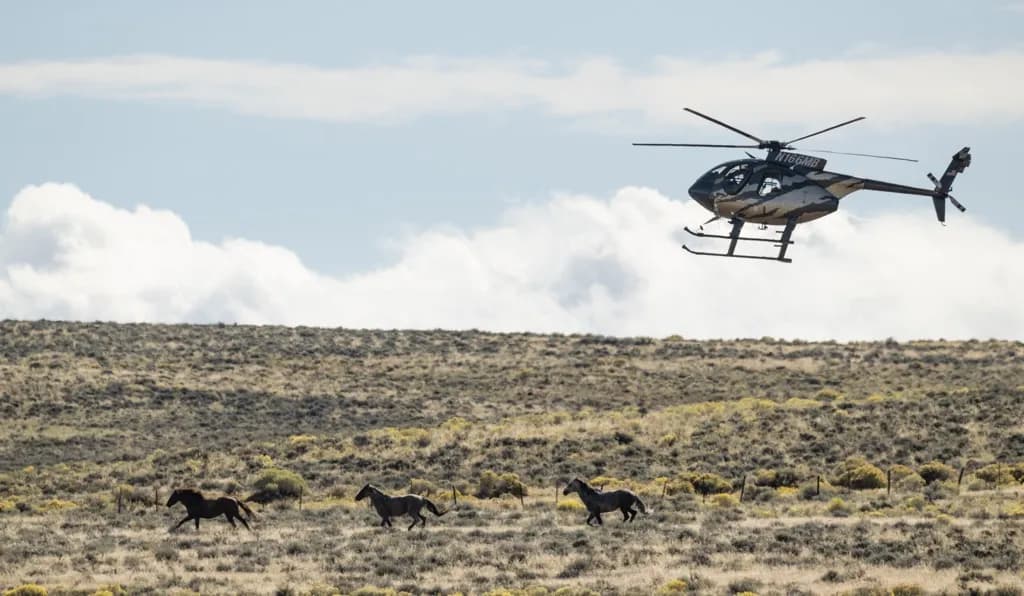
Helicopters Gather Wild Horses West of Craig