Trump Scraps Methane Rules, Colorado Keeps State Controls
The Trump administration is rolling back federal methane regulations, but Colorado retains its own state statutes to control oil and gas emissions. Officials confirm local rules remain in effect despite federal changes.
The Trump administration is sweeping federal methane rules off the table. Colorado’s rules stay put.
That is the short version. The White House wants to roll back federal controls on oil and gas emissions, but Denver’s regulatory framework is locked in. It does not move with Washington.
In September, the Colorado Air Quality Control Commission finished two years of rulemaking. They adopted most of the Biden-era EPA rules that the new administration seeks to overturn. The work is done. It is in state statute.
Stefanie Shoup, the Air Pollution Control Division deputy director for regulatory affairs, made that clear. “Our rules are all now in state statute and state regulation, regardless of what happens at the federal level,” she said. “We feel strongly that we have all of the protections that are appropriate.”
Cyrus Western, the EPA administrator for Denver-based Region 8, agreed. He called Colorado a special case because it has its own state regulatory framework for these specific issues.
Read that again. The federal agency covering our region admits the state is on its own. That independence matters because methane is not a minor pollutant. It is 80 times more potent than carbon dioxide as a greenhouse gas over the first 20 years. It also forms ozone pollution, which clogs lungs in every valley from Grand Junction to Glenwood Springs.
The oil and gas industry accounts for 60% of the state’s methane emissions. The Trump EPA wants to relax regulations on “marginal” wells — those producing less than the equivalent of 15 barrels of oil a day. These small producers generate about half the industry’s methane, according to federal data.
Here is where the local impact hits hard. Marginal wells make up 67% of all wells in Colorado. That is almost 30,000 wells, according to a Colorado State University analysis. If federal rules vanish, those 30,000 sites still fall under state jurisdiction.
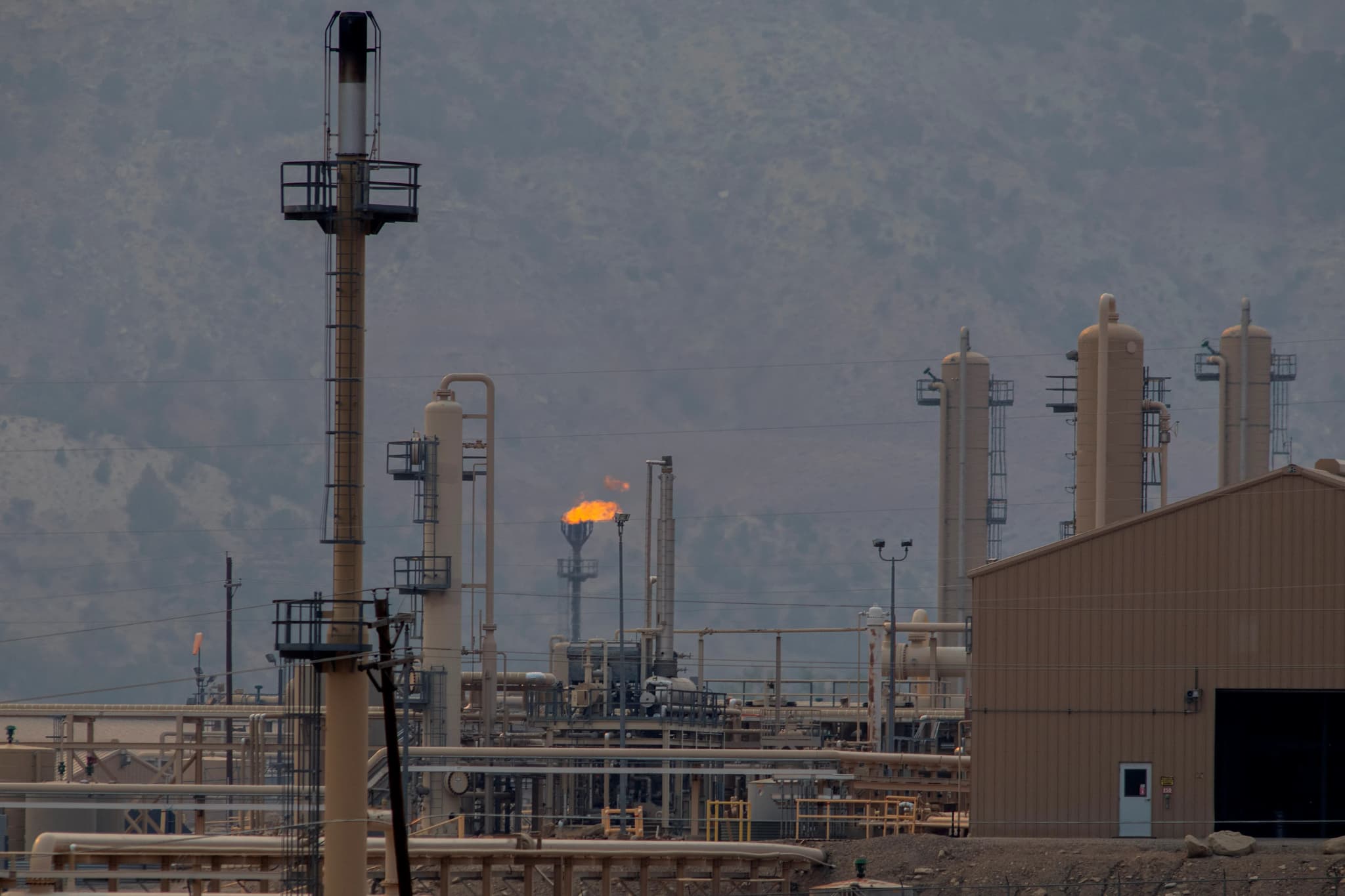
The federal proposal would allow flaring and the use of methane-powered pneumatic controllers. The Biden rules limited both. The new proposal requires flaring to destroy 95% of the methane and controllers to run gas through a pollution control device. But Colorado already banned venting or burning off methane at well sites save for emergencies. The Energy and Carbon Management Commission set those limits. They also capped fugitive emissions.
The federal rule is now open for a 45-day public comment period. Neighbors can weigh in, but the outcome won’t change what is written into Colorado law.
The Trump administration argues that marginal wells are too small to warrant strict controls. They produce 7% of domestic oil and gas. Colorado disagrees by keeping them in the regulatory net.
This is not a victory for clean air, exactly. It is a preservation of status quo against a federal retreat. The rules exist. They are enforced by state agencies, not EPA Region 8.
The question is whether enforcement keeps pace with the number of wells. With nearly 30,000 marginal sites scattered across the state, monitoring is a logistical challenge. The state has the authority. Does it have the manpower?
That is the gap nobody in Denver or Washington is talking about. The rules are solid. The enforcement capacity is the variable.
Methane doesn’t respect state lines, but regulation does. For now, Colorado’s air stays regulated by Denver, not Washington.
Keep up with the Western Slope
The day's Western Slope news, one email each morning. Free.