USDA Demands Colorado Rewrite Wolf Rules After Trump Order
USDA Secretary Brooke Rollins urged Colorado to revise gray wolf protections and support lethal takings, forcing state officials to navigate new federal mandates that clash with existing voter-approved laws.
Steamboat Springs —The letter from Washington doesn’t ask for a conversation. It demands a rewrite of the rules.
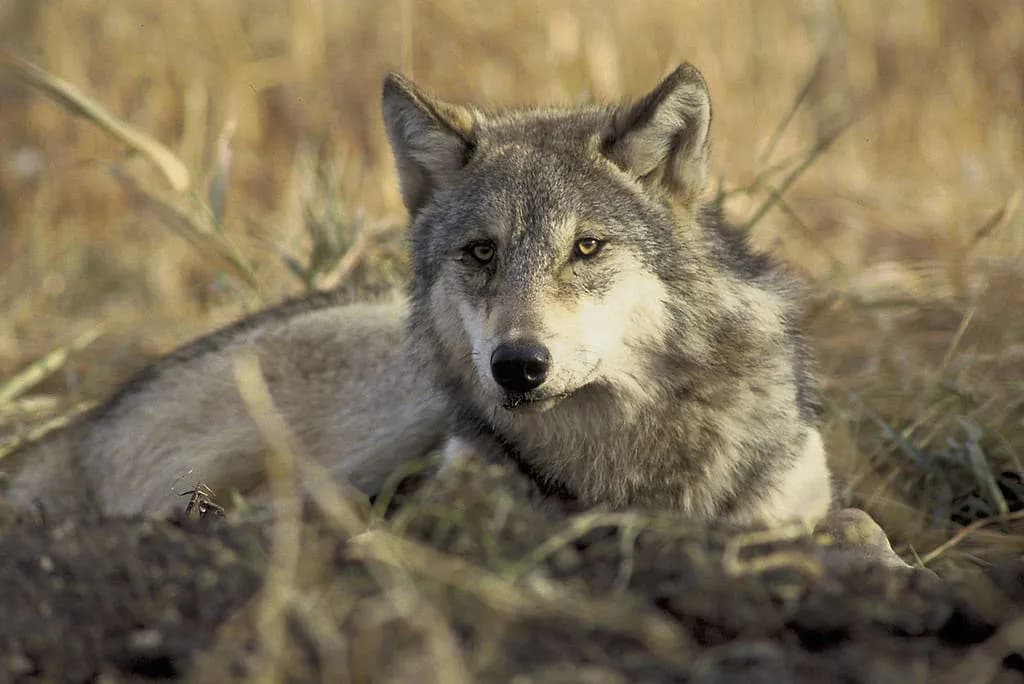
In Denver, state officials are currently holding a pen over the legal status of the gray wolf, a species that has been legally protected in Colorado since 2020. The U.S. Department of Agriculture (USDA) has sent a directive to the state, asking it to review its wolf management policies and potentially delist the animal from state-specific protection lists. This is not a suggestion; it is an execution of President Donald Trump’s Sept. 4 executive order, titled “Supporting America’s Ranchers.”
The obvious take is that this is a battle between ranchers and environmentalists. That’s the narrative people expect to hear in the valley, but it misses the mechanical reality of what is happening. This is a federal agency telling a state government to change its own laws before the federal courts have even finished sorting out the species’ status.
Secretary of Agriculture Brooke Rollins sent identical letters to every state with a wolf population, urging them to “listen to their producers.” She specifically asked states to revise standards for lethal takings and support ranchers through compensation. The USDA’s letter flags two specific tools: the Animal and Plant Health Inspection Service, which can assist in euthanizing wolves involved in livestock conflicts, and a federal compensation program for producers.
But here is the part everyone skips past: Colorado’s protections are not just a policy preference; they are a mandate.
When voters passed Proposition 114 in 2020, they didn’t just ask for wolves. They mandated that Colorado Parks and Wildlife (CPW) build a self-sustaining population of gray wolves. That same proposition required the state to help producers prevent conflicts and compensate them for losses. The law is a two-part engine: reintroduce the wolf, but pay for the damage.
Currently, gray wolves are listed as endangered at both the state and federal levels. Under this dual protection, it is illegal to kill them in Colorado. The state’s designation as an experimental population — granted via a 10(j) rule with the U.S. Fish and Wildlife Service — allows for some lethal take under specific conditions, but only within that framework. If the federal government delists the wolf, as Trump’s order suggests, the “experimental population” status becomes moot. The federal leash is cut. But the state leash remains.
CPW would likely continue following its wolf plan and pursuing reintroduction, because that is what the 2020 ballot measure told them to do. The tension arises in the gap between federal delisting and state protection. If Washington says, “You can kill them,” but Denver says, “No, you have to pay for the damage first and follow our rules,” who wins?
The USDA’s letter implies that state protections are an obstacle to ranching efficiency. Rollins argues that states should work with the USDA “wherever possible” to protect livestock, including through lethal removal when requested by appropriate authorities. It’s a clean argument for people who see wolves as pests and messy arguments for everyone else.
For locals in the valley, this isn’t just about wildlife biology; it’s about property rights and tax dollars. The federal compensation program mentioned in the letter is real, but it requires eligibility checks at local Farm Service Agency offices. The state’s compensation system under Prop 114 is a separate beast entirely, often criticized for its pace and complexity.
The federal government is now asking Colorado to decide if it wants to be the state that lets ranchers shoot wolves on sight, or the state that insists on a slower, costlier process of prevention and payment. The letter doesn’t say which path is “correct.” It just says the federal government will help with the killing and the paying if you loosen your grip.
In a council chamber in Denver, or a ranch office outside Glenwood Springs, the question is no longer whether wolves exist. It’s who holds the trigger. The federal government has handed it over, asking us to decide if we want to keep our hands on the safety.
The wolves are already here. The paperwork is just now catching up to them.
Keep up with Steamboat Springs
The day's Western Slope news, one email each morning. Free.



Steamboat's $5.2M Ranch Sale Exposes Bifurcated Housing Market

Steamboat Museum Honors Rossi Couple With Pioneer Awards