Vail Resorts Cuts Fiscal 2026 Earnings Forecast on Weather
Vail Resorts CEO Rob Katz lowers fiscal 2026 net income and EBITDA projections, citing persistent challenging weather conditions in the Rockies as the primary driver for the reduced financial outlook.
Aspen —Will the weather finally stop eating Vail Resorts’ profits?
No. Not yet.
CEO Rob Katz told investors Monday that net income and EBITDA will be more than $100 million less than initial projections. The fiscal 2026 forecast just got smaller. Again.
Let’s look at the numbers. In December, the company predicted net income of $201 million to $276 million. By March, that dropped to $144 million to $190 million. Today, it’s $128 million to $162 million.
That is a steady bleed.
EBITDA followed the same downward trajectory. Initial estimates sat between $842 million and $898 million. The current guidance caps at $755 million.
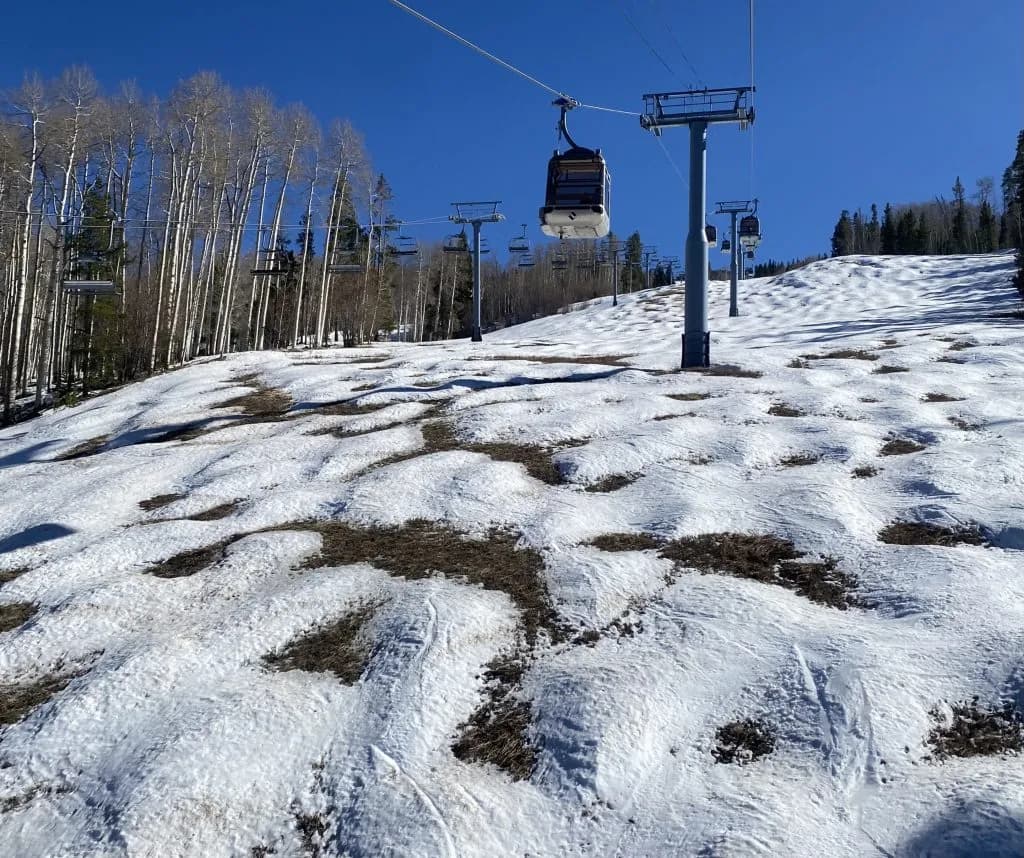
Katz blamed "persistent, historically challenging weather conditions in the Rockies." He said the weather limited terrain availability. That’s the official line. It’s also the same line he’s used for years.
In 2021, he cited below-average snowfall in Colorado, Utah, and Tahoe. In 2022, he pointed to a slow start due to early-season conditions. In 2023 and 2024, weather was the culprit again, even when other parts of the country saw record snowfall.
The pattern is clear. Vail Resorts shoots high. The weather hits. They lower the guide. Repeat.
Katz noted this is exactly one year since he returned as CEO. He also noted he lowered the guidance then, too. His predecessor, Kirsten Lynch, had predicted a maximum net income of $298 million for fiscal 2025. Katz cut that. Lynch had affirmed the higher number, but investors were already getting nervous.
Patrick Scholes with Truist Securities wrote in January 2025 that maintaining the full-year earnings guide was a "positive" after several years of missing expectations. That was optimistic. Today’s cut suggests that optimism was premature.
Locals might wonder how this affects them. It affects the bottom line of the resort that employs thousands and drives the local economy. When Vail Resorts cuts guidance, it signals reduced capital expenditure. It signals caution. It signals that the "historic" weather isn't just a blip — it’s a recurring tax on the business.
The company isn't saying the business model is broken. They’re saying the sky is broken. But you can’t control the sky. You can only control how you price your tickets when it rains on the slopes.
Katz didn’t offer a new strategy. He offered a reminder: the weather is bad. The numbers are lower. The guidance is cut.
Read that again. It’s not a one-time adjustment. It’s a trend.
The short version? Vail Resorts is still paying the weather premium. And investors are still paying for it.
Keep up with Aspen
The day's Western Slope news, one email each morning. Free.

The digital counter on the side of the bus in Carbondale ticks over, but the seats inside are half-empty

Eagle County Launches Aging Well Roadmap To Keep Seniors Housed