Vail summer camps shift indoors as wildfire smoke chokes Western Slope air
Vail summer camps adapt to heavy wildfire smoke by monitoring real-time air quality data and moving activities indoors to protect children from respiratory risks.
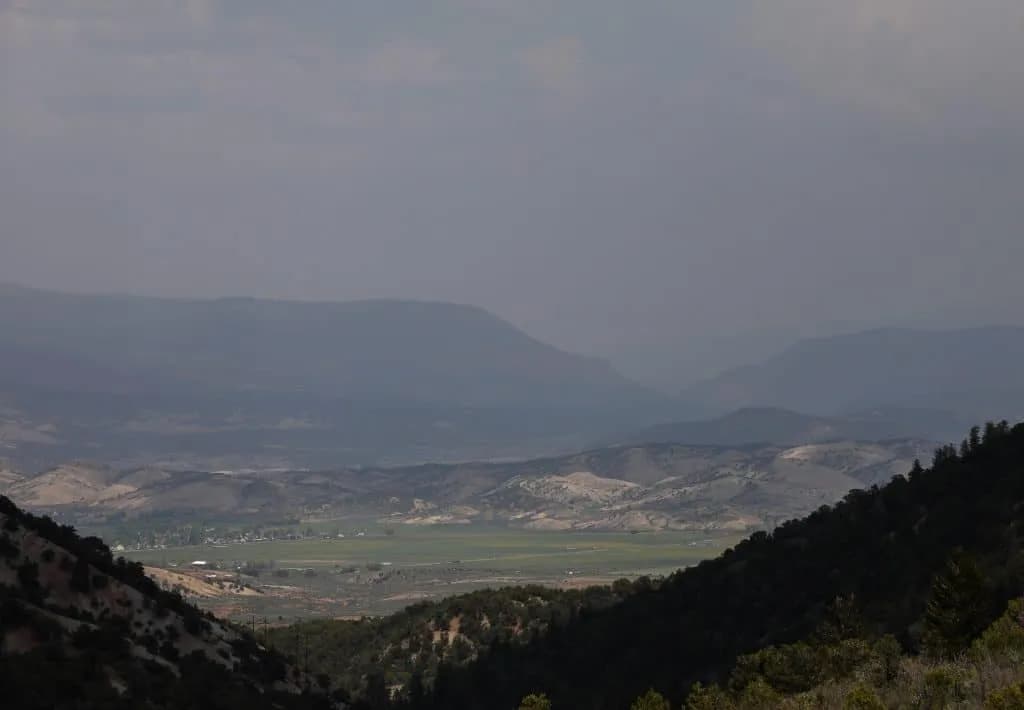
Aspen —The air hangs heavy over Vail, thick with the kind of haze that turns the midday sun into a pale, bruised disc. It’s not just dust. It’s smoke, drifting down from the high country, carrying fine particles that settle deep in the lungs of children who are still growing.
For families across the Western Slope, the summer ritual of dropping kids off at camp for a day of soccer, archery, or science experiments now comes with a new variable: the air quality index.
The Chief Medical Officer for the Colorado Department of Public Health and Environment, Dr. Ned Calonge, says the risk is physiological, not just environmental. Because children are smaller, they breathe more air volume for their body size. That extra volume pulls pollutants deeper into developing lungs.
“They breathe more air volume for their body size,” Calonge said. “Many of them are still growing and developing their lungs … so they can be particularly sensitive to wildfire smoke.”
The symptoms are immediate and familiar to any parent of an asthmatic child: coughing, wheezing, trouble breathing. If the air gets bad enough, the only fix is moving the child to an area where the air is better. For most of the day, that means keeping windows closed and filters running. But for summer camps, where the entire business model is built on being outside, that’s easier said than done.
Local programs aren’t waiting for the sky to clear. They’re rearranging their days.
Beth Pappas, the sports event and partnership director for Vail Recreation District, says her staff monitors the weather forecast daily, but they’ve added air quality to that routine. The district runs sports camps that include zip lining and equestrian activities — things that require open space and clear skies. When the air turns smoky, those activities don’t stop, but they change.
The rec center tracks the PurpleAir website to monitor AQI ratings in real time. When the numbers climb, the district has a backup plan: they reserve the gyms at Homestake Peak School. It gives the kids a place to retreat when the haze becomes too thick to ignore.
“The rec district, we exist for the health and well-being of the community,” Pappas said. “We definitely are constantly watching and taking those precautions.”
It’s a different approach for Walking Mountains, which runs K-9 summer science camps. They also rely on PurpleAir data, but their protocol is more granular, tied directly to specific AQI thresholds.
If the AQI sits between 50 and 150, the camp adjusts the programming. They spend more time inside than usual, but they don’t abandon the outdoors entirely. The goal is to keep the educational mission alive while reducing exposure.
If the AQI hits the severe range — 150 to 200, the shift is drastic. The majority of the day is spent indoors. The curriculum changes too. Instead of hiking or field work, the kids might reflect in nature, drawing and journaling. It’s the same concept, just executed in a climate-controlled room.
Not all camps are created equal, and not all parents have the luxury of choosing between a gym and a trailhead. But for the organizations managing these programs, the smoke is forcing a rethink of what “outdoor education” actually looks like in July.
Stand there long enough and you can see it in the way the light hits the trees. The colors are muted. The air tastes metallic. And inside the gyms at Homestake Peak, the sound of bouncing basketballs replaces the shout of kids chasing frisbees across the grass.
Keep up with Aspen
The day's Western Slope news, one email each morning. Free.